


Introduction
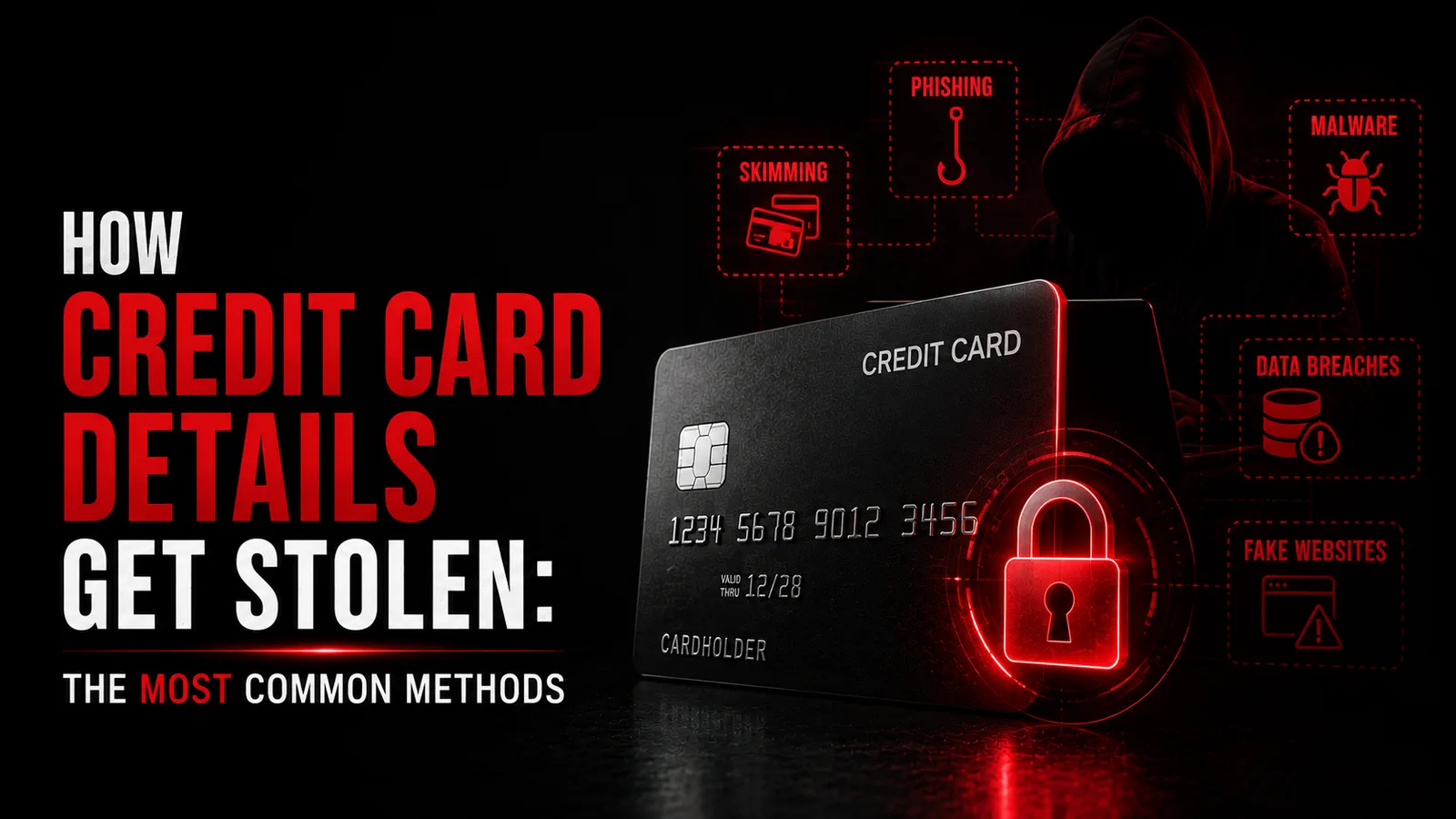
Credit card information can be stolen without the physical card ever leaving your possession. Phishing, fake checkout pages, data breaches, digital skimming, malware, account takeover, and compromised merchants can all expose payment credentials.
Sometimes the first indication is obvious: a purchase appears that you know you did not make. Other warning signs are less direct, such as an unexpected one-time passcode, a fraud alert for a transaction you do not recognize, or a card suddenly declining even though the account should be in good standing.
No single warning sign always proves that your card information was stolen. A merchant may post a temporary authorization, a card can decline for legitimate reasons, and an issuer may contact you because its fraud system detected something unusual but not necessarily fraudulent.
The safest approach is to treat unfamiliar activity as something to verify promptly rather than something to ignore.
The Federal Trade Commission recommends watching for fraudulent activity and reporting lost, stolen, or compromised cards promptly. The Consumer Financial Protection Bureau similarly advises consumers to contact their card company when unauthorized charges appear.
This guide explains 10 warning signs, what each one can mean, and what you should do next.
Quick Answer: The 10 Most Important Warning Signs
1. A transaction you do not recognize.
2. A very small or unusual charge you cannot explain.
3. An unexpected OTP, 3-D Secure, or transaction-approval prompt.
4. A fraud alert for a purchase you did not make.
5. Your card is unexpectedly declined or temporarily blocked.
6. Your issuer sends a replacement card you did not request.
7. Your online card account shows unfamiliar profile or security changes.
8. You receive password-reset or new-device alerts you did not initiate.
9. A merchant or service tells you your payment data was exposed in a breach.
10. You begin receiving unusually convincing phishing messages containing real card or account details.
Any one of these deserves verification. A confirmed unauthorized charge or unrecognized security change deserves immediate issuer contact.
Sign 1: A Transaction You Do Not Recognize
The clearest warning sign is a purchase, cash advance, recurring payment, or other card transaction you do not recognize.
Before assuming fraud, check whether the merchant appears under a parent-company or payment-processor name and ask authorized family members whether they made the purchase.
If the transaction still cannot be identified, contact the issuer promptly through the number on the card, the official mobile application, or a known official website.
FTC guidance recommends reviewing statements and reporting unauthorized activity quickly.
Do not contact a phone number contained in a suspicious text or email about the transaction; verify through the issuer's official channel.
Why One Unfamiliar Charge Matters
A single unfamiliar charge may be the first visible evidence that payment information has been compromised.
The cardholder does not need to wait for multiple fraudulent purchases before acting.
Prompt reporting can help the issuer block further activity, investigate the transaction, and determine whether the card should be replaced.
In the United States, credit-card liability protections are strong, but consumers should still report unauthorized use quickly and follow the issuer's dispute procedures.
Sign 2: A Small or Unusual Charge You Cannot Explain
Not every fraudulent transaction is large.
A small unfamiliar amount can still indicate that a card number has been used without permission.
There are also innocent explanations: temporary authorizations, verification holds, tips, currency conversion, or delayed merchant posting can create unfamiliar-looking amounts.
The correct response is not to assume every small charge is criminal, but to investigate any charge you genuinely cannot identify.
If the issuer confirms that the transaction is unauthorized, follow its card-replacement and dispute guidance.
Do Not Ignore Small Charges
People often notice a tiny unfamiliar charge and decide it is not worth the effort to investigate.
That can be a mistake because unauthorized use is defined by permission, not by transaction size.
CFPB describes unauthorized use generally as use by someone who does not have the right to use the card.
A small unexplained transaction should therefore be treated the same way as a larger unexplained transaction: verify it and report it if it is not yours.
Sign 3: Unexpected OTP, 3-D Secure, or Approval Prompts
A one-time passcode, banking-app approval, or EMV 3-D Secure challenge can appear when an online transaction or account action needs additional authentication.
If you receive one when you are not actively making a purchase or signing in, someone may be attempting to use your card or account.
Do not share the code with a caller, chat contact, or support agent.
Do not approve a banking-app prompt you did not initiate.
Open the bank or issuer's official app independently and review the activity.
An authentication message is especially important when it includes a merchant or transaction amount you do not recognize.
Why Authentication Alerts Are Valuable
Authentication systems can give cardholders a warning before an unauthorized transaction completes.
Mastercard and other payment systems use one-time passcodes and risk-based authentication in digital payments, while EMV 3-D Secure allows issuers to challenge higher-risk e-commerce transactions.
The user's role is simple: approve only activity they actually initiated.
Unexpected prompts should be treated as a request to verify the account, not as a request to help someone on the phone 'cancel' a transaction.
Sign 4: A Fraud Alert for a Purchase You Did Not Make
Banks and card issuers monitor transactions for suspicious patterns.

If the issuer sends a push notification, text, email, or automated call asking whether you recognize a transaction, take the alert seriously.
Verify the alert through the official banking application or known contact information before responding to links or numbers in the message.
If the transaction is not yours, report it immediately.
Visa notes that transaction monitoring and fraud-detection technology are important for identifying suspicious payment activity.
A legitimate fraud alert is a protective signal; a fake fraud alert can itself be phishing, so always verify independently.
How to Tell a Real Fraud Alert From Phishing
Do not rely solely on branding, caller ID, or the fact that a message knows the last four digits of your card.
Close the message and open your bank's official app.
If necessary, call the number printed on the physical card or listed on the issuer's official website.
Never disclose a password, PIN, or one-time code because someone claims to be investigating fraud.
The safest verification step is to move the conversation away from the channel the sender controls.
Sign 5: Your Card Is Unexpectedly Declined or Blocked
A card decline does not automatically mean the card was stolen.
Legitimate reasons include credit limits, expired cards, merchant errors, travel restrictions, issuer outages, or unusual transaction patterns.

However, issuers may also block or restrict a card when fraud monitoring detects suspicious activity.
If a card that normally works suddenly declines, check the official banking app for alerts and contact the issuer if you cannot explain the problem.
Do not repeatedly retry the transaction across many websites while you are uncertain about the account status.
Unexpected Declines Plus Other Signs
A decline becomes more concerning when it appears alongside another warning sign.
For example, a declined card plus unfamiliar transactions or unexpected authentication prompts deserves immediate investigation.
Multiple independent warning signs make a compromise more plausible.
The issuer can tell you whether the decline was caused by fraud controls, account status, or another reason.
Sign 6: An Unexpected Replacement Card or Security Notice
Banks sometimes replace cards proactively when they believe card information may have been compromised.
This can happen even when the customer has not yet noticed an unauthorized transaction.
If you receive a replacement card, digital-card update, or security message you did not request, verify it through the issuer.
Do not assume the notice is fake, but also do not activate a card or provide personal information through an unexpected link.
The issuer may have received breach intelligence or detected activity that justified replacing the payment credential.
Visa advises cardholders to contact their financial institution when a card is lost, stolen, or affected by unauthorized use.
Why Banks Sometimes Replace Cards Before Fraud Appears
Payment networks, merchants, law enforcement, and issuers can identify card numbers that may have been exposed in a compromise.
An issuer can choose to increase monitoring or replace the card before successful misuse occurs.
This is a preventive measure, not proof that money has already been stolen from the account.
A proactive replacement makes the old card number less useful if it has entered criminal circulation.
Sign 7: Unfamiliar Changes to Your Online Card Account
Account takeover can expose more than the card number.
Watch for unfamiliar changes to your mailing address, telephone number, email address, communication preferences, authorized users, saved devices, or payment settings.
Visa describes account takeover as fraud in which criminals gain access to legitimate customer accounts through stolen credentials or phishing and then make unauthorized purchases or change payment details.
If you see an account change you did not make, change your password from a trusted device, enable or review MFA, sign out unfamiliar sessions where possible, and contact the issuer.
Secure the email account associated with the card because it may control password recovery.
Why Contact-Information Changes Are Serious
A criminal who changes a telephone number or email address may be trying to take control of future alerts or password resets.
An address change can also redirect replacement cards or correspondence.
These changes can therefore indicate a broader account-takeover problem rather than only a stolen card number.
The response should include both card security and account security.
Sign 8: Password-Reset or New-Device Alerts You Did Not Initiate
A password-reset email or new-device login notification can indicate that someone is attempting to access the account associated with your card.
One unsuccessful reset attempt does not prove the attacker has your card number, but it is evidence that the account is being targeted.
If the alert is genuine, do not click an unexpected reset link unless you independently initiated the process.
Open the legitimate app or website directly, review login history, change the password if necessary, and enable MFA.
Protect email especially carefully because compromise of email can allow attackers to reset multiple financial and shopping accounts.
Credential Theft and Card Theft Can Overlap
A phishing site may collect both account credentials and payment information.
A data breach can also expose several data categories simultaneously.
This is why a stolen-card incident sometimes becomes an account-takeover incident.
If both a card transaction and a login alert are unfamiliar, tell the issuer that you suspect account compromise rather than treating the two events separately.
Sign 9: You Receive a Data-Breach Notification Involving Payment Information
A breach notice is one of the strongest reasons to increase monitoring even before an unauthorized charge appears.
Read the notice carefully and identify exactly what information was affected.
Card number exposure calls for issuer monitoring or replacement guidance.
Password exposure calls for password changes and MFA.
Broader identity-data exposure can justify additional identity-theft protections.
The fact that data was exposed does not guarantee fraud will occur, but it increases the reason for vigilance.
The FTC has repeatedly advised consumers to monitor accounts and credit information after significant breaches.
Exposure Is Not the Same as Confirmed Fraud
A breach means information may have been accessed or exposed.
It does not automatically mean a criminal has successfully used your card.
Issuers may detect the compromise and replace the card before unauthorized transactions occur.
Consumers should avoid panic but follow the organization's and issuer's protective guidance promptly.
The correct response depends on the exact information involved.
Sign 10: Suddenly More Convincing Phishing Messages
After personal or payment information is exposed, phishing can become more convincing.
A message may know your name, bank, card brand, recent merchant, telephone number, or other details.
The presence of accurate information does not prove that the sender is legitimate.
Criminals can combine stolen or publicly available data to impersonate banks and merchants more effectively.
If messages suddenly become unusually specific, treat them as a possible sign that personal data has circulated.

Verify every sensitive request through a known official channel.
Follow-Up Phishing After a Breach
Breaches can create a second wave of scams.
Criminals may send fake security notices claiming that the victim must verify the card, receive a replacement, activate fraud protection, or confirm account details.
Do not enter payment information into links contained in unsolicited breach messages.
Use the official bank or merchant app instead.
A real breach can be exploited by a completely different scammer who only wants the victim to believe they are part of the response.
Bonus Sign: Your Card Appears in a Wallet or Device You Do Not Recognize
Some card issuers allow users to see devices or wallets associated with the card.
If your account shows a digital-wallet enrollment or device you do not recognize, contact the issuer.
The exact information available varies by bank.
Remove unfamiliar devices only through official account controls and follow issuer guidance.
Do not trust an unsolicited person who claims they need a verification code to remove a fraudulent wallet.
Bonus Sign: Merchants Contact You About Orders You Did Not Place
A merchant may contact you about an unusual order, delivery address, refund, or verification request.
Verify the contact independently.
If the order appears in the merchant's official account and you did not place it, change that account's password, review saved payment methods, and contact the issuer.
A fraudulent order can indicate either stolen card details or takeover of the shopping account itself.
What Is Not Automatically a Sign of Stolen Card Information?
Not every unusual card event means compromise.
Temporary authorization holds can appear at hotels, fuel stations, rental companies, and some online services.
Merchant names on statements can differ from storefront names.
Cards can decline because of ordinary issuer rules or technical problems.
A legitimate merchant may send an authentication prompt for a purchase you are actually making.
The purpose of this guide is not to create panic; it is to help consumers verify unfamiliar activity quickly.
How to Verify an Unfamiliar Merchant
Check your email receipts, order history, subscriptions, and recent purchases.
Ask authorized users on the account.
Search the merchant descriptor to see whether it corresponds to a known parent company or payment processor.
If you still cannot explain the charge, contact the issuer.
Do not delay reporting a transaction solely because the merchant name is confusing.
What to Do Immediately If You Think Your Card Details Were Stolen
Contact the issuer using the number on the card or the official app.
Explain what you observed: unfamiliar transaction, unexpected OTP, breach notice, account change, or suspicious decline.
Ask whether the card should be locked or replaced.
Review recent activity, including small transactions.
Change associated account passwords if account takeover is possible.
Secure your email account.
Enable transaction alerts and MFA.
Preserve relevant messages or screenshots for your records.
Continue monitoring after replacement because fraud may involve other accounts or identity information.
Should You Lock or Replace the Card?
A temporary lock can be useful while investigating.
However, if the card number is confirmed compromised, permanent replacement is usually more effective because it invalidates the old credential.
Issuer features and policies differ.
Follow the bank's recommendation rather than keeping a compromised card indefinitely behind a temporary lock.
Visa's consumer guidance notes that lost or stolen cards can be cancelled and replaced to block fraudulent transactions.
Do You Need to Change the PIN?
If the suspected compromise involved only an online card number, the PIN may not have been exposed.
If the card was physically skimmed, used at a suspicious ATM, or the PIN may have been observed or captured, tell the issuer specifically.
The bank can advise whether the PIN or the entire card should be replaced.

Do not assume every kind of card compromise exposes every credential.
Do You Need a Credit Freeze?
A credit freeze is not the normal response to a card-number-only compromise.
It is more relevant when strong identity information such as a Social Security number has been exposed and the concern is new-account identity theft.
A freeze does not block unauthorized transactions on an existing card.
Match the protection to the type of information stolen.
Card compromise: contact the issuer. Identity compromise: consider broader credit and identity-theft protections.
How Long Should You Monitor the Account?
Continue monitoring even after the first suspicious event is resolved.
Fraud may appear days or weeks after an exposure, and recurring billing or account-takeover activity can create additional issues.
Enable alerts so you do not have to rely only on monthly statements.
If the issuer replaces the card, verify that legitimate recurring payments have moved to the new credential and continue watching for unfamiliar charges.
The appropriate duration depends on whether the incident involved only the card or broader identity information.
U.S. Credit Card Liability Basics
U.S. federal protections generally limit a consumer's liability for unauthorized use of a credit card.
CFPB says that if unauthorized use occurs before a missing card is reported, the most a consumer will generally owe is $50, and many card agreements provide zero liability.
The details can depend on the circumstances and card agreement.
Debit-card rules are different and can depend more heavily on how quickly the consumer reports the problem.
Consumers should report suspicious activity immediately rather than relying on liability limits after losses occur.
Why Fast Reporting Matters
Prompt reporting is important even when the consumer expects legal protection.
It can stop additional transactions, trigger card replacement, preserve dispute rights, and help the issuer investigate.
FTC guidance says consumers should report loss, theft, or fraudulent activity immediately.
The goal is to stop the compromise rather than merely recover money afterward.
How Transaction Alerts Help
Alerts can turn card fraud from a monthly discovery into a real-time notification.
Configure purchase alerts, online-transaction alerts, or thresholds where the issuer supports them.
Do not assume an alert is genuine if it arrives with a suspicious link.
Verify through the banking app.
When alerts are configured correctly, they provide one of the simplest ways to recognize unauthorized activity quickly.
How 3-D Secure Helps
EMV 3-D Secure allows merchants and issuers to assess risk and authenticate e-commerce transactions.
An unexpected 3DS prompt can warn the cardholder that someone is attempting an online transaction.
A legitimate low-risk purchase may also complete without a visible challenge.
Consumers should therefore not expect an OTP on every transaction.
The most important rule is to approve only challenges tied to purchases they knowingly initiated.
How Tokenization Helps
Payment tokenization replaces a reusable card number with a substitute credential in supported payment environments.
This can reduce the usefulness of stolen payment information outside the intended merchant, device, or context.
Visa reported in April 2026 that tokenization was associated with a 35% reduction in e-commerce fraud rates compared with non-tokenized transactions in its cited data.
Tokenization does not prevent every scam or merchant compromise, but it reduces reliance on broadly reusable static credentials.
Digital wallets and modern stored-card systems may use tokenization automatically.
Why a Replacement Card Does Not Fix Everything
A replacement card solves the compromised payment credential.
It does not automatically fix a stolen shopping-account password, compromised email account, leaked identity information, or malware on the device.
If the incident includes login alerts, password resets, identity-data exposure, or suspicious device activity, address those risks separately.
Think of card replacement as one part of incident recovery rather than a universal reset.
Common Myths About Stolen Credit Card Warning Signs
Myth: Fraud always starts with a huge unauthorized purchase. Reality: any unexplained transaction can matter, regardless of size.
Myth: A declined card definitely means criminals used it. Reality: declines have many legitimate causes, though unexplained declines should be verified.
Myth: No fraudulent charges means the card was never exposed. Reality: a breach can occur before any successful misuse.
Myth: An OTP proves the bank is protecting you, so you should read it to support. Reality: an unexpected code should never be shared with a caller or chat contact.
Myth: A replacement card means fraud definitely occurred. Reality: issuers can replace cards proactively after suspected exposure.
Myth: A credit freeze stops existing-card fraud. Reality: freezes primarily address new-account credit fraud.
Myth: If the bank's fraud system did not alert you, the charge must be legitimate. Reality: consumers should still review account activity themselves.
Conclusion
Credit card information can be compromised quietly, long before a consumer notices obvious fraud.
That makes early warning signs valuable.
An unexplained purchase is the strongest signal, but unexpected authentication prompts, fraud alerts, declines, account changes, replacement-card notices, breach notifications, and unusually targeted phishing can all justify closer attention.
The goal is not to panic every time a card declines or an authorization appears.
The goal is to verify activity quickly through the card issuer and act as soon as unauthorized use is confirmed.
For consumers, the best response pattern is straightforward: review, verify, report, replace when necessary, secure related accounts, and keep monitoring.
Fast action can limit additional fraud and turn a potentially serious compromise into a manageable payment-security incident.