


Introduction
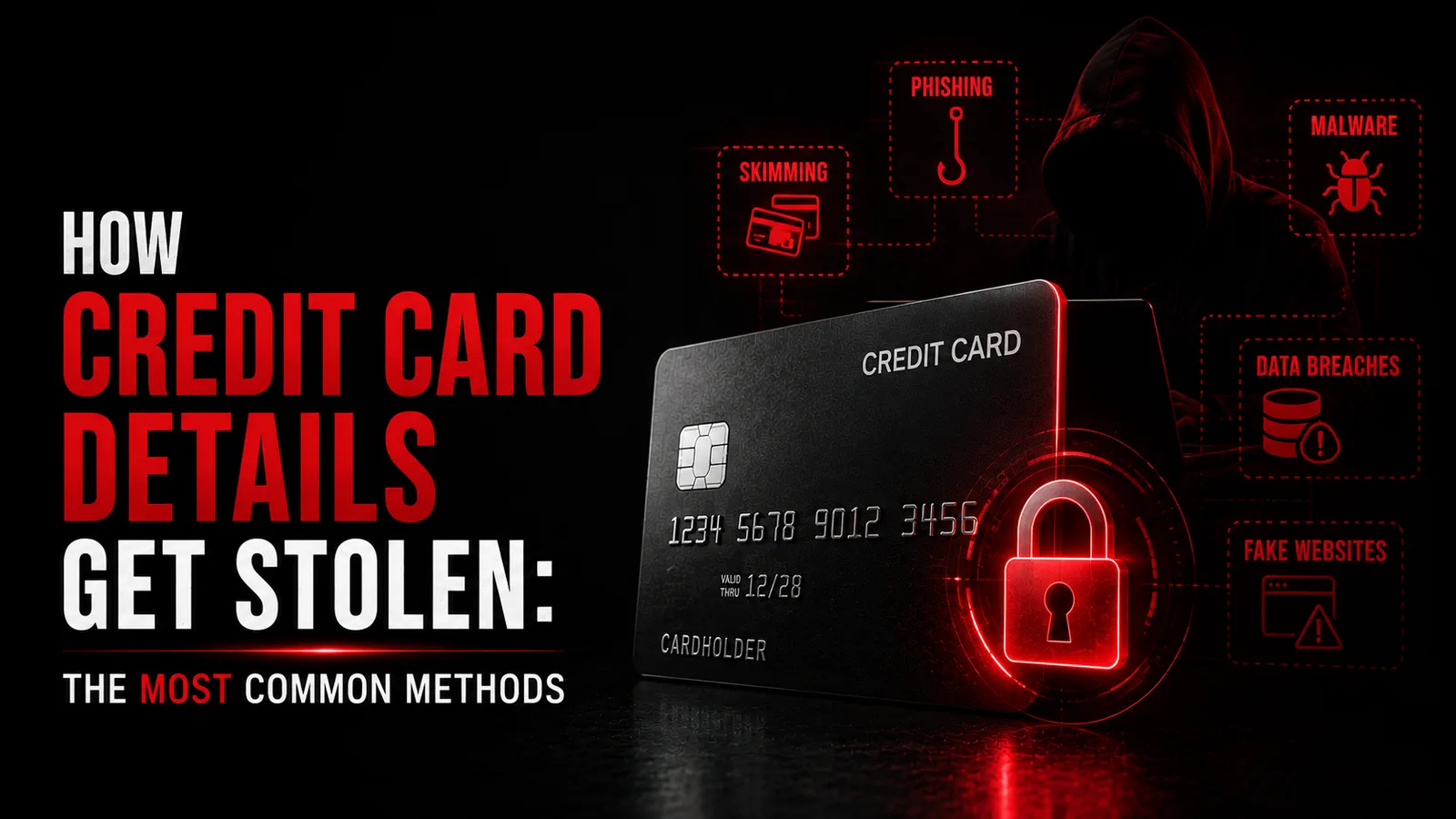
Credit card details can be stolen in several very different ways. Some attacks target individual consumers with phishing messages or fake websites. Others compromise merchants, payment pages, devices, databases, or physical card readers so criminals can collect payment information at scale.
Europol identifies data breaches, social engineering, data-stealing malware, and phishing as important sources of compromised payment-card data. PCI Security Standards Council and Visa also warn about physical and digital skimming, where criminals capture card information as customers use legitimate-looking payment environments.
Understanding these methods is useful because the defenses are different. A customer who knows how to recognize phishing is better protected from impersonation scams, while a merchant must also secure checkout scripts, payment systems, staff accounts, and stored payment data.
This article explains the most common theft methods from a defensive perspective. It intentionally avoids operational instructions that would help someone steal card data or bypass payment security.
Quick Answer: How Do Credit Card Details Get Stolen?
The most common routes include phishing and social engineering, data breaches, compromised e-commerce checkout pages, malware or account takeover, physical skimming devices, stolen or photographed cards, insecure handling of payment information, and compromised third-party vendors.
The exact information exposed can vary. A compromise may involve the Primary Account Number, expiration date, cardholder name, billing information, card-verification value, account credentials, or other personal data.
Not every incident exposes every field, and possession of stolen card data does not guarantee that an unauthorized payment will succeed because issuers and merchants use authentication, fraud analytics, transaction monitoring, and authorization controls.
1. Phishing and Social Engineering
Phishing is one of the most common ways criminals obtain financial information directly from people.
A phishing message may impersonate a bank, merchant, delivery company, government agency, streaming service, or other familiar organization. The message often tries to create urgency and directs the recipient to a fake website or asks them to provide sensitive information.
The Federal Trade Commission warns that phishing messages frequently attempt to steal account numbers, passwords, Social Security numbers, and other sensitive information.
For payment-card theft, the defensive lesson is simple: do not enter card or banking details merely because a message claims an account is locked, a package is delayed, a payment failed, or an urgent refund is waiting.
How to Recognize Payment Phishing
Common warning signs include unexpected requests for financial information, pressure to act immediately, links that lead to unfamiliar domains, messages claiming that a card must be 'verified,' and requests for passwords or one-time authentication codes.
A professional-looking logo does not prove that a message is genuine. Attackers can copy branding and website designs.
Instead of following an unexpected link, consumers should open the official banking app or type the organization's known website address themselves.
If a message claims to come from the card issuer, the safest approach is to contact the issuer using the number printed on the card or another official channel.
2. Fake Checkout and Payment Pages
A fake checkout page is designed to look like a legitimate merchant or payment service while sending entered information to criminals.
These pages can be reached through phishing links, malicious advertisements, fake stores, compromised search results, social-media scams, or QR codes.
The FTC warns that malicious QR codes can lead users to spoofed websites where information entered by the victim is stolen.
Consumers should be cautious when a site appears unexpectedly, uses unusual payment instructions, has a suspicious domain, or was reached through an unsolicited message.
3. E-Skimming and Compromised E-Commerce Sites
Digital skimming, also called e-skimming or web skimming, occurs when an attacker compromises an online store or payment page so card information is intercepted during checkout.

Europol describes digital skimming as the theft of payment-card data from customers of an online shop while transaction information is entered during checkout, often without the customer noticing anything unusual.
PCI SSC has repeatedly warned that malicious code inserted into e-commerce environments can capture payment information entered by customers.
This attack is particularly dangerous because the shopper may be using a real merchant website rather than an obviously fake page.
What Data Can Digital Skimming Expose?
The information captured depends on the compromised page and the fields entered by the customer.
Visa notes that digital-skimming incidents can expose information such as PAN, expiration date, CVV2, and personal information.
PCI SSC has also described online skimming malware collecting payment and identity information from checkout forms.
This is why merchants must protect the payment page itself rather than assuming HTTPS alone makes the checkout safe.
How Merchants Defend Against E-Skimming
PCI DSS v4.x includes stronger controls around payment-page scripts and detection of unauthorized changes.
PCI SSC's 2025 guidance on payment-page security emphasizes managing authorized scripts, verifying script integrity, and detecting unauthorized modifications to payment pages and HTTP headers.
Merchants should also reduce unnecessary third-party scripts, maintain secure software, patch vulnerabilities, use trusted payment providers, restrict administrative access, and monitor checkout changes.
Hosted or tokenized payment solutions can reduce the amount of sensitive payment data directly handled by the merchant environment.
4. Merchant and Processor Data Breaches
Payment data can also be stolen when attackers compromise a merchant, processor, service provider, or another organization that handles sensitive information.
Europol identifies data breaches as a major source of compromised card details used in payment fraud.
A breach can occur through vulnerable software, stolen administrator credentials, malware, exposed databases, insecure cloud configuration, or compromised vendors.
The scale can range from one small website to very large collections of payment records.
Why Data Minimization Matters
The less sensitive information an organization stores, the less information can be exposed if the organization is compromised.
PCI DSS is built around protecting payment-account data where it is stored, processed, or transmitted.
Merchants should avoid keeping card data simply because it might be convenient later and should use tokenization or trusted payment providers where appropriate.
Sensitive authentication data such as card-verification values receives particularly strict treatment under PCI standards.
5. Malware and Information-Stealing Software
Malware can steal information from infected computers or mobile devices.
Depending on the malware, criminals may target browser data, login credentials, screenshots, clipboard contents, keystrokes, files, or information entered into websites.
Europol specifically lists data-stealing malware among the sources of compromised card details.
Visa likewise notes that malware can be used to trick or compromise cardholders and that financial institutions rely on fraud monitoring to detect unusual activity.
How Consumers Reduce Malware Risk
Keep operating systems, browsers, applications, and security software updated.
Install software only from trusted sources and avoid opening unexpected attachments or running files sent by unknown people.
Use multi-factor authentication on banking, email, and important shopping accounts.
Because email accounts are often used for password resets, protecting email can indirectly protect stored payment methods and financial accounts.
6. Account Takeover
Sometimes criminals do not steal the physical card details first. Instead, they gain control of an online account that already contains saved payment methods.
Account takeover can result from phishing, reused passwords, credential stuffing, compromised email accounts, malware, or weak password-reset procedures.
Once inside an account, an attacker may attempt purchases, change delivery details, access personal information, or manipulate stored-payment settings.
Merchants should treat account security as part of payment security rather than assuming fraud prevention begins only when card numbers are entered.
How Merchants Reduce Account Takeover
Use secure authentication, suspicious-login detection, rate limits, bot protection, secure password resets, and multi-factor authentication for sensitive actions.
Monitor important account changes such as password resets, email changes, new devices, unusual delivery changes, and rapid purchase activity.
Administrative and customer-support accounts should receive especially strong protection because compromise can expose large numbers of customers.
Fraud controls should consider both the payment transaction and the state of the customer account.
7. Physical Card Skimming
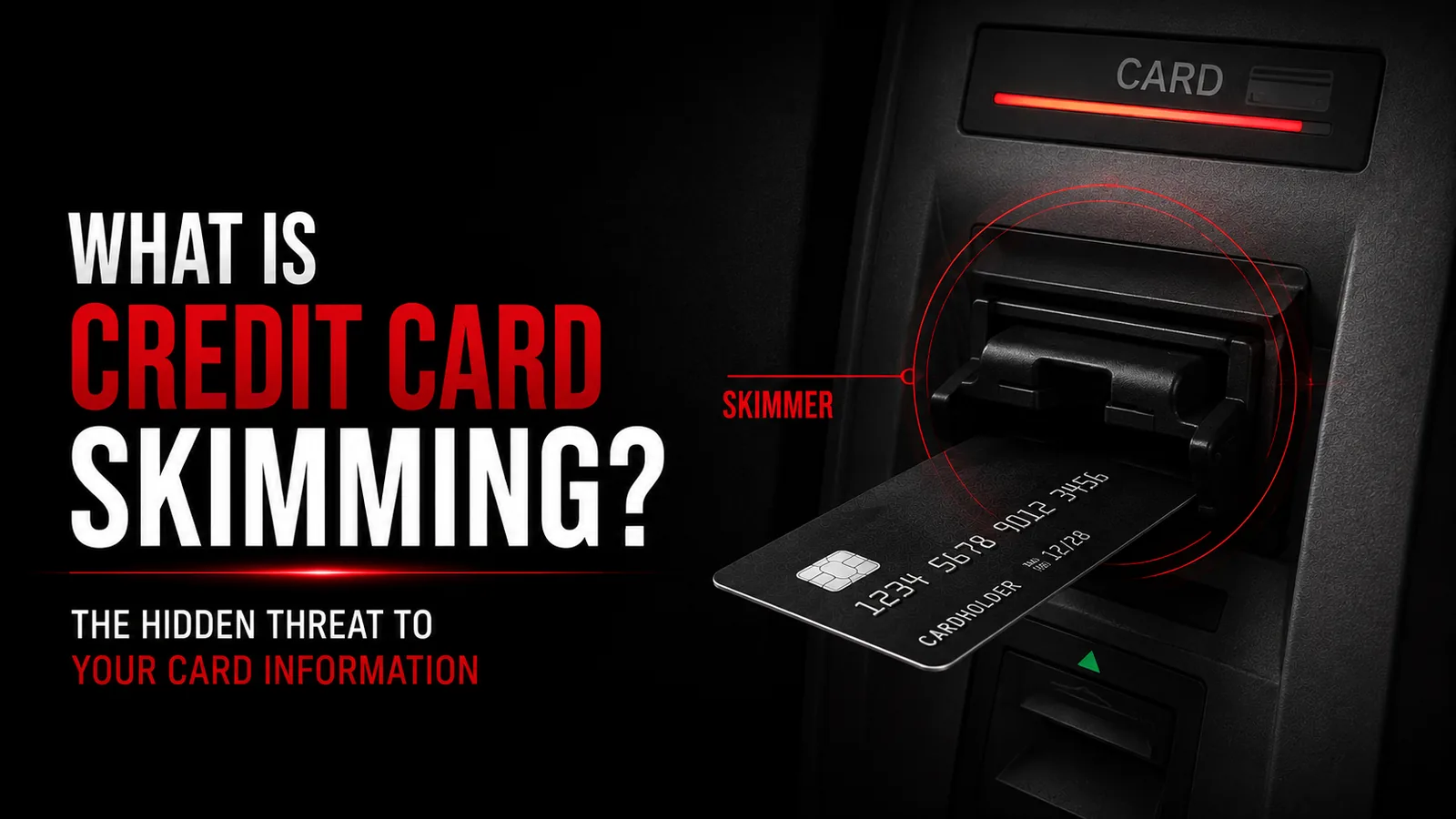
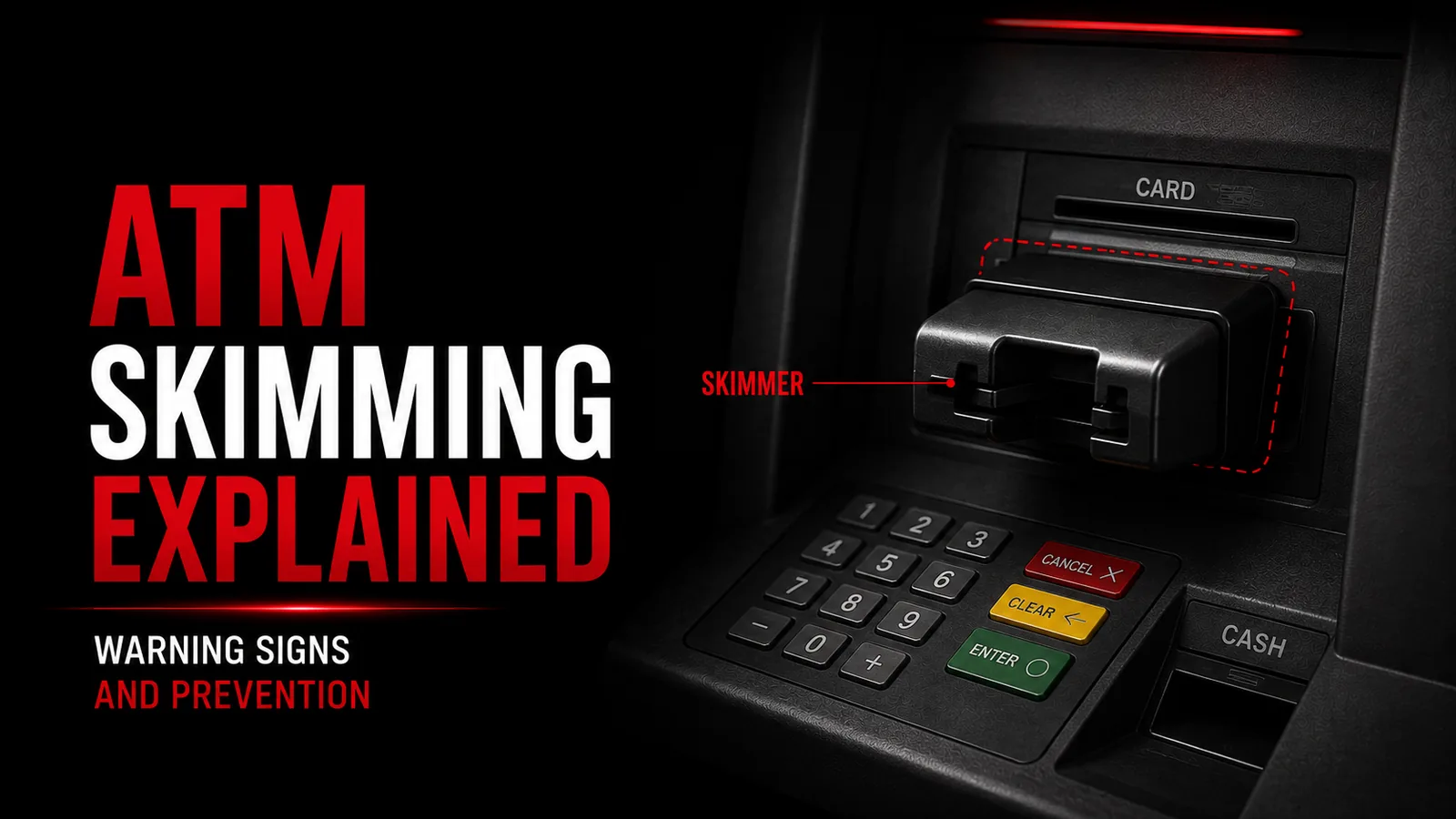
Physical skimming uses unauthorized hardware attached to or hidden within a legitimate-looking card reader to capture payment information.
PCI SSC describes skimming devices as hardware criminals attach to card readers to obtain payment-card data.
The FTC similarly warns that illegal skimmers can be placed on payment terminals and can capture magnetic-stripe information without the customer realizing it.
ATMs, fuel pumps, unattended terminals, and other public card readers have historically been targets.
How Consumers Reduce Physical Skimming Risk
Inspect unfamiliar or unattended payment terminals for obvious signs of tampering, loose components, or unusual overlays.
When possible, use EMV chip or contactless payment instead of magnetic-stripe fallback.
Cover the keypad when entering a PIN, especially at ATMs and unattended terminals.
Enable transaction alerts so suspicious activity can be detected quickly.
If a terminal looks altered or behaves unexpectedly, use another payment method or location and report the terminal to the operator.
8. Lost, Stolen, or Photographed Cards
A criminal does not always need sophisticated technology. A lost or stolen physical card can expose the card number and other information printed on it.
Card details may also be captured when a card is photographed, copied, or handled by an untrusted person.

Consumers should avoid sharing photographs that reveal payment-card information and should keep cards out of sight when they are not being used.
If a card is lost, contact the issuer promptly and use the issuer's lock or freeze feature where available.
9. Insecure Storage and Human Error
Payment information can be exposed when organizations handle it carelessly.
Examples include placing card details in unprotected documents, email, support tickets, spreadsheets, logs, recordings, or other systems that were never designed to store payment information securely.
PCI DSS exists partly to reduce these practices by requiring organizations to identify where payment data exists and protect it appropriately.
Merchants should train staff not to copy sensitive card information into general-purpose systems and should design payment flows that minimize employee access.
10. Compromised Third-Party Vendors
Modern websites and businesses depend on many third parties, including payment providers, analytics systems, plugins, customer-support platforms, hosting providers, and software vendors.
A compromise at a third party can sometimes expose merchant systems or introduce malicious code into an otherwise legitimate website.
PCI SSC's e-commerce guidance places significant emphasis on controlling and monitoring payment-page scripts partly because third-party JavaScript can create additional attack surface.
Merchants should inventory vendors, limit permissions, remove unused integrations, and monitor changes to critical systems.
11. Publicly Exposed or Misconfigured Systems
Sensitive information can leak because of configuration mistakes rather than a sophisticated intrusion.
Examples include databases or backups accidentally made publicly accessible, weak access controls, exposed development systems, or credentials committed to public repositories.
Organizations should regularly review cloud permissions, secrets management, access controls, backups, and development practices.
Security testing should focus on preventing accidental exposure as well as deliberate attack.
12. Social Engineering of Employees
Attackers may target merchant employees rather than consumers.
They can impersonate executives, vendors, IT staff, customers, or payment providers in an attempt to obtain credentials or convince staff to change systems.
If an employee account with access to payment systems is compromised, the attacker may gain a path into more sensitive infrastructure.
Merchants should train staff, require strong authentication for administrative access, verify unusual requests through a second channel, and restrict privileges according to job role.
Which Card Details Are Criminals Usually Trying to Obtain?
The answer depends on the attack and the payment environment.
Potentially exposed information can include the PAN, expiration date, cardholder name, billing information, card-verification value, account login credentials, personal information, and in some physical attacks magnetic-stripe data.
PCI SSC distinguishes ordinary cardholder data from sensitive authentication data because different elements carry different storage and security requirements.
Consumers should treat the complete payment credential as sensitive even if one individual field seems harmless by itself.
Does a Stolen Card Number Automatically Work?
No.
Modern payment systems use multiple controls beyond the PAN.
These can include card-verification checks, address checks, EMV 3-D Secure authentication, tokenization, issuer fraud analytics, merchant fraud scoring, device intelligence, transaction monitoring, and payment authorization.
A compromised credential therefore creates risk, but it does not guarantee that an unauthorized transaction will be approved.
Warning Signs Your Card Information May Be Compromised
Possible warning signs include unfamiliar transactions, unexpected small authorization attempts, fraud alerts, authentication prompts for purchases you did not initiate, unexpected card declines, password-reset messages, or notifications that account details were changed.
Not every unusual event proves card theft, but unexplained activity should be investigated quickly.
Consumers should review account alerts and statements regularly rather than waiting for a monthly statement to discover suspicious activity.
What to Do If Your Card Details Are Stolen
Contact the card issuer promptly using an official channel.
Report transactions you do not recognize and follow the issuer's instructions regarding locking, replacing, or reissuing the card.
The FTC advises consumers who paid a scammer by credit or debit card to contact the card issuer, report the fraudulent transaction, and request reversal where applicable.
If phishing or account takeover may also have occurred, change affected passwords, secure the email account, enable multi-factor authentication, and review other accounts for reused credentials.
Continue monitoring the account even after the card is replaced.
How Consumers Can Protect Card Information
Use trusted merchants and avoid payment links in unsolicited messages.
Use multi-factor authentication for banking, email, and shopping accounts.

Keep devices and browsers updated.
Use transaction notifications when available.
Prefer chip, contactless, tokenized wallets, and secure merchant checkout flows over unnecessary magnetic-stripe use.
Do not share PINs, banking passwords, or one-time authentication codes.
Review statements and report unauthorized activity promptly.
How Merchants Can Protect Payment Data
Use PCI DSS-compliant payment infrastructure and trusted payment providers.
Minimize storage of payment-account data and use tokenization where appropriate.
Protect administrative access with multi-factor authentication.
Secure and monitor payment-page scripts.
Patch software and remove unsupported components.
Segment critical systems and restrict employee access.
Monitor transactions for abnormal behavior.
Use EMV 3-D Secure and other authentication controls where appropriate.
Maintain incident-response procedures so compromises can be contained quickly.
Why Layered Security Matters
Every theft method targets a different weakness.
Phishing targets human trust. Malware targets devices. E-skimming targets checkout code. Physical skimming targets payment terminals. Data breaches target business systems. Account takeover targets identity and credentials.
No single defense can stop all of these.
The strongest payment-security strategy therefore combines consumer awareness, secure devices, merchant security, tokenization, authentication, PCI DSS, fraud analytics, and transaction monitoring.
Common Myths
Myth: Card details are stolen only from shady websites. Reality: legitimate merchants can also be compromised through breaches or digital skimming.
Myth: HTTPS guarantees that a checkout page is safe. Reality: HTTPS protects the connection, but malicious code running on a compromised website can still intercept information before or during submission.
Myth: A chip card cannot have its details stolen. Reality: EMV greatly strengthens card-present security, but phishing, e-commerce compromise, account takeover, and other attacks can still expose payment information.
Myth: Criminals always need the physical card. Reality: card-not-present fraud can involve remotely stolen payment credentials.
Myth: One stolen field guarantees a successful payment. Reality: authorization and fraud controls use multiple signals.
Myth: Only consumers need to protect card data. Reality: merchants, processors, vendors, and payment platforms all play important security roles.
Conclusion
There is no single method by which credit card details are stolen. Payment information can be compromised through deceptive messages, hacked businesses, malicious checkout code, infected devices, stolen accounts, physical skimmers, careless data handling, and third-party compromise.
The common theme is that criminals look for whichever part of the payment lifecycle is easiest to exploit: the person, the device, the merchant, the payment page, the account, or the physical terminal.
That is why strong payment security must be layered. Consumers need phishing awareness, secure accounts, safe devices, and transaction monitoring. Merchants need PCI DSS controls, hardened payment pages, restricted access, tokenization, modern authentication, vendor security, and effective fraud detection.
Understanding how card details are stolen is valuable not because it teaches how to commit fraud, but because it shows where defenses must be placed before payment data is exposed.