
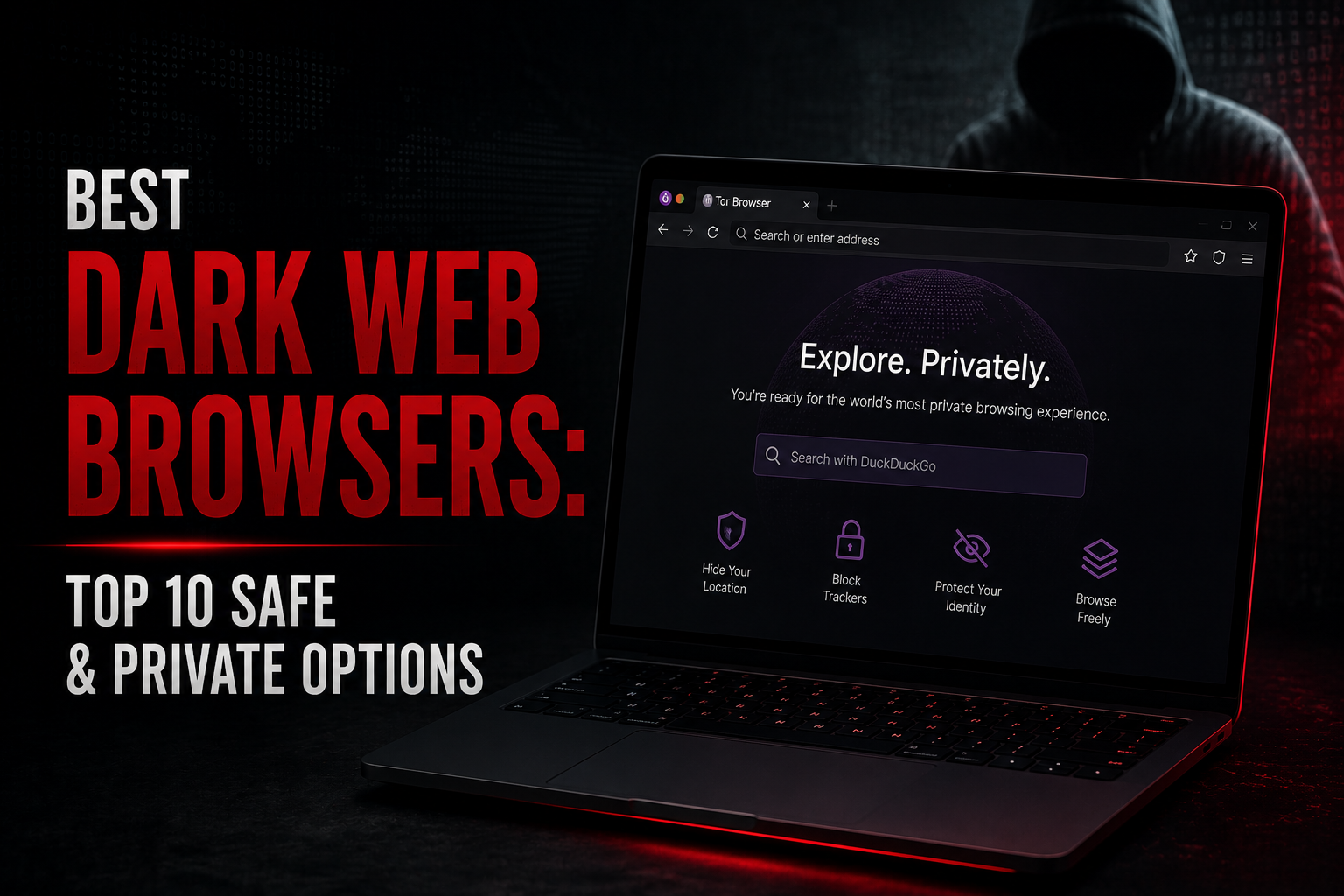


Best Dark Web Browsers: Top 10 Safe & Private Options
Complete Guide to Anonymous Browsing & Dark Web Access
SEO Title: Best Dark Web Browsers 2024: Top 10 Safe & Private Options for Anonymous Access
Meta Description: Discover the best dark web browsers for privacy and security. Compare Tor, Brave, Firefox, and 7 more options. Learn how to access .onion sites safely and anonymously.
- Understanding the Dark Web
- How Dark Web Browsers Work
- Top 10 Dark Web Browsers Compared
- Detailed Browser Reviews
- Security & Privacy Features
- Setup & Configuration Guides
- Safety Best Practices
- Legal & Ethical Considerations
Understanding the Dark Web
What Is the Dark Web?
The Three Layers of the Internet:
| Layer | Description | Access Method |
| Surface Web | Indexed by search engines (Google, Bing) | Standard browsers |
| Deep Web | Unindexed content (databases, private sites) | Login credentials |
| Dark Web | Intentionally hidden, requires special software | Dark web browsers |
Technical Definition:
The dark web refers to websites hosted on overlay networks that use non-standard protocols and ports, specifically requiring browsers capable of routing through anonymizing networks like Tor (The Onion Router).
Legitimate Uses:
- Investigative journalism
- Whistleblower platforms
- Privacy protection for activists
- Secure communication in oppressive regimes
- Research and cybersecurity analysis
- Anonymous tip lines
How Dark Web Browsers Work
The Technology Behind Anonymous Browsing
Onion Routing Explained:
Standard Connection:You → ISP → Website
↑
Direct traceable path
Tor/Onion Routing:
You → Entry Node → Middle Node → Exit Node → Website
↑
Encrypted layers (like an onion)
Each node only knows previous/next hop
No single point knows full path
Key Features:
- Multi-layer encryption: Each relay decrypts one layer
- Circuit rotation: New path every 10 minutes (configurable)
- No logs: Nodes don't store connection data
- Decentralized: Volunteer-run network, no central authority
Top 10 Dark Web Browsers Compared
Quick Comparison Table
| Browser | Best For | Tor Integration | Privacy Level | Speed | Ease of Use |
| Tor Browser | Maximum anonymity | Built-in | ★★★★★ | Slow | Easy |
| Brave | Daily browsing + Tor | Built-in | ★★★★☆ | Fast | Easy |
| Firefox + Tor | Customization | Manual | ★★★★☆ | Medium | Moderate |
| Whonix | Maximum security | System-wide | ★★★★★ | Slow | Complex |
| Tails OS | Portable anonymity | Built-in | ★★★★★ | Medium | Moderate |
| Subgraph OS | Security-focused | Built-in | ★★★★★ | Medium | Complex |
| I2P Browser | I2P network | Built-in | ★★★★☆ | Medium | Moderate |
| Freenet | Decentralized storage | Built-in | ★★★☆☆ | Slow | Complex |
| ZeroNet | P2P websites | Built-in | ★★★☆☆ | Medium | Moderate |
| Pale Moon | Lightweight | Manual | ★★★☆☆ | Fast | Easy |
Detailed Browser Reviews
1. Tor Browser - The Gold Standard
Overview:
The official browser of the Tor Project, specifically designed for anonymous browsing and dark web access.
Key Features:
- Built-in Tor network integration
- Firefox ESR base with security hardening
- NoScript and HTTPS Everywhere pre-installed
- Circuit display showing current path
- Security levels: Standard, Safer, Safest
Pros:
- Maximum anonymity out of the box
- Regular security updates
- No configuration required
- Isolated from main system
- Prevents browser fingerprinting
Cons:
- Slowest browsing experience
- Some sites block Tor exit nodes
- CAPTCHA challenges more frequent
- Limited extension support
Best For: Maximum anonymity, accessing .onion sites, whistleblowing, journalism
Download: torproject.org

2. Brave Browser - Privacy + Performance
Overview:
Chromium-based browser with built-in privacy features and optional Tor private windows.
Key Features:
- Built-in ad/tracker blocking
- Tor private browsing mode
- HTTPS Everywhere
- Script blocking
- Fingerprinting protection
Tor Integration:
- Private windows with Tor (Beta)
- Routes through Tor network
- Can access .onion sites
- Separate from main Tor Browser
Pros:
- Fast performance for regular browsing
- Built-in privacy features
- Optional Tor mode
- Modern Chromium interface
- Rewards program (optional)
Cons:
- Tor mode not as robust as Tor Browser
- Based on Chromium (Google concerns)
- Smaller Tor network contribution
- Still in Beta for Tor features
Best For: Daily browsing with occasional dark web access, users wanting speed + privacy
Download: brave.com
3. Mozilla Firefox - Customizable Privacy
Overview:
Open-source browser that can be configured for dark web access with Tor proxy settings.
Setup Required:
- Install Firefox
- Configure proxy settings: SOCKS5 localhost:9050
- Install privacy extensions
- Modify about:config settings
Recommended Extensions:
- TorButton (discontinued, use manual config)
- HTTPS Everywhere
- uBlock Origin
- Privacy Badger
- NoScript
Pros:
- Highly customizable
- Strong privacy foundation
- Regular security updates
- Large extension ecosystem
- Independent organization
Cons:
- Requires manual Tor configuration
- Not as anonymous as Tor Browser
- Fingerprinting concerns
- More setup required
Best For: Technical users wanting customization, privacy-conscious regular browsing
Download: mozilla.org/firefox
4. Whonix - Isolated Security
Overview:
Debian-based operating system designed for advanced security and anonymity, runs inside virtual machines.
Architecture:
- Gateway: Connects to Tor network only
- Workstation: Isolated from internet, routes through Gateway
- Isolation: Malware in Workstation can't reveal real IP
Key Features:
- System-wide Tor routing
- Isolated environment
- Pre-configured applications
- Leak-proof design
- Regular security updates
Pros:
- Maximum isolation and security
- System-wide anonymity
- Protection against malware IP leaks
- Pre-hardened configuration
- Free and open source
Cons:
- Requires virtualization software (VirtualBox/Qubes)
- Resource intensive
- Complex setup
- Slow performance
- Overkill for casual users
Best For: High-security requirements, journalists, activists, researchers

Download: whonix.org
5. Tails OS - Portable Anonymity
Overview:
Live operating system that you start on almost any computer from a USB stick or DVD.
Key Features:
- Leaves no trace on computer
- All internet traffic through Tor
- Built-in encryption tools
- Pre-installed privacy applications
- Amnesic (forgets everything on shutdown)
Included Tools:
- Tor Browser
- Pidgin (encrypted chat)
- Thunderbird (email)
- LibreOffice
- GIMP
- Metadata cleaning tools
Pros:
- Complete portable anonymity
- No installation required
- Leaves no digital footprint
- Pre-configured security
- Free and open source
Cons:
- Requires USB/DVD boot
- Slower than installed OS
- Limited storage (unless persistent volume)
- Not for daily use
- Hardware compatibility issues
Best For: Temporary secure access, public computers, travel, emergency anonymity
Download: tails.boum.org
6. Subgraph OS - Security-Focused
Overview:
Linux distribution designed for secure computing with hardened kernel and sandboxed applications.
Key Features:
- Oz sandboxing framework
- Mandatory Access Control (MAC)
- Kernel hardening
- Metaproxy for application routing
- Tor integration
Security Features:
- Application sandboxing
- Filesystem encryption
- Secure boot
- Automatic updates
- Memory protection
Pros:
- Strong application isolation
- Hardened against exploits
- Modern security architecture
- User-friendly for Linux
- Active development
Cons:
- Limited hardware support
- Smaller user base
- Still in alpha/beta
- Requires Linux familiarity
- Fewer pre-installed apps
Best For: Security researchers, advanced users, those needing exploit resistance
Download: subgraph.com
7. I2P Browser - Anonymous Network
Overview:
Browser for I2P (Invisible Internet Project), an anonymous network layer similar to but separate from Tor.
How I2P Differs from Tor:
- Peer-to-peer network (not volunteer relays)
- Focused on hidden services (eepsites)
- Garlic routing (bundles messages)
- Self-healing network
- Built for sustained connections
Key Features:
- Built-in I2P router
- Access to .i2p sites
- Anonymous file sharing
- Email and chat services
- BitTorrent integration
Pros:
- Decentralized network
- Good for sustained connections
- Built-in applications
- Self-contained ecosystem
- Resistant to blocking
Cons:
- Smaller network than Tor
- Slower for web browsing
- Different threat model
- Java-based (performance)
- Smaller user base
Best For: Long-term anonymous services, file sharing, messaging, I2P-specific sites
Download: geti2p.net
8. Freenet - Decentralized Storage
Overview:
Peer-to-peer platform for censorship-resistant publishing and communication, not traditional web browsing.
Key Features:
- Decentralized data storage
- Censorship resistant
- Anonymous publishing
- Friend-to-friend network
- Darknet mode available
How It Works:
- Files encrypted and distributed across network
- No central server
- Request routing through multiple nodes
- Plausible deniability for stored data
Pros:

- Highly censorship resistant
- No central point of failure
- Anonymous publishing
- Data persists without publisher
- Free and open source
Cons:
- Not for regular web browsing
- Slow access times
- Storage space required
- Complex concept
- Limited content
Best For: Publishing sensitive documents, censorship-resistant content, long-term storage
Download: freenetproject.org
9. ZeroNet - P2P Websites
Overview:
Decentralized network using Bitcoin cryptography and BitTorrent technology for peer-to-peer websites.
Key Features:
- No hosting costs
- Censorship resistant
- Works offline
- Bitcoin address based
- No central servers
How It Works:
- Sites hosted by visitors (peers)
- Bitcoin cryptography for identity
- BitTorrent for content distribution
- Works without internet (local network)
Pros:
- No server required
- Censorship resistant
- Works offline
- Fast once loaded
- Simple to use
Cons:
- Limited content
- Smaller network
- Security concerns
- Python-based
- Not truly anonymous without Tor/VPN
Best For: Decentralized blogging, simple websites, offline access, experimenting with P2P
Download: zeronet.io
10. Pale Moon - Lightweight Option
Overview:
Firefox fork optimized for efficiency and customization, can be configured for privacy.
Privacy Configuration:
- Manual Tor proxy setup required
- Privacy-focused extensions
- Lightweight footprint
- Legacy extension support
Pros:
- Fast performance
- Low resource usage
- Highly customizable
- Independent development
- Legacy add-on support
Cons:
- Manual Tor configuration
- Smaller security team
- Not specifically designed for anonymity
- Fingerprinting concerns
- Outdated base (Goanna engine)
Best For: Older hardware, users wanting lightweight browser, customization enthusiasts
Download: palemoon.org
Security & Privacy Features
Essential Features Comparison
| Feature | Tor Browser | Brave | Whonix | Tails | I2P |
| Built-in Tor | ✓ | Partial | ✓ | ✓ | ✗ |
| Ad Blocking | ✓ | ✓ | ✓ | ✓ | ✗ |
| Script Blocking | ✓ | ✓ | ✓ | ✓ | ✓ |
| HTTPS Force | ✓ | ✓ | ✓ | ✓ | ✗ |
| Fingerprint Protection | ✓ | ✓ | ✓ | ✓ | ✓ |
| No Logging | ✓ | Partial | ✓ | ✓ | ✓ |
| OS Isolation | ✗ | ✗ | ✓ | ✓ | ✗ |
| Portable | ✗ | ✗ | ✗ | ✓ | ✗ |
Understanding Anonymity Levels
Level 1 - Basic Privacy:
- VPN + Standard browser
- Hides IP from websites
- VPN provider knows identity
- Browser fingerprinting possible
Level 2 - Enhanced Privacy:
- Tor Browser
- Multi-hop routing
- Entry guard protection
- Some fingerprinting protection
Level 3 - Strong Anonymity:
- Tor Browser + Safe settings
- No JavaScript
- HTTPS only
- Minimal fingerprinting
Level 4 - Maximum Security:
- Whonix/Tails
- Isolated environment
- System-wide Tor routing
- Amnesic operation (Tails)
Setup & Configuration Guides
Tor Browser Setup
Download & Install:
- Visit torproject.org (verify HTTPS)
- Download for your OS
- Verify signature (important!)
- Install or extract
- Launch Tor Browser
Security Level Configuration:
Standard: All features enabled- Best compatibility
- Some tracking possible
Safer: JavaScript disabled on non-HTTPS
- Safer but some sites break
- Click-to-play media
Safest: JavaScript disabled everywhere

- Maximum security
- Many sites won't work
- Manual allow exceptions
Circuit Location:
- Click onion icon in address bar
- View current country path
- New circuit for this site (if slow/blocked)
- New identity (new circuits + clear cookies)
Brave Tor Mode Setup
Enable Tor:
- Download and install Brave
- Menu → New Private Window with Tor
- Or: brave://settings/privacy → Tor settings
- Toggle "Private window with Tor"
Access .onion Sites:
- Use Tor private window
- Enter .onion address
- Note: Not as robust as Tor Browser
Limitations:
- Tor mode is Beta
- Slower than regular browsing
- Some .onion sites may not work
- Use Tor Browser for critical anonymity
Whonix Installation
Requirements:
- VirtualBox or KVM
- 4GB+ RAM recommended
- 20GB+ disk space
Steps:
- Download Whonix Gateway and Workstation
- Import both into VirtualBox
- Start Gateway first (connects to Tor)
- Start Workstation (routes through Gateway)
- All Workstation traffic through Tor
Verification:
- Check IP in Workstation (should differ from host)
- Test DNS leaks
- Verify no clearnet access
Tails OS Installation
Create Bootable USB:
- Download Tails ISO
- Verify signature
- Use Etcher or Rufus to create bootable USB
- Configure BIOS to boot from USB
- Boot into Tails
Persistent Storage (Optional):
- Configure during first boot
- Encrypted volume for files/settings
- Choose what to persist
- Still amnesic for non-persistent data
Safety Best Practices
Do's and Don'ts
DO:
- ✓ Keep browser updated
- ✓ Use safest security level when possible
- ✓ Verify .onion addresses from trusted sources
- ✓ Use HTTPS whenever possible
- ✓ Clear cookies between sessions
- ✓ Use separate identities for different activities
- ✓ Verify downloads with signatures
- ✓ Use additional encryption for sensitive files
DON'T:
- ✗ Maximize browser window (fingerprinting)
- ✗ Enable JavaScript on untrusted sites
- ✗ Download files without verification
- ✗ Use personal accounts over Tor
- ✗ Enable browser plugins (except bundled)
- ✗ Torrent over Tor (slows network)
- ✗ Open downloaded documents while online
Common Mistakes
1. Logging Into Personal Accounts
- Links identity to Tor session
- Correlates activities
- Defeats anonymity purpose
2. Downloading Files
- Can contain malware
- May phone home outside Tor
- Verify in isolated environment
3. Changing Browser Settings
- May reduce anonymity
- Enable fingerprinting
- Stick to defaults
4. Using HTTP Instead of HTTPS
- Exit node can see traffic
- Man-in-the-middle attacks possible
- HTTPS Everywhere helps
Legal & Ethical Considerations
Legitimate Uses
Legal Applications:
- Investigative journalism
- Whistleblowing platforms
- Privacy protection
- Circumventing censorship
- Research and education
- Secure communication
- Anonymous tip lines
Examples:
- Journalists protecting sources
- Activists in oppressive regimes
- Researchers studying cybercrime
- Whistleblowers reporting misconduct
- Citizens bypassing internet censorship
Illegal Activities to Avoid
Prohibited Actions:
- Accessing illegal content
- Purchasing illegal goods/services
- Hiring hitmen (most are scams)
- Distributing malware
- Planning criminal activities
- Harassment or threats
- Fraud schemes
Reality Check:
- Law enforcement operates on dark web
- Many "services" are scams
- Anonymity isn't absolute
- Illegal activities have consequences
Jurisdictional Considerations
Legal Status by Country:
| Country | Tor Status | Notes |
| USA | Legal | Protected speech |
| EU | Legal | Privacy right |
| Russia | Restricted | Requires VPN |
| China | Blocked | Illegal to use |
| Iran | Blocked | Illegal to use |
| Turkey | Restricted | Censorship |
| North Korea | Illegal | Complete ban |
Travel Considerations:
- Some countries ban Tor
- Border searches of devices
- Encrypted data may be questioned
- Know local laws
Summary: Choosing the Right Browser
Decision Matrix
For Maximum Anonymity:
→ Tor Browser (easiest) or Whonix (most secure)
For Daily + Occasional Dark Web:
→ Brave with Tor mode
For Portable Security:
→ Tails OS on USB
For Research/Education:
→ Tor Browser or I2P Browser
For High-Security Requirements:
→ Whonix or Subgraph OS
Key Takeaways
- Tor Browser is the standard for dark web access - start here
- No browser provides absolute anonymity - operational security matters
- Keep updated - security vulnerabilities are constantly discovered
- Layer security - browser is one component of privacy
- Legal uses are numerous and important - technology is neutral
- Verify sources - many scams exist on dark web
- Practice safety - follow best practices to maintain anonymity