


Introduction
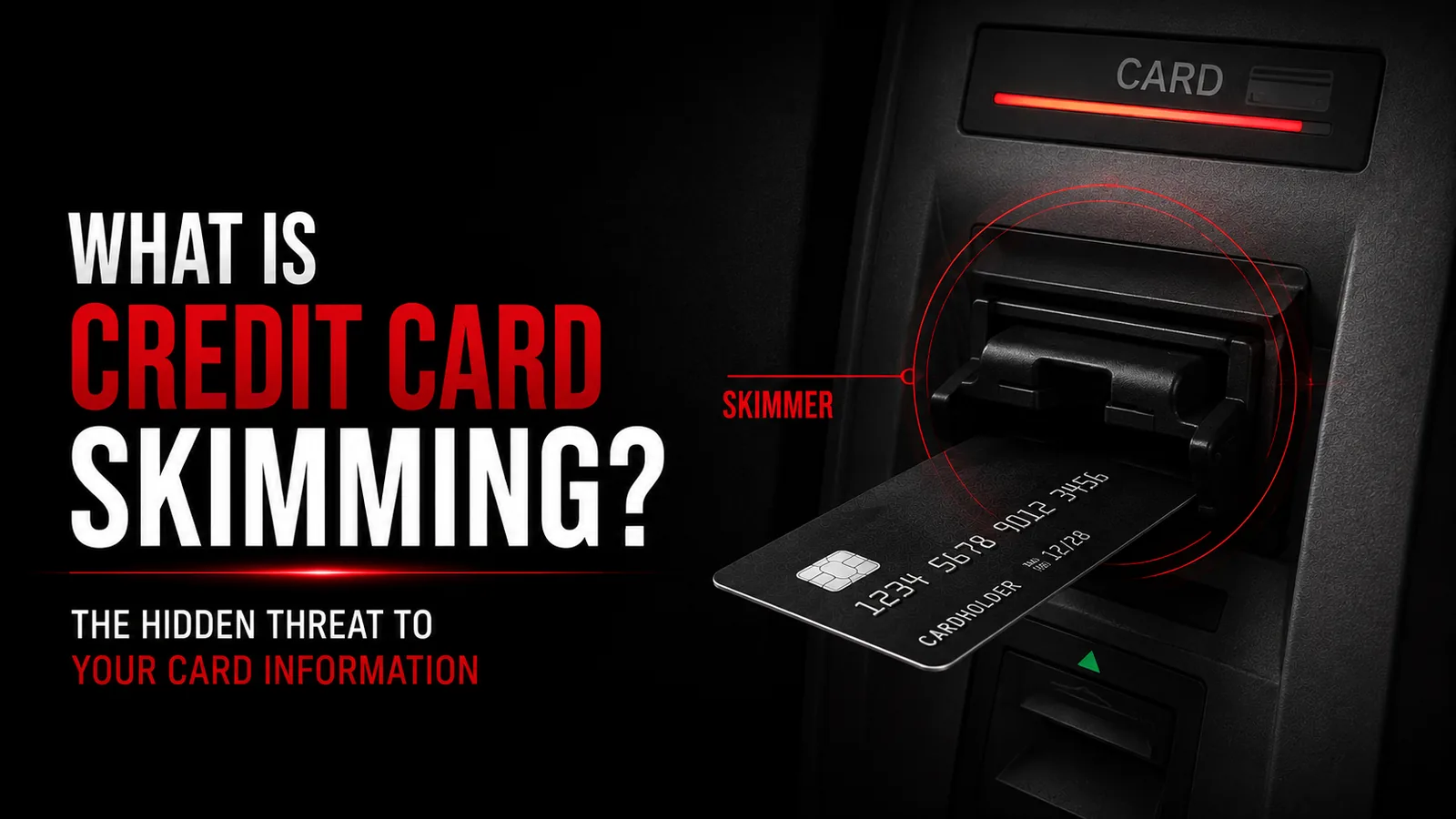
Credit card skimming is the unauthorized capture of payment-card information from a card or payment terminal. Criminals typically target card readers, ATMs, fuel pumps, unattended terminals, or other places where a customer inserts or swipes a card.
PCI Security Standards Council defines skimming as the unauthorized capture and transfer of payment data to another source for fraudulent use. The Federal Trade Commission similarly describes skimmers as illegal card readers attached to payment terminals that capture data from a card's magnetic stripe.
Modern EMV chip and contactless technologies have made traditional counterfeit-card fraud much harder because they generate dynamic transaction security information rather than relying only on static magnetic-stripe data.
However, skimming has not disappeared. Older terminals, magnetic-stripe fallback, tampered devices, PIN theft, and other forms of payment-terminal compromise can still create risk.
This article explains credit card skimming from a defensive perspective, including how it works at a high level, where it occurs, warning signs, consumer precautions, merchant defenses, and what to do if a card may have been compromised.
Quick Answer: What Is Credit Card Skimming?
Credit card skimming is the unauthorized collection of payment-card data through a compromised or altered card-reading device.
A skimmer may be attached to the outside of a legitimate reader or concealed within a terminal. Its purpose is to capture payment information as a customer uses the card.
Traditional skimming mainly targets data stored on the magnetic stripe. Criminals may also attempt to obtain a PIN through a hidden camera, fake keypad overlay, social engineering, or another method.
The strongest consumer defenses include using EMV chip or contactless payments where available, protecting PIN entry, monitoring transaction alerts, and avoiding terminals that appear tampered with.
How Does Card Skimming Work at a High Level?
A skimming attack generally involves altering or supplementing a legitimate payment terminal so that information is captured when a customer uses the card.
PCI SSC describes skimming devices as unauthorized hardware that criminals attach to card readers to sweep up payment data.
The customer may not notice anything unusual because the legitimate transaction can still proceed while the unauthorized device captures information in the background.
This is why physical inspection, secure terminal management, and modern chip/contactless acceptance matter.
This article intentionally avoids construction details, equipment specifications, or instructions that could help someone build or deploy a skimming device.
What Information Can a Skimmer Capture?
The exact information depends on the payment method and compromise.
Traditional card skimming is primarily associated with magnetic-stripe information. PCI SSC describes skimming as copying payment-card numbers and, in some cases, PIN information for fraudulent use.
A separate method may be used to observe a PIN, such as a tampered keypad or hidden camera.
Modern EMV chip transactions generate dynamic security data and are designed to make counterfeit use of copied card information much harder.
Consumers should nevertheless treat suspected terminal tampering as a serious card-security incident and contact the issuer promptly.
Magnetic Stripe vs EMV Chip
The magnetic stripe stores static information that can be read when the card is swiped.
EMV chips are designed differently. EMVCo explains that chip transactions generate dynamic transaction security information and that the payment information stored on the chip is difficult to counterfeit.
This has significantly reduced traditional counterfeit fraud at chip-enabled point-of-sale terminals.
For that reason, consumers should generally insert the chip or use contactless payment rather than deliberately choosing magnetic-stripe fallback when chip or tap is available.
Merchants should keep chip functionality working correctly so customers are not unnecessarily forced back to less secure payment methods.
Can an EMV Chip Be Skimmed Like a Magnetic Stripe?
Traditional magnetic-stripe skimming does not translate directly to EMV chip security.
A criminal may still be able to capture some card information in a compromised environment, but copying that information does not reproduce the chip's dynamic cryptographic capabilities.
EMVCo states that EMV chip specifications are designed to reduce fraud by using secure contact and contactless transactions that provide transaction-specific security.
That is why stealing static information from a chip-enabled card does not automatically allow an attacker to create a functioning counterfeit chip card.
The payment ecosystem still needs broader fraud controls because criminals may attempt other forms of misuse using compromised information.
What About Contactless Card Skimming?
Consumers sometimes worry that someone can simply stand nearby and steal everything needed from a contactless card.

Visa states that contactless skimming is very limited in scope and that each contactless transaction generates transaction-specific security information.
EMV contactless payments use dynamic security features that make captured information substantially less useful for fraudulent reuse than static magnetic-stripe data.
That does not mean every form of payment fraud is impossible. It means modern tap-to-pay technology is specifically designed to reduce the usefulness of copied payment information.
Using a phone-based wallet can add further protections such as tokenization and device authentication.
Where Are Skimmers Commonly Found?
Historically, skimming has been associated with locations where payment terminals are unattended or easily accessible.
Examples can include ATMs, fuel pumps, ticket machines, vending environments, standalone kiosks, and retail point-of-sale terminals.
PCI SSC warns merchants that terminals positioned where unauthorized people can easily reach them may be more vulnerable to tampering.
The presence of a card reader in one of these locations does not mean it is compromised. The risk arises when criminals can alter the terminal without being detected.
Both consumers and merchants benefit from routine inspection and tamper-awareness.
ATM Skimming
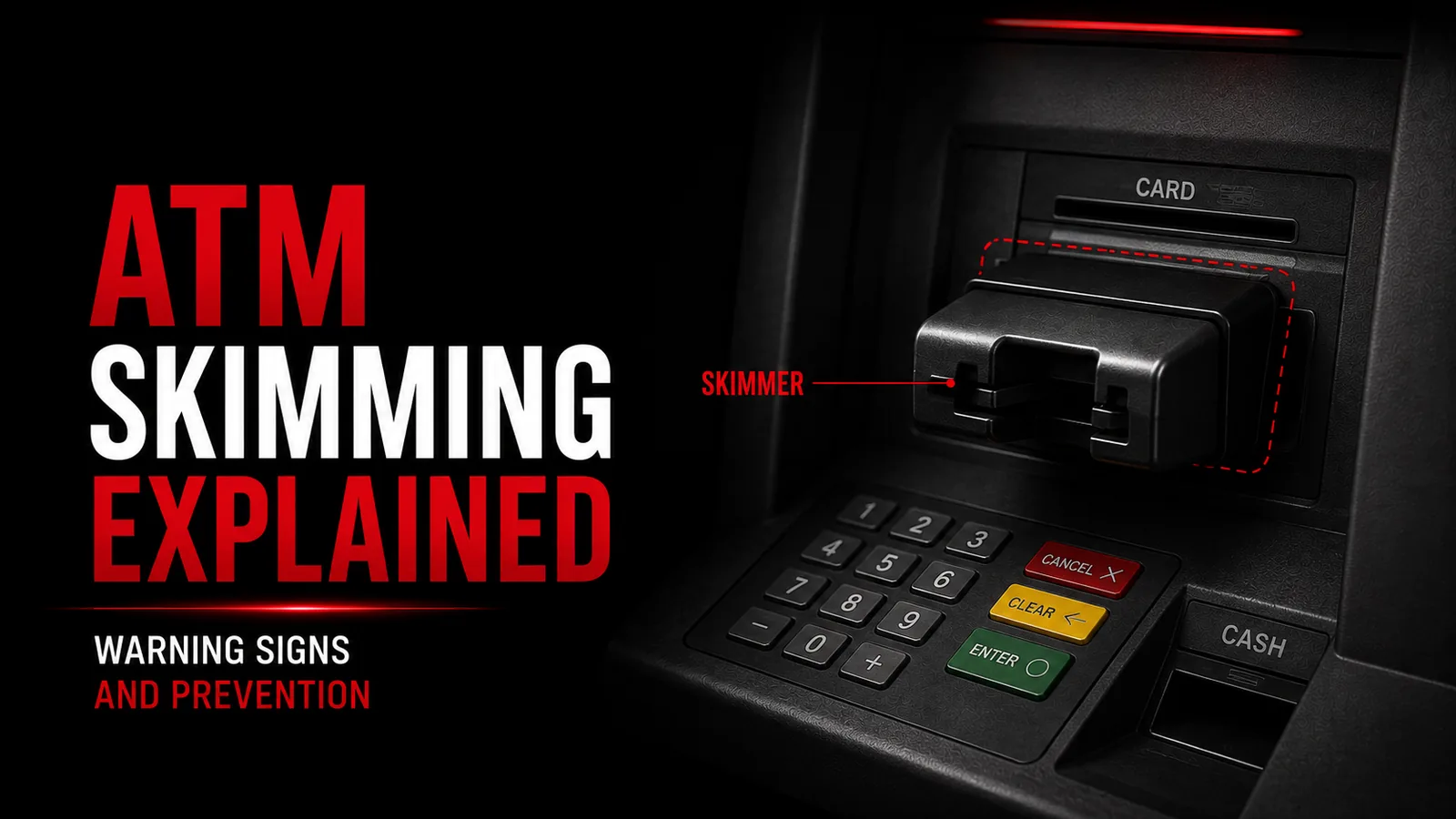
ATM skimming involves tampering with an automated teller machine or its card-reading environment.
A criminal may attempt to capture card information while also trying to learn the customer's PIN.
Consumers should inspect unfamiliar ATMs, shield the keypad during PIN entry, and use machines in monitored or trusted locations when practical.
If an ATM retains a card unexpectedly, behaves strangely, or appears physically altered, contact the bank through an official channel rather than accepting help from a stranger nearby.
Banks should use anti-tamper controls, monitoring, physical inspections, and fraud analytics to detect suspicious ATM activity.
Gas Pump Skimming
Fuel pumps have historically been attractive skimming targets because many payment readers are outdoors, unattended, and used by large numbers of customers.
The FTC has specifically warned consumers about skimmers at gas pumps and describes them as illegal readers that capture magnetic-stripe data.
Consumers can reduce risk by looking for obvious signs that a pump has been opened or altered and by using chip, contactless, or mobile-wallet payment where available.
Paying inside at a staffed terminal can also be an option if the pump reader appears suspicious.
Fuel retailers should use tamper controls, inspections, modern payment hardware, and secure maintenance procedures.
Point-of-Sale Terminal Skimming
Retail card readers can also be tampered with.
PCI SSC advises merchants to train employees to recognize suspicious changes to payment terminals and to keep devices where staff can monitor them.
A terminal that suddenly has new attachments, damaged seals, altered cabling, or unexplained physical differences should be removed from service until inspected.
Merchants should maintain an inventory of payment devices and know what each approved terminal is supposed to look like.

Physical security is part of payment security.
What Is a Shimmer?
The term 'shimmer' is sometimes used for a thin unauthorized device inserted inside certain chip-card readers.
The defensive significance is that not all terminal tampering is visible from the outside.
However, EMV chip cryptography still makes creation of a functioning counterfeit chip card significantly more difficult than copying a magnetic stripe.
Merchants therefore need both visual inspection and broader terminal-security controls rather than assuming that every compromise will be obvious.
Consumers should report unusual terminal behavior rather than attempting to dismantle or investigate the device themselves.
Can Skimming Steal a PIN?
A card skimmer and PIN-capture method can be used together.
The card-reading component targets payment data while a separate mechanism may attempt to observe PIN entry.
The FTC warns that criminals can combine skimming with hidden cameras or other techniques to obtain PINs.
Covering the keypad with your hand during PIN entry is a simple precaution that can reduce the usefulness of visual observation.
Never disclose a PIN to someone who claims they need it to fix a terminal or reverse a transaction.
How Can You Spot a Possible Skimmer?
There is no perfect visual test because tampering can range from crude overlays to concealed modifications.
Possible warning signs include a card slot that looks different from nearby terminals, loose or unusually bulky components, broken or mismatched security seals, a keypad that appears raised or overlaid, unusual resistance when inserting a card, or evidence that a terminal enclosure has been opened.
Consumers should compare suspicious machines with nearby identical terminals where practical.
Do not attempt to forcibly remove hardware from a terminal. Notify the business, bank, or terminal operator.
If the terminal looks suspicious, use another payment method or location.
Can a Skimmer Be Invisible?
Yes, some compromises are difficult for consumers to identify.
This is why visual inspection is only one layer of defense.
Transaction alerts, issuer fraud analytics, EMV chip security, secure terminal design, merchant inspections, and anti-tamper controls are also important.
Consumers should not assume they did something wrong if a compromised terminal was impossible to detect.
The practical goal is to reduce exposure and respond quickly if suspicious activity appears.
Why Covering the PIN Pad Helps
A criminal attempting to steal a PIN may rely on visual observation.
Covering the keypad during entry makes hidden-camera or shoulder-surfing attacks more difficult.
This is useful even when the card reader itself appears normal.
Consumers should also avoid speaking the PIN aloud and should never write it directly on the card.
PIN protection is particularly important at ATMs and unattended terminals.
Why Transaction Alerts Matter
Transaction notifications can help detect unauthorized activity shortly after it occurs.
A cardholder who receives an alert for a purchase or withdrawal they did not make can contact the issuer quickly.
Fast reporting can allow the bank to block the card, investigate the activity, and reduce additional losses.
Alerts are not a substitute for secure payments, but they improve detection.
Consumers should keep issuer contact details current so alerts reach the correct device or email account.
Does a Skimmed Card Mean Fraud Will Definitely Occur?
No.
Compromised card information creates risk, but fraud is not automatic.
Modern payment systems use issuer authorization, fraud analytics, EMV security, transaction monitoring, velocity controls, authentication, and merchant risk systems.

Some copied information may also be incomplete or unusable for particular payment channels.
Nevertheless, suspected skimming should be treated seriously because criminals may attempt unauthorized activity later.
What Happens After Card Information Is Skimmed?
After payment information is compromised, criminals may attempt to misuse it or combine it with other stolen information.
Historically, magnetic-stripe data was particularly valuable for creating counterfeit stripe cards in environments where stripe transactions were still accepted.
The global migration to EMV chip has made this form of counterfeit fraud substantially harder in chip-enabled environments.
Fraud may therefore shift toward other channels, including card-not-present transactions, account takeover, or social engineering.
This displacement is one reason payment security must cover both physical and online channels.
Skimming vs E-Skimming
Physical skimming and digital skimming are different attacks.
Physical skimming targets a card reader or payment terminal.
E-skimming, also called digital skimming or web skimming, compromises an online checkout page and captures information entered during e-commerce payment.
The similarity is that both intercept card data during what appears to the customer to be a normal payment.
The defenses differ: physical skimming requires terminal security, while e-skimming requires secure websites, payment-page script controls, patching, and PCI DSS e-commerce protections.
Skimming vs Phishing
Skimming compromises the payment environment.
Phishing deceives the person.
A skimming victim may use a real ATM or merchant terminal that has been tampered with.
A phishing victim is usually persuaded to provide information through a fake message, website, or caller.
Because attackers can use both methods, consumers need both physical terminal awareness and social-engineering awareness.
Skimming vs Card-Not-Present Fraud
Skimming is primarily associated with obtaining information from a physical card or terminal.
Card-not-present fraud occurs when payment credentials are misused remotely without the physical card being presented.
Information originating from a physical compromise can sometimes contribute to later fraud in another channel, but the two terms describe different stages or environments.
Merchants should therefore maintain defenses for both physical and e-commerce transactions.
How Merchants Can Prevent Skimming
Maintain an inventory of all payment terminals and their locations.
Train staff to recognize tampering and suspicious device changes.
Inspect terminals routinely and after unusual access, maintenance, or relocation.
Restrict physical access to card readers and keep customer-facing terminals visible to employees where practical.
Use PCI-approved payment devices and keep terminal software and security controls current.
Investigate broken seals, changed hardware, unexpected cables, or unexplained terminal replacement immediately.
Maintain incident-response procedures so a suspected compromised terminal can be removed from service quickly.
Why Terminal Inventory Matters
A business should know which devices belong in its payment environment.
An accurate inventory makes it easier to notice an unauthorized replacement or alteration.
PCI SSC's skimming-prevention guidance emphasizes monitoring payment devices and controlling physical access.
Serial numbers, device locations, inspection records, and authorized maintenance processes can help merchants detect anomalies.
This is particularly important for businesses with many unattended or distributed terminals.
Why Employee Training Matters
Frontline employees often have the best opportunity to notice that a payment terminal has changed.
Training should explain what approved equipment looks like, who is authorized to service it, and how to report suspicious activity.
Employees should not allow unknown technicians to modify payment terminals without verification.
Businesses should also train staff to preserve evidence and avoid using a device once tampering is suspected.
A strong security culture can make skimming attempts more difficult to sustain unnoticed.
Why EMV Acceptance Matters for Merchants
EMV chip acceptance reduces reliance on static magnetic-stripe information.
EMVCo says chip cards have helped considerably reduce card-present counterfeit fraud because transaction security is generated dynamically.
Merchants should avoid situations where malfunctioning chip readers routinely force customers to swipe.
Keeping payment terminals properly maintained helps ensure customers can use the more secure payment method built into their cards.
Contactless EMV can provide similar dynamic security with a faster tap experience.
How Consumers Can Reduce Skimming Risk
Prefer EMV chip or contactless payment when available.
Use mobile wallets where practical because tokenization can reduce exposure of the underlying card number.
Inspect unfamiliar unattended terminals for obvious tampering.
Cover the keypad when entering a PIN.
Use ATMs and terminals in well-monitored locations where practical.
Enable transaction alerts.
Review statements regularly.
Report unexpected transactions or withdrawals quickly.
If a terminal appears suspicious, use another one rather than trying to test it.

Are Mobile Wallets Safer Against Traditional Skimming?
Mobile wallets can reduce exposure to traditional magnetic-stripe skimming because they use contactless communication and commonly rely on tokenized payment credentials.
The merchant generally receives a payment token rather than repeatedly receiving the underlying physical-card number in the same way as older payment methods.
The phone may also require device authentication before payment.
This does not eliminate every fraud risk, but it makes traditional stripe-skimming techniques far less relevant to that transaction.
Consumers should still protect the phone itself with a strong passcode and secure account recovery.
What to Do If You Think Your Card Was Skimmed
Contact the card issuer through an official channel.
Explain that the card may have been used at a compromised terminal and ask whether the issuer recommends locking or replacing it.
Review recent transactions and withdrawals.
Report anything you do not recognize.
Change the PIN if the issuer advises it or if PIN exposure is possible.
Continue monitoring the account because unauthorized transactions may not appear immediately.
If you know which terminal may have been compromised, notify the bank, merchant, or terminal operator so it can be inspected.
What to Do If Unauthorized Charges Appear
Report unauthorized transactions promptly to the card issuer.
The FTC advises consumers to report lost, stolen, or fraudulently used cards and to watch accounts for unauthorized activity.
If the card issuer confirms fraud, follow its process for dispute, replacement, and account protection.
Do not contact a number supplied in a suspicious message claiming to help with the fraudulent transaction; use the issuer's official app, website, or number printed on the card.
Keep records of reports and disputed transactions where appropriate.
Should You Replace a Card After Suspected Skimming?
The issuer is best positioned to determine whether replacement is necessary.
In many cases, replacing or reissuing a card can prevent continued misuse of a compromised credential.
If the suspected incident also involved a PIN, the issuer may recommend changing the PIN or taking additional steps.
Consumers should not wait for multiple unauthorized transactions before contacting the issuer if there is credible evidence of compromise.
Early reporting gives the issuer more options to protect the account.
Common Myths About Card Skimming
Myth: Skimming only happens at ATMs. Reality: compromised readers can appear at fuel pumps, retail terminals, kiosks, and other payment locations.
Myth: A normal-looking transaction means the reader was safe. Reality: a skimmer can capture information while the legitimate payment still completes.
Myth: Chip cards make all card theft impossible. Reality: EMV greatly reduces counterfeit fraud but does not stop phishing, account takeover, e-skimming, or every form of payment abuse.
Myth: Contactless cards can easily be cloned from across a room. Reality: modern contactless payments use transaction-specific security information that greatly limits reuse of captured data.
Myth: If no fraudulent charge appears immediately, nothing was stolen. Reality: compromised information may be used later.
Myth: Consumers alone are responsible for spotting skimmers. Reality: merchants and terminal operators have major responsibilities for device inventory, inspection, access control, and security.
Conclusion
Credit card skimming is a physical payment-security threat built around unauthorized capture of card information from a payment reader.
Its historical strength came from the static nature of magnetic-stripe data. The global move toward EMV chip and contactless payments has made that information much harder to turn into working counterfeit transactions because modern payments generate dynamic security data.
That does not mean skimming and terminal tampering have disappeared. Criminals can still target outdated readers, magnetic-stripe fallback, PIN entry, unattended terminals, and poorly monitored payment environments.
Consumers can reduce risk by preferring chip, contactless, and tokenized wallet payments, protecting PIN entry, using transaction alerts, and reporting suspicious devices or charges quickly.
Merchants have an equally important role: secure physical access to payment devices, maintain terminal inventories, train employees, inspect readers regularly, and keep modern EMV functionality working.
The best defense against skimming is therefore a combination of modern payment technology, physical terminal security, customer awareness, and rapid fraud detection.