


Introduction
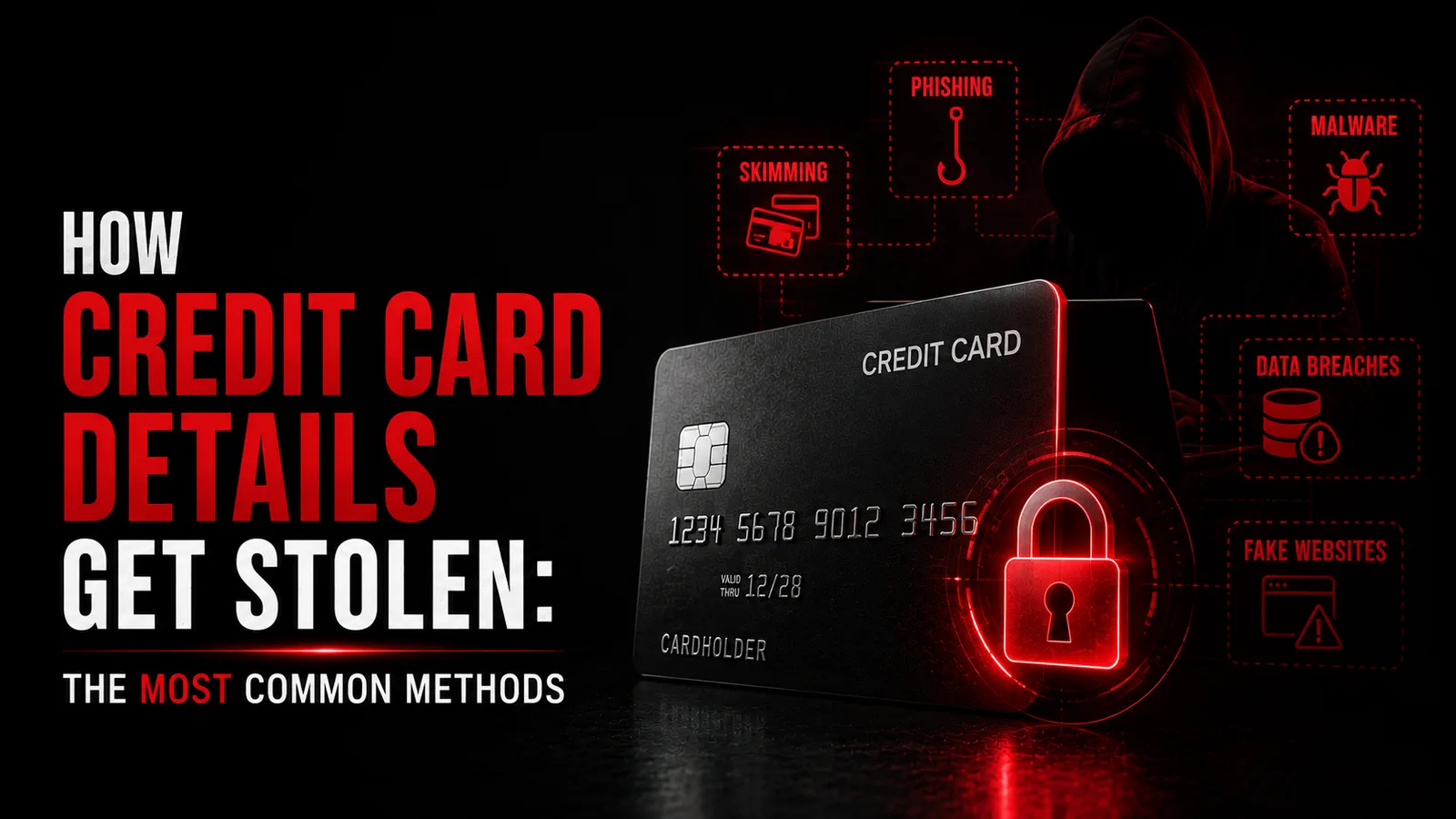
Malware can turn an ordinary business computer, point-of-sale system, administrator account, web server, or employee workstation into a route toward payment-card theft. Criminals use malicious software to obtain credentials, observe user activity, intercept payment information, alter systems, or create persistent access that can later be used for fraud.
PCI Security Standards Council identifies malware as a direct merchant threat and warns that criminals use malicious software to infiltrate systems and steal payment data. Visa likewise describes malware and hacking as methods that can capture keystrokes or extract payment information from business systems.
The risk is not limited to traditional antivirus-style computer viruses. Modern businesses must consider point-of-sale malware, browser and information-stealing malware, malicious web code, ransomware operators that steal data before encryption, compromised remote-access tools, credential theft, web shells, malicious attachments, and supply-chain compromise.
This guide explains these threats from a defensive perspective and focuses on how businesses can reduce exposure. It intentionally does not include malware code, deployment procedures, credential-stealing techniques, persistence instructions, bypass methods, or guidance for evading endpoint security.
Quick Answer: How Can Malware Lead to Payment Card Theft?
Malware can expose payment information by compromising systems that process card data or by stealing credentials that provide access to those systems.
Depending on the environment, malware may capture data from infected endpoints, point-of-sale systems, browsers, web applications, remote-access sessions, administrator accounts, or other systems connected to the payment environment.
Modern information stealers can also collect browser-stored credentials and other sensitive information, while web-skimming malware can intercept card details entered into compromised e-commerce checkout pages.
Businesses reduce risk by minimizing raw card-data exposure, maintaining PCI DSS controls, using strong MFA, patching promptly, running appropriate anti-malware and endpoint detection, segmenting payment environments, restricting privileged access, protecting remote access, monitoring logs and transactions, securing e-commerce scripts, maintaining tested backups, and having a rehearsed incident-response plan.
What Is Malware?
Malware is software or code designed to perform unauthorized or harmful actions.
PCI SSC defines anti-malware as software designed to detect, remove, block, or contain various forms of malicious software, reflecting the broad range of threats businesses may face.
Malware can include credential stealers, ransomware, remote-access malware, spyware, malicious browser extensions, web shells, point-of-sale malware, worms, trojans, malicious scripts, and other tools.
The exact labels matter less than understanding what the malicious code can access and what business systems it can influence.
Why Payment Environments Are Attractive Targets
Payment environments contain information and access that can potentially be converted into financial fraud.
Businesses may handle payment-card data, customer identities, transaction histories, administrator credentials, merchant accounts, and access to third-party payment services.
A compromise may therefore provide value even when the malware never directly reads a card number.
For example, stolen administrator credentials can provide access to e-commerce settings, payment pages, customer accounts, or remote-management tools.
This is why protecting payment data requires protecting identities, endpoints, servers, and software supply chains as well as the payment application itself.
Malware Does Not Need to Be on the Card Terminal
Businesses sometimes assume payment malware must run directly on a card terminal.
In reality, compromise can begin elsewhere.
An employee laptop can expose remote-access credentials. A developer workstation can expose source-code or deployment secrets. A compromised email account can lead to administrative password resets. A hacked web server can alter checkout code. A managed service provider account can provide access to multiple customer systems.
Effective payment security therefore requires understanding all systems that can reach, administer, modify, or authenticate into the cardholder-data environment.
1. Point-of-Sale Malware
Point-of-sale malware is malicious software designed to compromise systems involved in physical payment processing.
PCI SSC has historically warned that criminals deploy POS malware to capture payment-card data from retail payment environments.
The risk is highest when sensitive payment information is unnecessarily exposed in system memory, logs, applications, or poorly segmented networks.
Modern EMV and secure payment architectures reduce some forms of card-present data theft, but merchants still need to harden POS systems, restrict administrative access, monitor endpoints, and keep payment software supported and patched.
Why Legacy POS Systems Increase Risk
Older payment systems may run unsupported operating systems or applications that no longer receive security updates.
Unsupported software makes vulnerability management more difficult and may not support modern endpoint-security tools.
Businesses should maintain an inventory of POS hardware and software, identify end-of-life components, and establish replacement plans.
A payment terminal that continues processing transactions is not necessarily secure simply because it still functions.
Security support life cycle should be treated as part of procurement and asset management.
2. Information-Stealing Malware
Information stealers, often called infostealers, are designed to collect valuable information from compromised systems.
CISA's 2025 advisory on LummaC2 describes malware used to exfiltrate sensitive user information, including traditional credentials and browser-related data.
For businesses, the payment risk is often indirect but serious. Stolen browser sessions, passwords, cookies, remote-access credentials, email credentials, or cloud logins can provide a route toward systems that handle customer or payment information.
This means protecting payment systems also requires protecting ordinary employee workstations that can authenticate to business infrastructure.
Why Browser-Stored Credentials Are Risky
Browsers are convenient places to store passwords and sessions, but an infected endpoint can turn convenience into exposure.
Organizations should use enterprise password-management and identity controls that fit their risk model rather than depending on unmanaged browser credential storage for highly privileged accounts.
Privileged administrators should use phishing-resistant or strong MFA where available and should avoid using highly privileged credentials for routine browsing or email.
The objective is to prevent compromise of one employee endpoint from automatically becoming compromise of payment administration.
3. Credential-Stealing Malware
Credential-stealing malware focuses on information that can be used to authenticate into systems.
Payment data may be protected by encryption while administrative credentials remain the easier route for attackers.
Once credentials are compromised, an attacker may attempt to access cloud consoles, payment dashboards, e-commerce administration, remote desktop systems, email accounts, source repositories, or managed services.
Businesses should assume that credentials observed on an infected device may need to be revoked and replaced.
Password changes alone may be insufficient when active sessions, tokens, API keys, or other credentials were also exposed.
4. Malware Delivered Through Phishing
Phishing remains one of the common routes through which malicious software reaches business users.
An employee may receive an unexpected attachment, link, fake software update, or document designed to trigger malware installation or credential theft.
PCI SSC and CISA both emphasize employee phishing awareness as a core security practice.
Businesses should combine user education with technical controls such as email filtering, attachment controls, endpoint protection, browser protections, and strong authentication.
Training alone is not sufficient because even careful employees can make mistakes.
5. Malicious Remote Access
Remote access can be essential for support, administration, and distributed work, but it creates a valuable target.
Attackers may attempt to steal credentials for remote desktop, VPNs, remote-management software, cloud consoles, or managed service provider tools.
CISA repeatedly recommends MFA for administrative and remote-access accounts and disabling accounts that are no longer in use.
Businesses should restrict remote access to authorized users and devices, monitor unusual login activity, remove legacy access paths, and avoid exposing management services directly to the internet when safer designs are available.
6. Web Shells and Server-Side Malware
A compromised web server can contain unauthorized code that provides persistent control or allows attackers to modify websites.
For e-commerce businesses, server compromise can threaten checkout code, customer accounts, configuration files, administrator credentials, and integrations.

Web-server security therefore includes patching, secure configuration, least privilege, file-integrity monitoring, deployment controls, and restricted administrative access.
A website that still loads normally may nevertheless be compromised.
Security monitoring should focus on unauthorized changes rather than waiting for visible website failure.
7. Digital Skimming and Malicious Checkout Code
Malware can also operate in the browser-facing payment environment.
Digital skimming or e-skimming occurs when malicious code is introduced into an e-commerce website and attempts to capture payment data while customers enter it.
Visa notes that digital-skimming attacks can harvest PAN, CVV2, expiration dates, and personal information from merchant websites.
PCI DSS v4.x includes specific payment-page script and change-detection requirements designed to reduce this risk.
Businesses should treat checkout JavaScript and third-party browser code as sensitive payment infrastructure.
8. Ransomware and Data Theft
Ransomware is primarily known for disrupting systems by encrypting or otherwise denying access to data.
Modern ransomware incidents can also involve data theft before encryption or extortion.
A ransomware intrusion into a merchant environment may expose customer information, credentials, payment-related systems, or administrative access even when card data itself was not the attacker's original objective.
CISA recommends maintaining offline or protected backups, patching systems, and using strong MFA among core ransomware defenses.
Businesses should not treat ransomware solely as an availability problem.
9. Compromised Managed Service Providers
Many businesses rely on managed service providers for IT support, remote management, cybersecurity, hosting, and application administration.
A privileged service-provider account can potentially reach multiple customer environments.

CISA guidance for MSPs and customers emphasizes MFA, disabling unused accounts, and securing remote-management access.
Businesses should know which vendors have privileged access, require appropriate security controls, monitor vendor activity, and have procedures for rapidly revoking access after a vendor incident.
Third-party trust should be continuously governed rather than assumed indefinitely.
10. Malicious or Compromised Software Updates
Organizations depend on software vendors for updates and packages.
If a software-delivery chain is compromised, trusted mechanisms can potentially distribute unauthorized code.
Businesses should obtain software from verified sources, maintain software inventories, follow vendor security advisories, and use integrity or signing protections where supported.
High-risk payment infrastructure should not automatically install unverified packages from unknown sources.
Software supply-chain security should be part of vendor assessment and incident planning.
11. Malicious Browser Extensions
Browser extensions can request broad access to webpages and browsing activity.
Employees using systems that administer payments or e-commerce should avoid unapproved extensions.
Organizations can use browser-management policies to restrict extension installation and maintain allowlists for business-approved tools.
An extension that can read or modify web pages may create risk if it operates on sensitive business dashboards.
Privileged administrative browsing environments should be kept as simple and controlled as practical.
12. USB and Removable Media Risks
Removable media can provide another route for malicious software into business systems.
PCI DSS malware protections include consideration of systems and media that can introduce malicious software.
Businesses should restrict removable media according to operational need, scan it appropriately, disable unnecessary autorun behavior, and avoid transferring files between uncontrolled personal devices and payment systems.
Payment terminals and administrative systems should not be treated as general-purpose computers.
How Malware Can Steal Payment Data Without Reading a Database
A common security misconception is that attackers need direct database access to steal payment information.
Malware may instead intercept data at endpoints, observe input, compromise checkout code, capture credentials, or alter the process before information reaches a protected database.
This is why database encryption is important but insufficient by itself.
Businesses need to protect the complete transaction path from customer entry through processing and administration.
How Malware Can Turn Into Account Takeover
Stolen passwords and sessions can allow attackers to impersonate legitimate employees or customers.
For merchants, account takeover can expose saved payment tokens, customer information, refund functions, order systems, loyalty balances, or administrative tools.
Businesses should monitor authentication events and sensitive account changes in addition to card transactions.
Strong account recovery is especially important because attackers may use compromised email accounts to reset business or customer passwords.
Why Payment Data Minimization Reduces Malware Risk
The less raw payment data a business exposes, the less malware can steal.
PCI DSS encourages organizations to understand where payment-account data is stored, processed, and transmitted and to minimize unnecessary exposure.
Tokenization, hosted payment pages, secure payment fields, and properly designed point-to-point encryption can reduce direct access to card data depending on the environment.
A compromised workstation cannot steal data that never reaches it in usable form.
Architecture can therefore reduce risk before endpoint detection becomes necessary.
Tokenization as a Malware Defense Layer
Tokenization substitutes a payment token for the original payment credential in supported environments.
This can reduce the usefulness of information exposed from merchant systems.
Tokenization does not protect every part of the workflow; malware operating before tokenization or inside a compromised checkout may still target raw information.
The strongest approach is to design the transaction so the merchant controls as little raw card information as possible.
Payment-provider architecture should be evaluated alongside PCI scope and business requirements.
Point-to-Point Encryption
Point-to-point encryption can reduce exposure of card-present payment data by encrypting account information from the point of interaction through a secure decryption environment.
PCI SSC maintains a dedicated P2PE standard for validated solutions.
When correctly implemented, this can reduce the opportunity for malware on intermediate merchant systems to read usable card data.
Merchants should follow the validated solution's implementation requirements rather than attempting to reproduce P2PE informally.
Encryption works best when cryptographic keys and endpoints are also strongly protected.
PCI DSS Requirement 5 and Malware Protection
PCI DSS includes a dedicated requirement for protecting systems and networks from malicious software.
PCI SSC's merchant resources explicitly identify malware as a threat capable of infiltrating business systems and stealing payment data.
Modern PCI DSS malware protections go beyond simply installing antivirus. Organizations need to understand which systems are susceptible, deploy appropriate anti-malware controls, keep protections current, and ensure the controls operate effectively.
PCI DSS should be treated as a security baseline rather than a substitute for threat-specific risk assessment.
Businesses should use the current official PCI DSS version and applicable assessment guidance for exact requirements.
Anti-Malware vs Endpoint Detection and Response
Traditional anti-malware focuses on detecting or blocking known forms of malicious software.
Endpoint Detection and Response, or EDR, typically provides deeper monitoring, behavioral detection, investigation, and response capabilities.
The appropriate mix depends on system type, business size, operating system, payment architecture, and risk.
A business should not assume that installing one antivirus product means malware risk is solved.
Controls need active monitoring, current signatures or detection logic, alert handling, and tested response procedures.
Business Defense 1: Patch Operating Systems and Applications
Unpatched vulnerabilities can allow attackers to compromise systems without requiring an employee to install anything intentionally.
CISA's current guidance repeatedly recommends timely patching of operating systems, software, and firmware, particularly for internet-facing systems and known exploited vulnerabilities.
Businesses should maintain an asset inventory, know which software is in use, track security advisories, and prioritize remediation based on exposure and severity.
Unsupported software should be upgraded or isolated until replacement is possible.
Patching should include e-commerce plugins, POS systems, VPN appliances, remote-management software, browsers, servers, and business applications.
Business Defense 2: Enforce Multi-Factor Authentication
MFA reduces the chance that one stolen password leads directly to administrative access.
CISA recommends technically enforcing MFA for administrator accounts rather than relying on policy alone.
Priority accounts include email, cloud administration, VPN, remote management, payment dashboards, e-commerce administration, source repositories, hosting, and identity providers.
Phishing-resistant MFA provides stronger protection where supported.
Break-glass accounts should be tightly controlled, monitored, and protected with secure recovery procedures.
Business Defense 3: Apply Least Privilege
Employees and service accounts should receive only the access required for their roles.
A marketing user should not automatically have payment-system administration rights. A cashier workstation should not be able to administer servers. A customer-support user should not have unrestricted infrastructure access.
Least privilege reduces what malware can reach after compromising one account.
Privileged access should be reviewed regularly and removed when roles change.
Temporary access should expire automatically where practical.
Business Defense 4: Segment the Payment Environment
Network segmentation can limit how far malware spreads after initial compromise.
The payment environment should not be unnecessarily reachable from guest Wi-Fi, general employee devices, development networks, or unrelated business systems.
Segmentation requires more than separate IP ranges; access-control rules must actually restrict traffic between security zones.
Organizations should test segmentation periodically.
Limiting lateral movement can prevent compromise of one workstation from becoming compromise of every payment system.
Business Defense 5: Secure Remote Access
Remote administration should be limited to approved users, devices, and pathways.
Use MFA, strong encryption, logging, device controls, and restricted source access where appropriate.

Disable unused remote accounts and services.
Do not leave legacy remote-management tools exposed simply because a vendor may need them occasionally.
Vendor support access should be enabled only as necessary and monitored according to business risk.
Business Defense 6: Protect Email
Email is a common initial access route for malware and credential theft.
Businesses should use spam and malware filtering, attachment controls, link protections, sender-authentication technologies, and user reporting mechanisms.
Employees should know how to report suspicious messages quickly.
Highly privileged administrators should consider separate accounts for ordinary email and privileged administration.
Compromise of email can also enable password resets for payment and cloud systems.
Business Defense 7: Control Software Installation
Employees should not have unrestricted ability to install software on sensitive systems.
Application allowlisting, managed software deployment, standard-user accounts, and approved software catalogs can reduce unauthorized applications.
POS systems and payment administration workstations should have particularly strict software controls.
Remove unnecessary utilities and disable unused services.
Reducing software variety also makes patching and monitoring easier.
Business Defense 8: Restrict Browser Extensions
Use enterprise browser policies to control which extensions can be installed.
Privileged administrative workstations should use a minimal extension set.
Extensions that can read or modify webpage content should receive particular scrutiny.
Regularly review approved extensions and remove those no longer needed.
Browser configuration is part of endpoint hardening, especially for staff accessing merchant or payment dashboards.
Business Defense 9: Use Appropriate Anti-Malware and EDR
Deploy anti-malware or endpoint protection on systems susceptible to malicious software in accordance with PCI DSS and business risk.
Keep detection engines, policies, and threat intelligence current.
Centralize alerts where feasible so serious findings are not left unnoticed on individual endpoints.
Define who investigates malware alerts and what severity triggers isolation or incident response.
Security tooling that generates alerts nobody reviews provides limited protection.
Business Defense 10: Monitor Logs and Authentication
Centralized logging helps businesses detect unusual behavior across endpoints, servers, identity systems, cloud platforms, and payment infrastructure.
Monitor for suspicious privileged logins, repeated authentication failures, impossible or unusual access patterns, unexpected new administrator accounts, disabled security tools, and abnormal configuration changes.
Logs should be protected from unauthorized modification and retained according to security and compliance needs.
Detection rules should be tuned to the business environment rather than copied blindly from generic templates.
Business Defense 11: Monitor Payment Transactions
Cybersecurity signals should be connected to payment-fraud signals.
A malware incident may first appear as unusual system activity, while the financial impact may appear later as suspicious transactions or chargebacks.
Fraud, payment, cybersecurity, and customer-support teams should share relevant information.
Mastercard's payment threat-intelligence approach emphasizes improving collaboration between cybersecurity and fraud teams.
This cross-functional view can help identify whether a cyber compromise is already affecting payment behavior.
Business Defense 12: Secure E-Commerce Payment Pages
Businesses accepting online payments must protect the browser-side checkout environment.
Maintain an inventory of payment-page scripts, explicitly authorize them, verify integrity, and detect unauthorized changes.
Reduce unnecessary third-party JavaScript on checkout.
Protect content-management, tag-management, deployment, and hosting accounts with strong MFA.
These controls reduce the risk that malicious code can silently intercept card information from legitimate customers.
Business Defense 13: Back Up Critical Systems
Backups are primarily an availability and recovery control, but they also matter during malware incidents.
CISA recommends maintaining protected or offline backups and regularly testing restoration.
Backups should not be continuously writable by every production system because malware or ransomware may otherwise affect them too.
Organizations should know how long it takes to restore critical payment and business services.
A backup that has never been tested should not be assumed to work during a crisis.
Business Defense 14: Protect Configuration and Secrets
API keys, database passwords, cloud credentials, payment-provider secrets, signing keys, and deployment tokens should not be stored in public repositories or unsecured configuration files.
Use appropriate secrets-management systems and rotate credentials when exposure is suspected.
Limit each secret's permissions and lifetime where practical.

Malware that steals one developer file should not automatically gain permanent administrator access to every environment.
Credential hygiene is an important form of payment security.
Business Defense 15: Manage Third-Party Risk
Identify vendors that can access payment systems, merchant administration, remote support, checkout scripts, hosting, or customer data.
Require security controls appropriate to their access.
Remove vendor accounts when relationships end.
Monitor for security advisories and incidents affecting critical suppliers.
Know how quickly access can be revoked if a vendor is compromised.
Third-party risk should be included in incident exercises and business continuity planning.
Business Defense 16: Train Employees
Employees should recognize suspicious attachments, fake software updates, unexpected credential requests, unusual support calls, and attempts to bypass normal IT procedures.
Training should be practical and role-based.
Cashiers, developers, administrators, customer-support staff, executives, and finance personnel face different threats.
Security teams should make reporting simple and avoid creating a culture where employees hide mistakes out of fear.
Fast reporting of one suspicious click can prevent a small incident from becoming a large breach.
Business Defense 17: Use Separate Privileged Workstations Where Appropriate
High-risk organizations may reduce exposure by separating privileged administration from ordinary browsing and email.
An administrator who manages payment systems does not necessarily need to perform everyday web browsing from the same security context.
Dedicated privileged access workstations or controlled administrative environments can reduce credential-stealing opportunities.
The design should match the organization's scale and risk rather than adding complexity without operational support.
Business Defense 18: Test Incident Response
NIST malware guidance emphasizes preparation, detection and analysis, containment, eradication, recovery, and post-incident activity.
Businesses should decide in advance who has authority to isolate systems, disable accounts, suspend payment processing, engage forensic support, notify the acquirer, restore backups, and communicate with customers.
Run tabletop exercises using realistic scenarios.
A written plan that nobody has practiced often fails when timing matters most.
Payment incidents may also involve contractual, regulatory, legal, and card-network notification obligations.
What to Do When Malware Is Suspected
Do not treat a suspected malware incident as an ordinary help-desk issue if payment systems or privileged credentials may be involved.
Activate the incident-response process.
Contain affected systems according to the organization's plan, preserve relevant evidence, identify affected identities and devices, investigate scope, revoke compromised credentials, remove malicious access, and restore systems from trusted sources.
Avoid wiping systems immediately if doing so would destroy evidence needed to understand the incident.
Organizations with payment-card exposure should engage the appropriate acquirer, payment partners, qualified security professionals, and legal or regulatory stakeholders as required.
Should an Infected Computer Simply Be Reimaged?
Reimaging can be an effective recovery step, but it should not automatically be the first action.
If the system contains useful forensic evidence, immediate wiping can make it harder to determine how the compromise occurred or what information was exposed.
Incident responders should first decide what evidence needs preservation.
After evidence collection, rebuilding from a trusted baseline can be safer than trying to manually remove unknown malware.
Credentials used from the infected system may also require rotation even after the computer is rebuilt.
Why Password Reset Alone May Not Be Enough
Malware can steal more than passwords.
Potential exposure can include session cookies, authentication tokens, API keys, browser sessions, remote-access credentials, and other secrets.
Organizations should evaluate which credentials were present or used on the infected system and revoke them appropriately.
Resetting a password while leaving an active stolen session valid may not fully remove attacker access.
Identity-provider and cloud-session revocation should be part of incident procedures.
How Businesses Should Handle Potential Card Exposure
If the investigation indicates payment-account data may have been exposed, the business should follow PCI DSS, acquirer, payment-network, legal, and contractual incident-notification procedures.
The organization should determine which systems were affected, what data was accessible, the likely exposure period, and whether malicious access was actually present.
Avoid telling customers that 'no payment data was affected' until evidence supports that conclusion.
Accurate breach communication requires coordination between security, legal, payments, leadership, and communications teams.
The goal is to stop exposure, preserve evidence, understand scope, and provide useful information to affected parties.
Why Cybersecurity and Fraud Teams Should Work Together
Malware-based payment theft crosses organizational boundaries.
Cybersecurity teams may see endpoint alerts and suspicious logins.
Fraud teams may see abnormal authorizations, chargebacks, account testing, or unusual merchant behavior.
Customer support may receive the first reports from victims.
Connecting these signals can shorten detection time.
Mastercard's threat-intelligence materials explicitly position stronger collaboration between fraud and cybersecurity teams as a way to move from reactive to proactive payment-risk management.
Common Warning Signs of Business Malware Infection
Possible signs include unexpected endpoint-security alerts, disabled security tools, unusual network traffic, unexplained administrator accounts, suspicious scheduled tasks or services, unauthorized software, unexpected browser behavior, unusual credential prompts, files being encrypted, unexplained performance problems, and suspicious logins from accounts tied to affected systems.
No single symptom proves malware.
Many sophisticated infections deliberately minimize visible symptoms.
Businesses should rely on centralized security monitoring and investigation rather than waiting for users to notice a slow computer.
Common Myths About Malware and Payment Card Theft
Myth: Malware must run on the payment terminal to steal payment data. Reality: it can compromise credentials, servers, browsers, web applications, remote access, or administration systems that influence payments.
Myth: Antivirus alone solves the problem. Reality: businesses need layered controls including patching, MFA, least privilege, segmentation, monitoring, secure architecture, and incident response.
Myth: EMV means merchants no longer need malware defenses. Reality: EMV reduces important card-present fraud risks but does not stop credential theft, ransomware, account takeover, or e-commerce compromise.
Myth: If card data is encrypted in a database, malware cannot steal it. Reality: malicious software can target endpoints, checkout pages, credentials, or data before encryption.
Myth: Small businesses are too small to be targeted. Reality: automated attacks, phishing, commodity infostealers, and compromised service providers can affect organizations of any size.
Myth: Backups prevent data theft. Reality: backups improve recovery but do not stop attackers from stealing information before systems are restored.
Myth: Changing one password ends a malware incident. Reality: compromised devices may expose multiple credentials, sessions, tokens, or accounts.
Conclusion
Malware and payment-card theft are connected by more than traditional viruses running directly on cash registers.
Modern attackers can target the full business environment: employee laptops, point-of-sale systems, browsers, cloud accounts, web servers, checkout scripts, remote-access platforms, managed service providers, development pipelines, and privileged identities.
That means effective payment security cannot depend on one antivirus product or one firewall.
Businesses need layered controls that reduce both the likelihood of compromise and the amount of useful payment information available if compromise occurs.
The strongest strategy combines secure payment architecture, PCI DSS, tokenization or appropriate encryption, prompt patching, strong MFA, least privilege, network segmentation, endpoint security, controlled remote access, e-commerce script protections, monitoring, tested backups, vendor governance, and rehearsed incident response.
The central principle is simple: malware cannot steal or misuse information it cannot reach, and attackers have far fewer options when credentials, systems, payment data, and administrative pathways are all independently protected.