
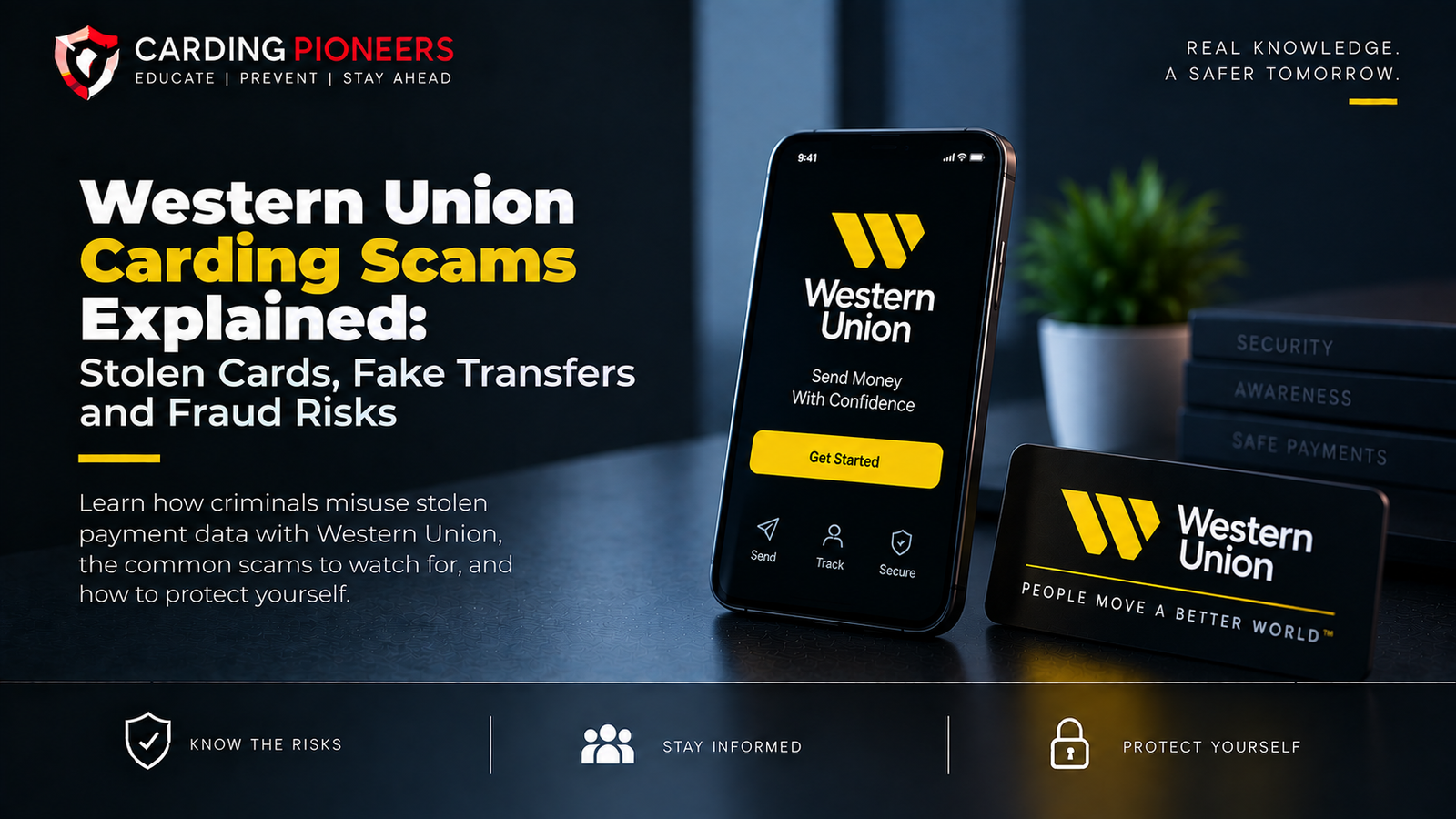
“Western Union carding” is informal fraud slang, not an official Western Union or payment-industry category. It can refer to attempts to use stolen payment-card data in connection with a money transfer, or to broader scams that combine fake transfer claims, stolen identities, social engineering and money-mule activity.
The phrase can be misleading because many Western Union scams do not involve carding at all. A victim may be tricked into sending a real transfer, a seller may be shown fake transfer evidence, or an account holder may see an unauthorized card charge linked to a transfer attempt.
Western Union's own fraud-awareness guidance emphasizes that money transfers should generally be sent only to people you know and trust. It warns that scammers use emergencies, online purchases, rentals, prizes, taxes, job offers, loan fees and other stories to pressure people into sending money.
Quick answer: Western Union carding scams can involve stolen cards, unauthorized payment activity, fake transfer claims or social-engineering schemes that pressure victims into sending real money. A fake receipt or reference number is not proof that funds were sent, and a transfer paid out to a scammer can be difficult to recover.
Safety scope: This article explains fraud patterns defensively. It does not provide stolen-card sources, card-testing instructions, transfer-acquisition methods, fraud thresholds, identity-bypass techniques or cash-out procedures.
What Does “Western Union Carding” Mean?
Carding normally refers to unauthorized use or trafficking of payment-card information. When the phrase is attached to Western Union, it usually describes fraud in which stolen card data is allegedly used to fund a money transfer, or in which criminals advertise supposedly fraudulent transfer methods.
That slang should not be confused with Western Union's legitimate service or official terminology. Western Union discusses fraud in terms of money-transfer scams, unauthorized activity, impersonation and consumer protection.
Western Union Carding vs a Normal Wire-Transfer Scam
Scenario | What is compromised? | Typical victim risk |
|---|---|---|
Stolen-card transfer attempt | Payment-card information | Unauthorized card charge or issuer dispute |
Authorized money-transfer scam | Victim's decision-making | Victim voluntarily sends real money to a scammer |
Fake transfer scam | Recipient's belief that money was sent | Goods or money released based on fake proof |
Account/identity abuse | Personal or payment information | Fraudulent transaction attempts and identity-theft risk |
Fraud Pattern 1: Stolen Card or Payment-Data Abuse
A criminal who has stolen card information may attempt to use it in a payment or transfer context. Whether a transaction is approved depends on the card issuer, Western Union, authentication checks, transaction risk and local availability.
- The legitimate cardholder may receive an unfamiliar charge or authorization attempt.
- The issuer can decline, block or later dispute unauthorized activity.
- The cardholder may need to lock or replace the card.
- A temporarily approved transaction does not make the stolen card legitimate to use.
Fraud Pattern 2: Fake Western Union Transfer Receipts
A scammer can create an edited screenshot, fake email or fabricated receipt that claims a Western Union transfer was sent.
The recipient may then be pressured to ship goods, refund money or provide something of value before independently confirming that the transfer exists.

- Do not rely on screenshots supplied by the sender.
- Do not trust an email simply because it contains Western Union branding.
- Verify transfer status only through official Western Union channels.
- Do not release goods or money because someone claims the transfer is 'pending' until you act.
Fraud Pattern 3: Fake MTCN or Reference-Number Claims
Western Union money transfers can have a Money Transfer Control Number (MTCN). Scammers may send a false or stolen reference number to make a nonexistent or unrelated transfer look convincing.
A number on its own is not proof that the sender legitimately paid you. Verification should happen through the official transfer-status process, not through a screenshot or message from the other party.
Fraud Pattern 4: Impersonation and Emergency Scams
Western Union warns about emergency scams in which criminals impersonate relatives, friends or authority figures and create urgency around a money transfer.
- A supposed relative claims to be in trouble.
- The caller insists the situation must remain secret.
- The victim is told to send money immediately.
- The story discourages independent verification.
Before sending money, contact the supposed relative or organization using a phone number or channel you already trust.
Fraud Pattern 5: Online Purchase and Marketplace Scams
The FTC and Western Union both warn that money-transfer services are a risky way to pay strangers for online purchases because once the money is collected, recovery can be difficult.
- The price is unusually low.
- The seller refuses normal protected payment methods.
- The seller demands a Western Union transfer to secure the item.
- The listing or seller cannot be independently verified.
Fraud Pattern 6: Advance-Fee, Prize and Loan Scams
Scammers may claim that a transfer is needed before a victim can receive a prize, loan, inheritance, refund or other payment.
Western Union specifically warns against sending money to claim lottery or prize winnings, pay credit-card or loan fees, or respond to other advance-fee stories.
Fraud Pattern 7: Fake Job and Mystery-Shopping Scams
A fake employer may send a fraudulent check or payment and then instruct the victim to wire part of the money elsewhere.

The FTC warns that fake checks can initially appear available before the bank later discovers the fraud, leaving the victim responsible for money already wired.
Fraud Pattern 8: Money Mule Recruitment
A money mule receives or moves fraud proceeds for someone else. Some recruits know what they are doing, while others are manipulated through fake jobs, romance scams or other stories.
Money-transfer services can appear downstream in these schemes when a recruit is told to forward funds or collect money for another person.
Why Fake Transfer Proof Is Dangerous
A convincing-looking receipt can create false certainty. Scammers exploit the assumption that if a transfer number, screenshot or branded email exists, the payment must be real.
- Screenshots can be edited.
- Emails can be spoofed or copied.
- Reference numbers can be fake, stolen or unrelated.
- A real transfer can still be canceled before payout in some circumstances.
- Only official verification can confirm the current transfer status.
Western Union vs Bank Wire Transfers
Western Union is a money-transfer company, while a bank wire is sent through a bank. Both can move money quickly, but the systems, rules and consumer protections differ.
The FTC warns that wiring money through services such as Western Union can be similar to sending cash: once the recipient receives the money, recovery is often difficult.
Why Scammers Prefer Fast Money Transfers
- Funds can move quickly.
- The scammer may be able to collect the money before the victim realizes the story was false.
- Victims often have fewer practical recovery options after payout.
- Urgency makes independent verification less likely.
Warning Signs of a Western Union Scam
Warning sign | Why it matters |
|---|---|
Urgent transfer request | A stranger or unexpected contact says money must be sent immediately. |
Secret emergency | You are told not to speak with family, your bank or authorities. |
Fake receipt or screenshot | Payment proof is supplied by the sender instead of verified independently. |
Prize or loan fee | You must send money before receiving supposed winnings or credit. |
Online purchase demand | A stranger insists on Western Union for goods or services. |
Government impersonation | Someone claims taxes, fines or official fees must be paid by money transfer. |
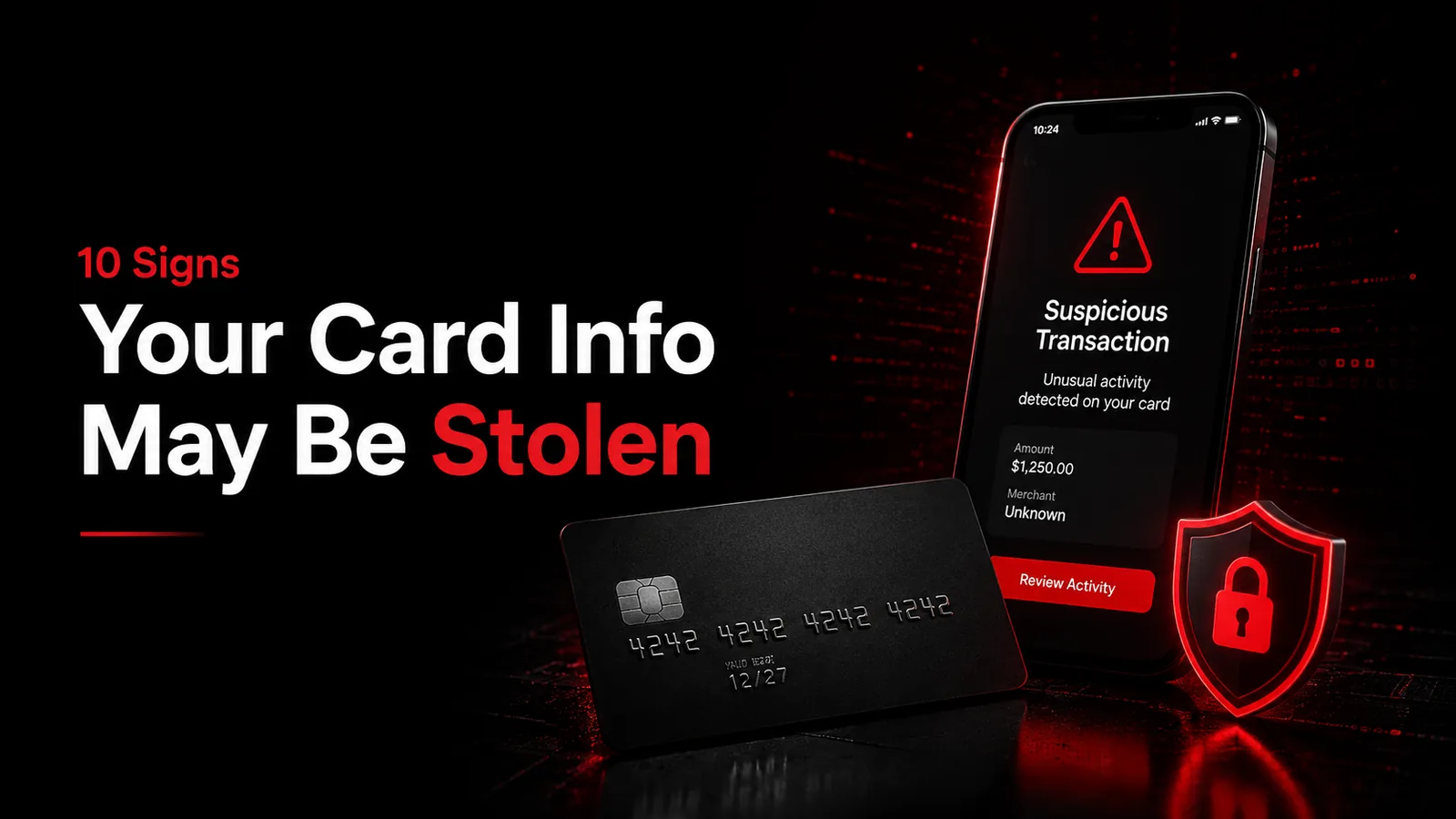
Unexpected card charge | A card statement shows Western Union activity you do not recognize. |
How to Verify a Western Union Transfer Safely
- Use Western Union's official website, app or customer-support channels.
- Do not use links sent by a stranger.
- Do not treat a screenshot as confirmation.
- Check the transfer status independently.
- If something does not match, do not release goods, refunds or additional money.
What to Do If Your Card Was Used Without Permission
- Contact the card issuer or bank immediately.
- Report the charge as unauthorized.
- Lock or replace the card if advised.
- Review recent and pending transactions for other fraud.
- Change passwords for financial accounts that may also be compromised.
What to Do If You Sent Money to a Scammer
1. Contact Western Union immediately.
Report that the transfer was induced by fraud and ask whether it can still be stopped or refunded.
2. Act before payout if possible.
Western Union says a full refund may be available when the transfer has not yet been picked up, sent or deposited, subject to the transfer status and terms.

3. Preserve evidence.
Keep receipts, messages, emails, names, phone numbers and transfer details.
4. Report the scam.
Use the appropriate fraud-reporting or law-enforcement process in your country.
5. Secure any compromised accounts.
Change passwords and contact banks or card issuers if personal or payment information was exposed.
Western Union's Fraud-Claim Guidance
Western Union says that if a transfer has not yet been paid out, victims should contact its Fraud Hotline or file a fraud claim as soon as possible.
Its Fraud Resource Center also notes that once a transfer has been sent or deposited, Western Union may not be able to provide a refund. That is why immediate reporting matters.
Suspicious Emails Claiming to Be From Western Union
Western Union's Fraud Resource Center instructs users to forward suspicious emails to [email protected]. It also makes clear that forwarding the email does not itself create a fraud claim; a separate fraud report is still required.
Western Union Carding vs APP Fraud
APP or authorized push payment fraud occurs when the victim sends money themselves because they were deceived. A carding incident instead involves unauthorized use of stolen payment-card data.
Western Union scams can involve either pattern, which is why it is important to identify whether the transfer was unauthorized or whether the victim authorized it under false pretenses.
Western Union Carding vs Money Mule Fraud
A money mule is a person who receives or moves criminal proceeds. Western Union may be used as one movement channel in some schemes, but the mule role is separate from stolen-card fraud.
Western Union Carding vs Fake Check Scams
A fake check scam starts with a fraudulent check that may temporarily appear available. The victim is then instructed to wire part of the money elsewhere.
The scam does not require stolen card data, but it produces a similar outcome: the victim sends real money based on a false payment.
How Consumers Can Reduce the Risk
- Send money only to people you know and trust.
- Never wire money to a stranger because of an emergency you have not verified.
- Do not use money transfers to pay for online purchases from unknown sellers.
- Do not send money to claim a prize, loan, job or inheritance.
- Verify payment claims through official Western Union channels.
- Protect card, banking and account credentials.
- Use strong passwords and avoid links in unexpected messages.
Frequently Asked Questions
What is Western Union carding?
It is informal fraud slang generally referring to stolen-card or payment-data abuse connected to a Western Union transfer. It is not an official Western Union category.
Can a fake Western Union receipt look real?
Yes. Screenshots, emails and transfer receipts can be edited or fabricated, so verify the transfer through official channels.

What is an MTCN scam?
A scammer may provide a fake, stolen or unrelated Money Transfer Control Number to make a transfer claim look legitimate.
Can stolen card data be used in a transfer attempt?
Fraudsters may attempt to use stolen payment information, but issuers and Western Union apply authorization and fraud controls and unauthorized charges can be disputed.
Why are Western Union scams hard to recover from?
Money can be collected quickly, and Western Union and the FTC warn that after payout there may be limited or no ability to recover the funds.
What should I do if I sent money to a scammer?
Contact Western Union immediately, report the transfer as fraudulent and ask whether it can be stopped or refunded.
What should I do if my card shows an unauthorized Western Union charge?
Contact the card issuer or bank promptly, report the charge and follow its card-locking or replacement process.
Should I send Western Union money for an online purchase?
Western Union and the FTC warn against sending money transfers to strangers for online purchases.
Does forwarding a phishing email to Western Union file a fraud claim?
No. Western Union says suspicious emails can be forwarded to [email protected], but a separate fraud claim or hotline report is still required.
Can a Western Union transfer be refunded?
It depends on the transfer status. Western Union says a transfer that has not been picked up, sent or deposited may be eligible for a full refund, while recovery after payout can be difficult.
Final Thoughts
“Western Union carding” is best treated as an informal label for a mixture of stolen-payment-data abuse and money-transfer fraud.
The more common consumer danger is social engineering: a scammer invents a convincing reason to make the victim send real money, or uses fake transfer proof to make another person release goods or funds.
The safest approach is to verify independently, send money only to people you know and trust, protect payment credentials and report suspicious transfers immediately before the funds are collected.
Authoritative References
- Western Union - Fraud Resource Center
- Western Union - Common Types of Fraud
- Western Union - Report Fraud / File a Fraud Claim
- Western Union - Consumer Protection FAQ
- FTC - What To Know Before You Wire Money
- FTC - What To Do if You Were Scammed
Editorial note: This article is educational and defensive. It explains stolen-card risk, fake transfer claims, social engineering, warning signs and recovery without providing stolen-card sources, transfer-acquisition methods, identity-bypass techniques, fraud thresholds or cash-out procedures.