


Introduction
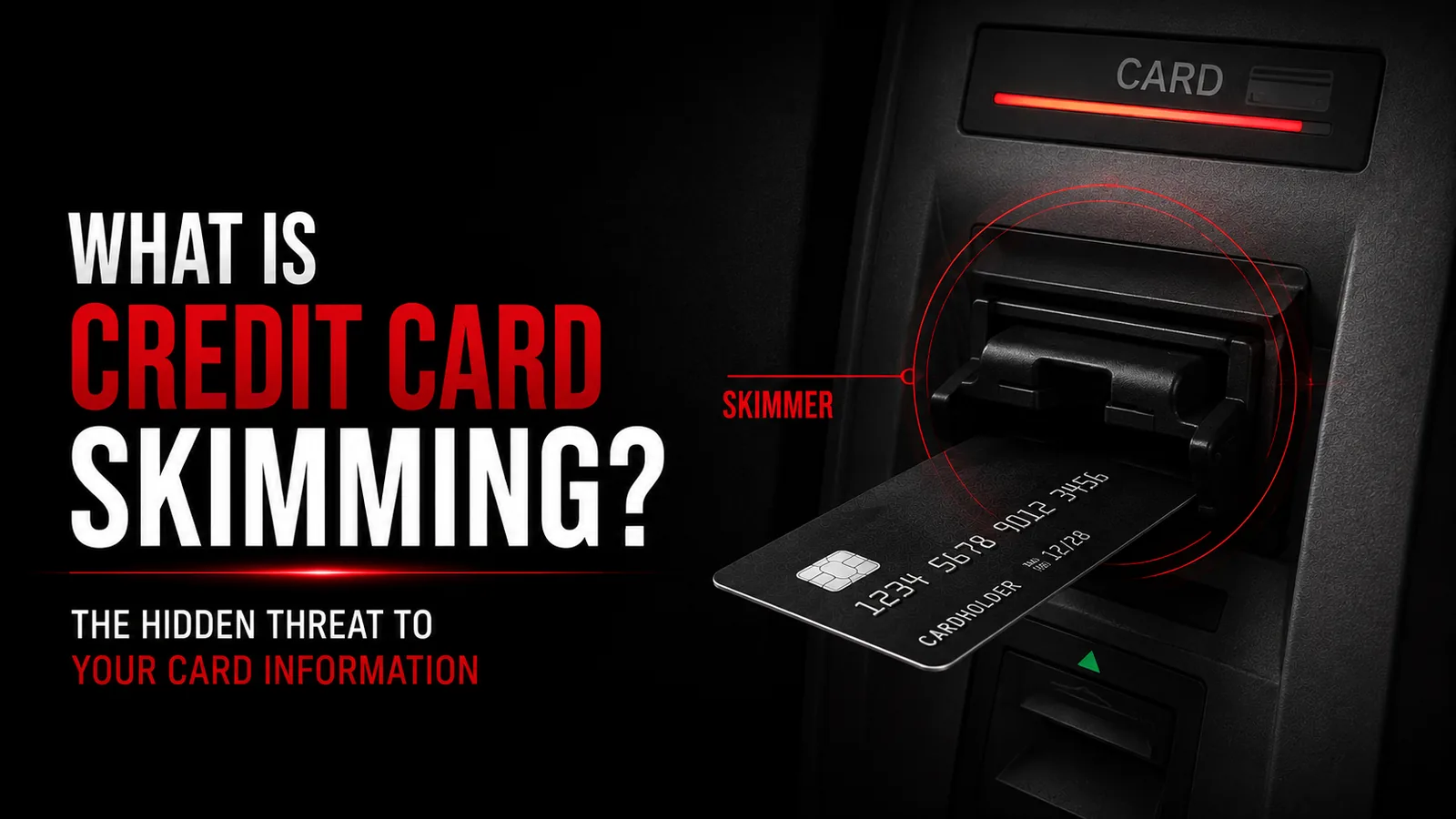
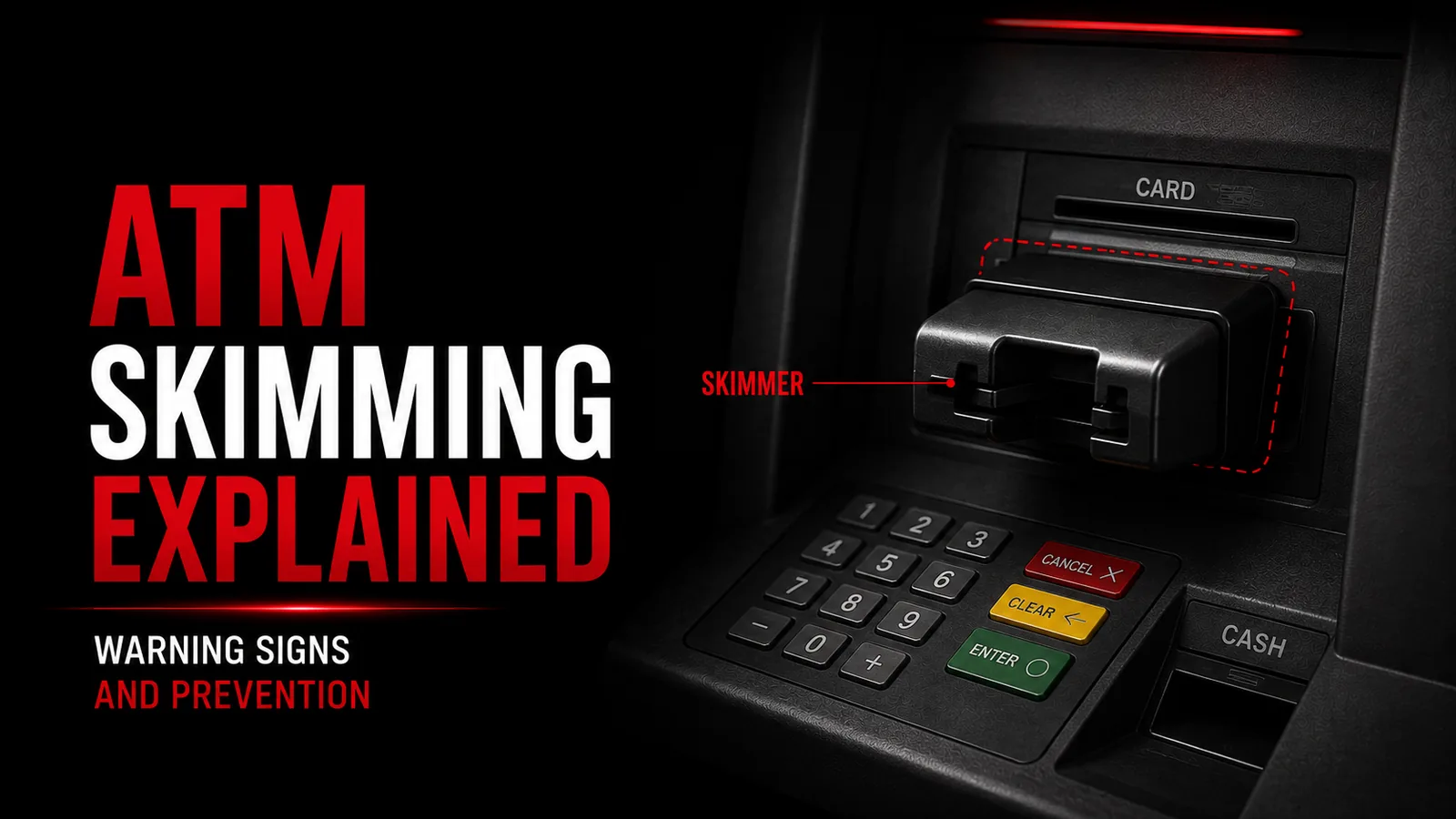
ATM skimming is a form of payment-card theft in which criminals tamper with an automated teller machine or its surrounding card-reading environment to capture card information and, in some cases, the customer's PIN.
The FBI describes skimming as the use of illegally installed devices on or inside ATMs, point-of-sale terminals, and fuel pumps to capture card data and record PIN entries. PCI Security Standards Council similarly defines skimming as the unauthorized capture and transfer of payment data for fraudulent use.
Traditional ATM skimming is most closely associated with magnetic-stripe data. Modern EMV chip technology has significantly reduced the usefulness of copied card data for counterfeit chip transactions because the chip generates a unique security code for each transaction.
However, ATM skimming and terminal tampering have not disappeared. Criminals may still target magnetic-stripe fallback, PIN entry, outdated hardware, poorly monitored machines, or other weaknesses around the ATM environment.
This guide explains ATM skimming from a defensive perspective: what it is, common warning signs, safer ATM habits, how chip and contactless technologies help, what banks and ATM operators can do, and how to respond if you suspect your card or PIN was exposed.
Quick Answer: What Is ATM Skimming?
ATM skimming is the unauthorized collection of card information from an ATM or its card-reading environment.
A criminal may tamper with the card reader while separately attempting to observe or capture the customer's PIN.
The legitimate ATM transaction may still complete, which means a victim may not immediately realize anything was wrong.
The best consumer defenses are to use trusted and well-monitored ATMs when practical, inspect unfamiliar machines for obvious tampering, shield the keypad, prefer chip/contactless or cardless access where available, enable transaction alerts, and report suspicious activity quickly.
How ATM Skimming Works at a High Level
An ATM skimming attack generally targets one or both of two things: card information and PIN information.
The card-data component involves unauthorized interception of information as the card is used. The PIN component may involve visual observation or tampering around the keypad.
The FBI notes that ATM skimming attacks can capture both card data and PIN entries.
The important defensive point is that a normal-looking cash withdrawal does not prove the ATM was uncompromised.
This article intentionally avoids device construction, installation, concealment, wireless transmission, or other operational details that could assist fraud.
Why ATMs Are Attractive Targets
ATMs process large numbers of payment cards and often operate without an employee standing beside them.
Some machines are located outdoors, in vestibules, at convenience stores, transportation hubs, or other places where criminals may attempt physical access.
An unattended machine can create more opportunity for tampering than a terminal continuously observed by trained staff.
That does not mean independently operated or outdoor ATMs are automatically unsafe. The key risk factors are physical access, monitoring, maintenance security, anti-tamper controls, and how quickly unauthorized modifications would be noticed.
What Information Can ATM Skimming Expose?
Traditional ATM skimming primarily targets payment information associated with the card's magnetic stripe.
PCI SSC's skimming guidance explains that criminals have historically copied payment-card numbers and PIN information and used compromised information for unauthorized transactions.
A PIN is not normally contained in readable form on the card's magnetic stripe; criminals may attempt to obtain it separately through observation or terminal tampering.
The exact information exposed depends on the incident, which is why suspected ATM compromise should be reported even when the consumer does not know precisely what was captured.
ATM Skimming vs Ordinary Card Theft
A stolen physical card and an ATM-skimming incident are different.
With physical theft, the criminal possesses the actual card.
With skimming, the card may remain in the customer's wallet while information is copied during normal use.
This can make skimming harder to notice because the victim may have no obvious reason to believe the card is compromised.
Transaction alerts and regular account review therefore play an important role in detection.
ATM Skimming vs Cash-Trapping
ATM skimming should not be confused with cash-trapping or other ATM manipulation.
Skimming focuses on payment credentials.
Cash-trapping schemes interfere with the physical delivery of banknotes so the victim believes the ATM failed to dispense money.
The two threats may occur in the same general environment, but they require different responses.
If an ATM behaves unexpectedly, contact the bank or ATM operator through an official channel rather than accepting assistance from an unknown person nearby.
ATM Skimming vs Phishing
ATM skimming compromises or tampers with the physical payment environment.
Phishing manipulates the customer through messages, calls, fake websites, or other social engineering.
A skimming victim may be using a legitimate bank ATM.
A phishing victim may be persuaded to reveal card or banking information without using an ATM at all.
Consumers need both physical-terminal awareness and social-engineering awareness because criminals can target either the machine or the person.

ATM Skimming vs E-Skimming
E-skimming, also called digital skimming or web skimming, targets online checkout pages rather than physical ATMs.
Both attacks intercept payment information during a transaction that may appear legitimate to the customer.
The defenses are different. ATM skimming requires physical device security, while e-skimming requires secure websites, payment-page monitoring, script controls, patching, and other e-commerce protections.
Merchants, banks, and consumers should therefore avoid using the word 'skimming' as though it describes only one technical environment.
Warning Sign 1: A Card Slot That Looks Different
One warning sign is a card slot that appears visually different from nearby machines of the same model.
Possible concerns include unusual bulk, a different shape, unexpected material, or an attachment that does not appear integrated with the ATM.
A visual difference is not proof of criminal tampering because legitimate ATMs can have different hardware revisions or accessibility features.
The safer response is not to test or pull aggressively on the device. Use another ATM and report the concern to the operator.
Comparing with another identical nearby machine can sometimes help identify obvious differences.
Warning Sign 2: Loose or Unusual Components
A card reader, keypad surround, or other component that appears loose, crooked, damaged, or newly attached deserves caution.
Legitimate ATM hardware is generally designed to be securely fitted.
However, consumers should not dismantle or forcibly remove components because they may damage legitimate equipment or interfere with evidence.
If something appears unusual, use another machine and notify the bank, business, or ATM operator.
Warning Sign 3: A Keypad That Looks Raised or Overlaid
Criminals may try to obtain PIN information by tampering with the keypad area.
A keypad that appears unusually thick, raised, misaligned, or different from a matching ATM can be a warning sign.
The most useful consumer precaution is to shield the keypad with the other hand during PIN entry.
This reduces the usefulness of visual PIN capture even when the consumer cannot identify the source of observation.
Covering the keypad is a simple habit that can be used at ATMs and other PIN-entry terminals.
Warning Sign 4: Broken or Mismatched Security Seals
Some ATMs or surrounding enclosures use security seals or indicators intended to reveal unauthorized access.
A broken, cut, mismatched, or obviously replaced seal may indicate that the equipment needs inspection.
Consumers should not assume that every sticker is a security seal or that an intact sticker guarantees safety.
For operators, tamper-evident controls are most useful when staff know what genuine seals look like and inspect them regularly.
Warning Sign 5: Unusual Resistance When Inserting the Card
If a card is unusually difficult to insert, sits differently than expected, or the reader behaves abnormally, stop rather than repeatedly forcing the card.
Mechanical problems can have innocent causes, but unusual behavior can also indicate that the reader requires inspection.
Use another ATM and inform the operator.
If the machine keeps the card, contact the bank through a trusted number and do not accept help from an unknown person who approaches you at the ATM.
Warning Sign 6: Someone Watching or Offering Unsolicited Help
Not every ATM threat is purely technical.
A person standing unusually close, watching PIN entry, distracting the customer, or offering unsolicited help can create additional risk.
Maintain personal space, shield PIN entry, and cancel the transaction if the environment feels unsafe.
If the ATM retains a card or appears to malfunction, contact the institution directly rather than handing credentials or PIN information to a stranger.
Warning Sign 7: Unexpected ATM Prompts
An ATM should not require customers to disclose information unrelated to the normal transaction.
Be suspicious of unexpected instructions to reveal a complete online-banking password, authentication code, or other secret.

A compromised screen, nearby sign, or social-engineering attempt may try to convince the customer that extra information is required.
When in doubt, cancel the transaction and contact the bank through its official app, website, or trusted telephone number.
Can an ATM Skimmer Be Hidden Inside the Machine?
Yes, some forms of terminal compromise can be concealed and may not be obvious to a consumer.
This is why visual inspection alone cannot guarantee safety.
Banks and ATM operators need additional controls such as physical inspections, anti-tamper measures, device inventory, monitoring, secure maintenance processes, and transaction fraud analytics.
Consumers should understand that failing to notice an expertly concealed compromise does not mean they acted carelessly.
The practical approach is to reduce risk and react quickly to suspicious account activity.
What Is a Shimmer?
The term 'shimmer' is often used for a thin unauthorized device placed inside certain chip-card readers.
The main defensive lesson is that not every compromise sits visibly on top of the card slot.
EMV chip security still provides important protection because copied information does not reproduce the chip's ability to generate valid transaction-specific cryptographic data.
Consumers should report abnormal card-reader behavior rather than trying to investigate inside the reader themselves.
ATM operators should combine physical inspection with electronic monitoring and secure device-management procedures.
Why EMV Chip Makes Traditional Skimming Less Useful
EMV chip technology generates a transaction-specific security code for each transaction.
EMVCo explains that the code is unique and cannot simply be reused, helping reduce counterfeit, lost, and stolen fraud.
This is fundamentally different from the static nature of traditional magnetic-stripe information.
The global migration to EMV has therefore made classic counterfeit-card fraud much harder in environments where chip transactions are properly processed.
Consumers should generally use the chip rather than choose stripe fallback when the chip reader is functioning.
Why Magnetic-Stripe Fallback Matters
Some ATMs and payment terminals may fall back to magnetic-stripe processing if a chip cannot be read or the infrastructure does not support chip transactions.
Fallback can reintroduce dependence on static stripe information.
A properly functioning modern ATM should not routinely force customers to use an older payment method without a legitimate reason.
Banks and ATM operators should monitor unusual fallback patterns because they can indicate hardware problems or increased fraud risk.
Consumers who encounter repeated unexpected fallback behavior should consider using another ATM and notifying the issuer or operator.
Are Contactless and Cardless ATMs Safer?
Where supported, contactless card access or cardless ATM access can reduce exposure to a compromised physical card slot.
EMV contactless transactions generate transaction-specific security information, and mobile-wallet access can also use tokenized credentials and device authentication.
Some banks also allow customers to begin an ATM withdrawal from an authenticated mobile application.
These approaches do not eliminate every form of ATM fraud, because criminals can target accounts, phones, social engineering, or the physical cash-dispensing environment.
But reducing reliance on a magnetic-stripe or insert reader can reduce exposure to traditional skimming techniques.
Can Contactless Card Information Be Skimmed?
Contactless payment technology is designed to limit the usefulness of captured information.
Visa states that contactless skimming is very limited in scope and that every contactless transaction generates transaction-specific security data.
EMV contactless therefore does not operate like a traditional magnetic stripe containing reusable static transaction information.
Consumers should still protect the physical card and banking account, but tap-based access can reduce traditional card-slot skimming exposure where the ATM supports it.
Why You Should Shield Your PIN
Shielding PIN entry is one of the simplest ATM-security habits.
A criminal who captures card information may still need additional authentication information for certain types of misuse.
Covering the keypad makes hidden-camera observation and shoulder surfing more difficult.
Use the free hand to block the view from above and the side while entering the PIN.
This habit is useful even at ATMs that appear completely normal.
Should You Use ATMs Inside Bank Branches?
A bank-branch ATM is not mathematically guaranteed to be safe, but machines in monitored locations can be harder to tamper with unnoticed.
When practical, consumers may prefer ATMs located inside or directly attached to financial institutions, well-monitored retail environments, or other locations with strong physical security.
The more important principle is to avoid obviously neglected, damaged, poorly lit, or suspicious machines when a safer alternative is available.
Location security is one layer, not a substitute for transaction monitoring and issuer fraud controls.
What About Standalone ATMs?
Standalone ATMs are common and many are operated legitimately.
They should not automatically be considered fraudulent.
However, consumers may want to exercise additional caution when a machine is unfamiliar, poorly monitored, physically damaged, or located where tampering could occur unnoticed.
Use another ATM if the reader or keypad looks unusual.
Operators of standalone machines should maintain strong inspection, maintenance, access-control, and anti-tamper processes.
Why ATM Transaction Alerts Matter
Real-time or near-real-time alerts can help detect unauthorized withdrawals quickly.
If a customer receives an alert for an ATM withdrawal they did not make, they can contact the bank immediately.

Visa's current security guidance emphasizes reviewing account activity regularly, and the FTC advises consumers to report lost, stolen, or unauthorized card activity promptly.
Alerts do not prevent the initial compromise, but they can reduce the time available for repeated unauthorized activity.
Customers should ensure the bank has current contact details.
Why Daily Withdrawal Limits Matter
Banks commonly apply daily withdrawal limits to ATM transactions.
These controls can limit exposure if an account or payment credential is compromised.
However, withdrawal limits should not be considered a substitute for authentication or fraud detection.
Customers should choose limits appropriate to their needs where their bank allows customization and should contact the bank immediately if unauthorized withdrawals appear.
Operators and issuers should combine limits with behavioral and transaction monitoring.
Does ATM Skimming Always Lead to Fraud?
No.
Compromised card information creates risk but does not guarantee that unauthorized transactions will succeed.
EMV security, issuer fraud analytics, transaction monitoring, geographic controls, withdrawal limits, account authentication, and other systems can interrupt fraud.
However, suspected skimming should still be reported promptly because attempted misuse may occur later.
Waiting for a second unauthorized transaction before taking action can unnecessarily increase exposure.
How Banks Detect Suspicious ATM Activity
Banks can use transaction-monitoring systems to identify activity that differs from normal account behavior.
Examples of useful defensive signals can include unusual withdrawal patterns, impossible travel, repeated failed attempts, changes in location behavior, or clusters of suspicious transactions associated with one terminal.
The precise fraud models used by banks are security-sensitive and change over time.
For consumers, the important point is that issuer monitoring works alongside—not instead of—prompt customer reporting.
ATM operators can also investigate a machine when multiple complaints or suspicious transactions are linked to the same location.
ATM Operator Defense 1: Physical Inspection
ATM operators should inspect machines routinely for evidence of tampering.
PCI SSC emphasizes inspection of payment devices and awareness of unauthorized attachments or replacements.
Inspection programs should be documented and performed by trained staff.
Operators need a known baseline for what legitimate hardware, seals, cabling, enclosures, and accessories look like.
A suspicious device should be taken out of service until it is safely investigated.
ATM Operator Defense 2: Device Inventory
An accurate device inventory helps an operator identify unauthorized changes.
Records can include the ATM's location, identifier, approved hardware, maintenance history, and responsible service providers.
If a terminal or component changes unexpectedly, staff should be able to determine whether the change was authorized.
PCI SSC's broader skimming-prevention guidance emphasizes knowing payment devices and controlling access to them.
Inventory is especially important for organizations managing multiple machines across different locations.
ATM Operator Defense 3: Secure Maintenance
ATM maintenance creates legitimate reasons for technicians to open or modify equipment.
That means maintenance processes need strong verification and access controls.
Operators should know which vendors and technicians are authorized and should investigate unexpected maintenance visits.
Keys, administrative credentials, service interfaces, and remote-management systems should be protected.
A secure maintenance process reduces the opportunity for an unauthorized person to disguise tampering as ordinary service work.
ATM Operator Defense 4: Anti-Tamper Monitoring
Modern ATM environments can use physical and electronic anti-tamper controls.
The exact technology varies by vendor and machine.
Useful goals include detecting unauthorized access, identifying unusual hardware changes, monitoring reader health, and quickly taking suspicious devices out of service.
Operators should avoid relying on a single visual sticker or seal.
Anti-tamper measures work best as part of layered physical security and fraud monitoring.
ATM Operator Defense 5: Keep EMV Working
A broken chip reader can force customers toward less secure fallback behavior.
ATM operators should repair malfunctioning EMV components promptly and monitor abnormal fallback levels.
EMVCo explains that chip transactions generate one-time security data that helps prevent counterfeit fraud.
Maintaining chip capability therefore has a direct fraud-prevention benefit.
Where available, contactless or cardless access can add further options that reduce dependence on insert readers.
What to Do If an ATM Keeps Your Card
Do not immediately accept help from an unknown person standing near the machine.

Contact the bank or ATM operator using an official number.
If the machine belongs to your bank and the branch is open, speak directly with staff.
Use the issuer's app to lock or freeze the card if that feature is available and the card cannot be recovered safely.
Monitor account activity and follow the issuer's replacement guidance.
Never disclose your PIN to someone who claims they need it to retrieve the card.
What to Do If You Suspect an ATM Is Tampered With
Stop the transaction if possible and use another ATM.
Do not attempt to dismantle the suspicious hardware.
Notify the bank, merchant, or ATM operator.
If you already used the ATM, review your account and enable or check transaction alerts.
Contact the issuer if you believe card or PIN information may have been exposed.
Providing the approximate time and location can help the operator investigate the machine.
What to Do If You See an Unauthorized Withdrawal
Contact the bank or credit union that issued the card immediately.
The FTC advises consumers to report unauthorized card activity as soon as possible because fast reporting can affect protections and reduce further loss.
Use the official banking app, known website, or number from the back of the card rather than a number supplied by an unexpected message.
Ask the issuer about locking or replacing the card and changing the PIN if necessary.
Review the account for other suspicious activity and keep records of the report and disputed transactions.
Should You Change Your PIN After Suspected Skimming?
If PIN exposure is possible, the issuer may recommend changing it.
The safest action depends on the bank's procedures and what type of compromise is suspected.
Do not reuse an easily guessed PIN based on birthdays, repeated digits, or other obvious personal information.
If the card itself may be compromised, changing only the PIN may not address all risks, so follow the issuer's advice about card replacement as well.
Should You Replace the Card?
The issuer is best positioned to decide whether reissuance is necessary.
A replacement card changes the payment credential and can prevent continued use of compromised card information.
Banks may proactively replace cards linked to known compromised ATMs or fraud incidents.
Consumers should contact the issuer promptly rather than waiting for more unauthorized activity if there is credible evidence that card data may have been captured.
Can a Criminal Drain an Account Immediately?
Unauthorized ATM withdrawals are limited by factors such as account balance, bank policies, withdrawal limits, transaction monitoring, PIN requirements, and other security controls.
It is therefore inaccurate to assume that one compromise automatically gives unlimited access to an account.
However, losses can still be serious, especially when fraud is not detected quickly.
Transaction alerts, daily limits, issuer monitoring, and prompt reporting all reduce risk.
Consumers should not delay reporting merely because the first suspicious amount is small.
Common Myths About ATM Skimming
Myth: ATM skimming only happens at old machines. Reality: modern hardware reduces risk, but physical tampering can target many environments if access controls are weak.
Myth: A successful cash withdrawal proves the ATM was safe. Reality: an ATM transaction can complete while unauthorized data capture occurs.
Myth: EMV chips make all ATM fraud impossible. Reality: EMV substantially reduces counterfeit-card fraud, but criminals can still target PINs, accounts, social engineering, outdated readers, or other weaknesses.
Myth: You can always see a skimmer. Reality: some compromises may be concealed, which is why operators also need monitoring and inspections.
Myth: Contactless cards work like magnetic stripes. Reality: contactless EMV uses transaction-specific security information.
Myth: If your card is still in your wallet, it cannot be compromised. Reality: skimming can copy information without physically stealing the card.
Myth: Consumers are solely responsible for preventing ATM skimming. Reality: banks and ATM operators have major responsibilities for device security, inspections, maintenance controls, and fraud detection.
Conclusion
ATM skimming is a reminder that payment security is not only digital. The physical machine used to access an account can also become part of the attack surface.
Traditional skimming relied heavily on static magnetic-stripe information and separate PIN capture. EMV chip technology has significantly reduced the usefulness of copied card data for counterfeit chip transactions by generating unique security information for each payment.
Still, no technology eliminates every ATM threat. Criminals may target outdated payment methods, PIN entry, account credentials, unattended machines, or social engineering.
For consumers, the practical defense is straightforward: choose well-maintained and monitored ATMs when possible, inspect unfamiliar machines, shield PIN entry, prefer modern chip/contactless/cardless access, enable alerts, and respond rapidly to unexplained withdrawals.
For banks and ATM operators, effective protection requires secure hardware, controlled maintenance, regular inspections, device inventories, anti-tamper monitoring, EMV support, and strong transaction-fraud analytics.
ATM skimming becomes much harder when physical security, modern payment technology, consumer awareness, and rapid fraud detection all work together.