
Introduction
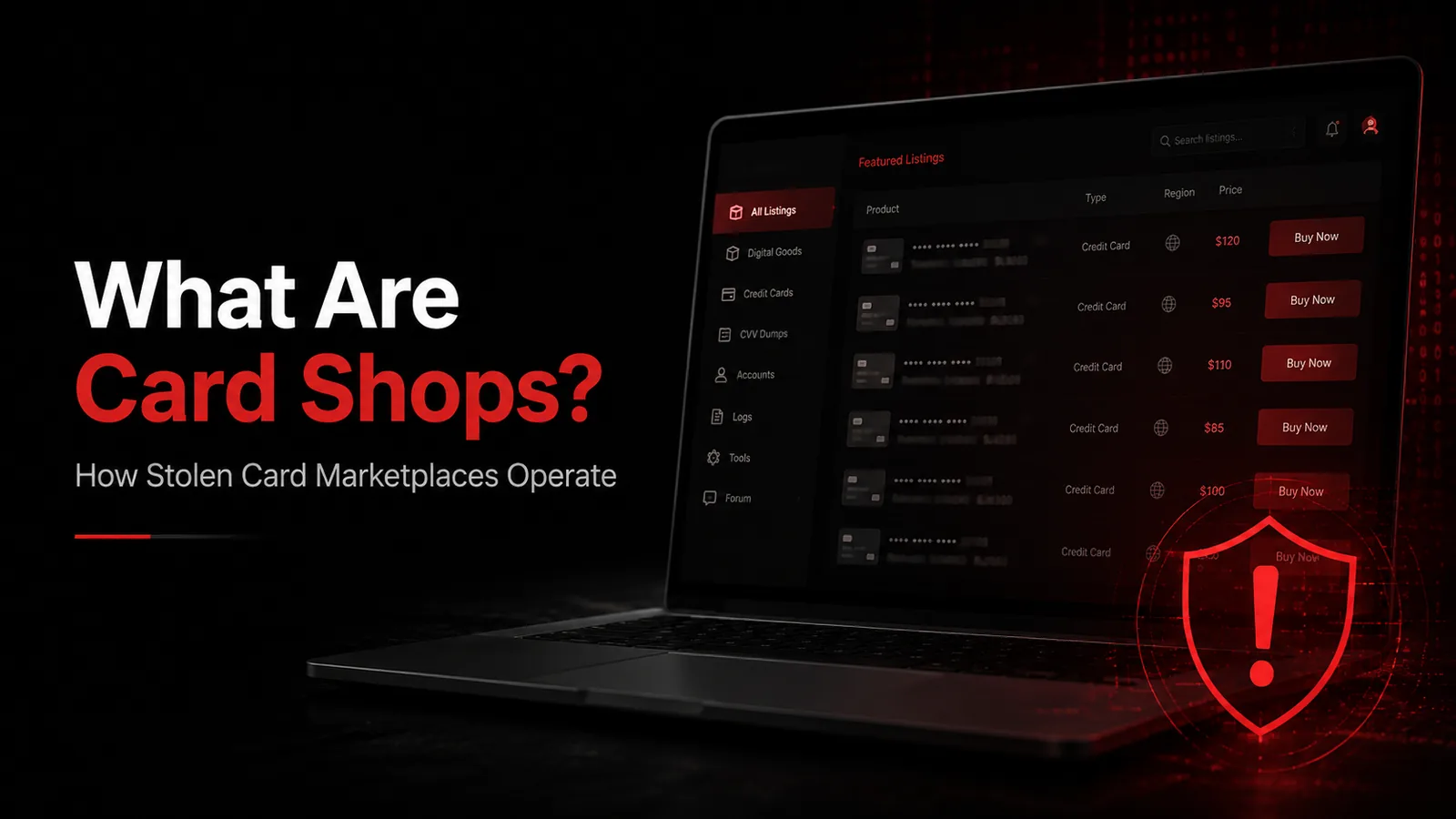
Card shops are illicit online marketplaces built around stolen or compromised payment-card information. Unlike a traditional discussion forum, which emphasizes conversation, reputation, and networking, a card shop is usually structured more like an online store: criminal sellers or operators organize stolen payment data into listings and make it available to other criminals.
Europol has described websites selling stolen credit-card data as “card shops” and has repeatedly targeted sellers and buyers of compromised card information through coordinated law-enforcement actions. Its current payment-fraud guidance also explains that compromised card details circulate through forums, marketplaces, and automated card shops.
The data sold through these marketplaces can originate from phishing, malware, data breaches, physical skimming, digital skimming, compromised merchants, and other forms of payment-data theft. The person who steals a card credential is therefore not necessarily the person who later attempts to misuse it.
Card shops should not be viewed as stable or trustworthy businesses. Their operators can disappear, sell fake or recycled data, infect customers with malware, steal deposits, expose transaction records, or have their domains and infrastructure seized by law enforcement.
This article explains card shops defensively and at a high level. It does not identify active shops, provide links or access instructions, describe how to purchase stolen cards, reproduce marketplace filters, list prices, or explain how criminals test or monetize stolen credentials.
Quick Answer: What Is a Card Shop?
A card shop is an illegal online marketplace that offers stolen or compromised payment-card information and sometimes related identity or account data.
The term is commonly used for marketplaces that organize stolen payment credentials into searchable or categorized inventories rather than relying mainly on forum conversations.
Card shops can exist on ordinary web infrastructure, restricted websites, Darknet services, or criminal platforms connected to encrypted messaging channels.
Europol has specifically used the term “card shops” for websites selling stolen credit-card data and has described automated card shops as part of the broader underground payment-fraud ecosystem.
For consumers and businesses, the practical lesson is that stolen card data can be redistributed after the original breach, which is why card replacement, transaction monitoring, authentication, and fraud analytics remain important even after the initial compromise has been contained.
Card Shops vs Carding Forums
Card shops and carding forums overlap, but they perform different primary functions.
A carding forum is mainly a community environment where users communicate, build reputations, advertise, refer services, and discuss fraud-related topics.
A card shop is more directly transaction-oriented. It organizes stolen payment information into a marketplace or automated storefront.
A forum can advertise a card shop, and a card shop can maintain a forum or chat channel, so the two can be closely connected.
Europol distinguishes underground forums from criminal marketplaces and automated shops, which helps explain why disrupting one platform does not necessarily eliminate the wider ecosystem.
Card Shops vs General Dark Web Marketplaces
A general dark web marketplace may sell many categories of illegal goods and services.
A card shop is more specialized around payment-card data and related fraud information.
Some broad illicit marketplaces have historically offered stolen credit-card information alongside drugs, counterfeit documents, malware, or other illegal products. Europol’s 2021 DarkMarket takedown, for example, described a large illicit marketplace where vendors sold stolen or counterfeit card details among many other prohibited items.
The category is therefore defined more by what is being traded than by whether the platform uses Tor or another anonymity technology.
Where Does the Stolen Card Data Come From?
Card shops do not create payment information from nothing.
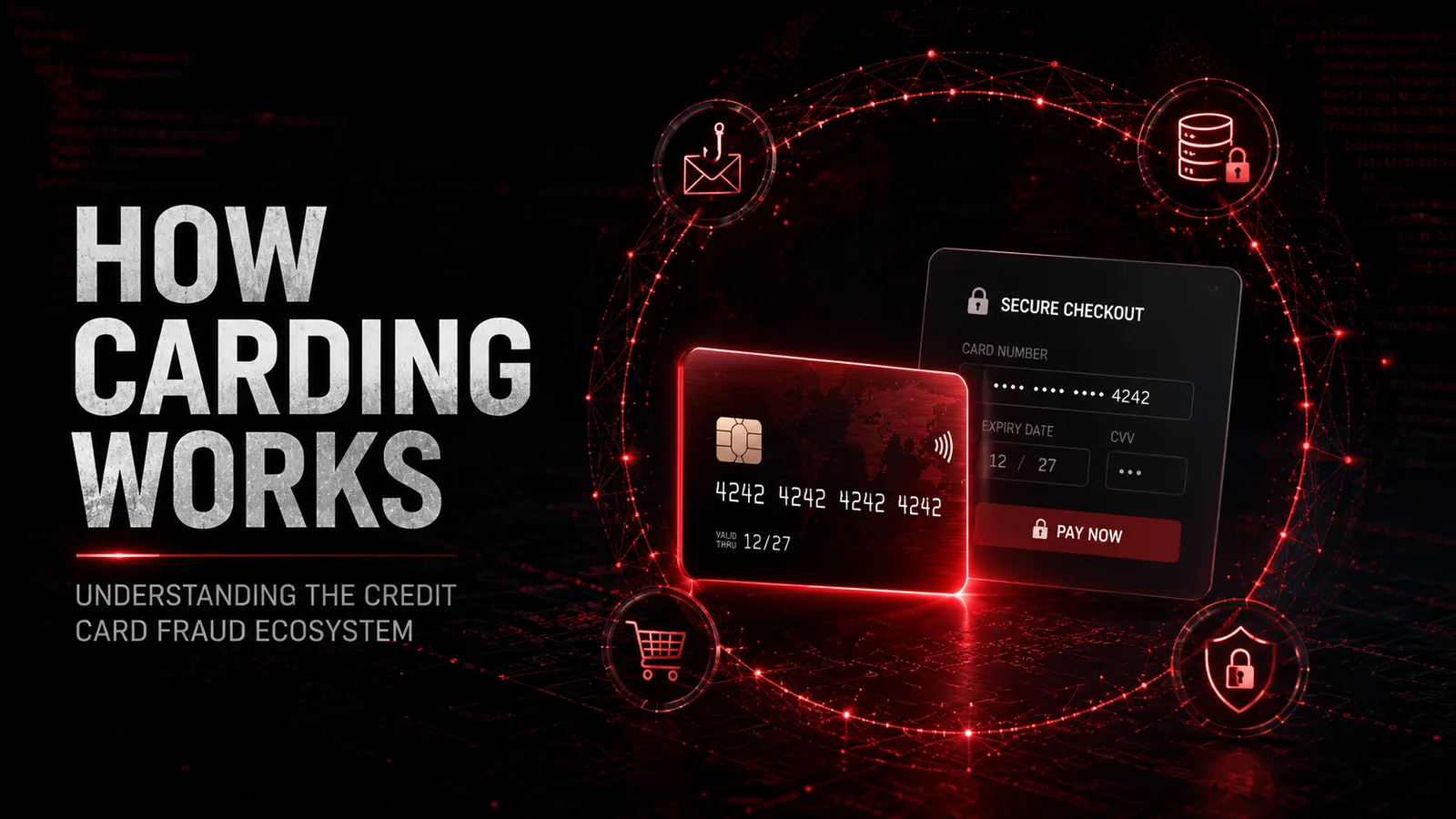
Stolen credentials can originate from merchant breaches, phishing, social engineering, malware, physical skimming, e-skimming, compromised accounts, or other payment-security incidents.
Europol says compromised card details obtained through breaches, social engineering attacks, data-stealing malware, and phishing can be sold and redistributed through criminal forums, marketplaces, and automated card shops.
This separation between data theft and data resale is a key reason payment fraud operates as an ecosystem rather than as one single act committed by one person.
How a Card Shop Operates at a High Level
At a high level, a criminal card marketplace performs several functions that resemble a normal e-commerce platform: it organizes inventory, presents listings, maintains user accounts, accepts payment, and records transactions.
The difference is that the underlying goods are stolen financial credentials and the activity is criminal.
Operators may obtain data from suppliers, brokers, or criminal affiliates and then place it into a marketplace inventory. Buyers may create accounts and use the platform’s internal systems to identify records they believe fit their intended fraud.
This article intentionally does not describe marketplace search fields, filtering methods, payment procedures, or post-purchase criminal workflows.
For defenders, the important point is that centralized marketplaces create infrastructure, databases, administrators, financial flows, and user records that can all become targets for investigation.
Why Criminals Use Automated Shops
Automation reduces the amount of direct communication required between criminals.
A buyer does not necessarily need to negotiate individually with the person who originally stole the data.
The shop can act as an intermediary that organizes and distributes stolen information at scale.
From a law-enforcement perspective, this centralization can become a weakness because one seized service may contain evidence involving many suppliers and customers.
The same convenience that helps criminal commerce can create concentrated investigative value.

Who Operates Card Shops?
Operators can include administrators, infrastructure managers, data suppliers, brokers, advertisers, support staff, and other criminal participants.
The exact roles differ between platforms.
Administrators may control domains, servers, user databases, cryptocurrency wallets, access permissions, and dispute processes.
These central roles can expose operators to serious legal risk because infrastructure and records may connect them to large volumes of stolen information.
Recent U.S. and international operations show that authorities target marketplace infrastructure as well as individuals.
Suppliers and Data Brokers
A marketplace operator does not necessarily steal every card record directly.
Suppliers or brokers may provide batches of compromised information obtained elsewhere.
Europol’s 2025 reporting on criminal data markets describes stolen credentials and data sets being sold, resold, and repackaged by data and access brokers across dark web forums, encrypted channels, and subscription-based criminal marketplaces.
This helps explain why one breach can continue creating risk after the original attacker is gone.
Stolen data can be duplicated and redistributed many times.
Why Stolen Card Data Is Resold
Different criminals specialize in different parts of fraud.
One actor may compromise a merchant, another may aggregate payment information, another may operate a marketplace, and another may attempt downstream fraud.
Resale allows criminals to monetize data without personally carrying out every later stage.
For defenders, specialization means security controls can interrupt the chain at multiple points: preventing compromise, identifying exposed accounts, replacing cards, authenticating transactions, and detecting suspicious use.
What Information Can Appear in Stolen-Card Markets?
Law-enforcement cases involving stolen-card marketplaces describe data such as payment-card numbers, expiration dates, card-verification information, and other personal or account information.
Some cybercrime marketplaces also trade compromised usernames and passwords or other data that can support account takeover.
The exact information available varies by incident and marketplace.
This article does not reproduce listing formats, seller terminology, prices, quality labels, or search categories because those details could assist illicit purchasing.
Why Marketplace Data Is Often Unreliable
Criminal marketplaces are not independently audited.
A listing may contain old, duplicated, cancelled, already-replaced, fake, or previously sold information.
Sellers can exaggerate the quality or freshness of their data.
A marketplace can manipulate reviews or simply disappear with users’ money.
The absence of legal consumer protection makes underground commerce structurally untrustworthy.
The Problem of Duplicate and Recycled Data
Stolen card information can be copied indefinitely.
The same record may therefore circulate through multiple sellers and marketplaces.
A card may already have been cancelled or replaced by the time a criminal tries to use it.
Issuers can also identify compromised accounts and increase monitoring.
This explains why stolen data does not automatically translate into successful fraud and why criminals themselves can be deceived by supposedly valuable inventories.
Why Card Shops Use Reputation Systems
Criminal marketplaces have a trust problem.
Buyers cannot rely on courts or regulators if a seller lies.
Some platforms therefore develop seller ratings, account histories, dispute systems, or administrator-controlled reputation mechanisms.
But these systems can be manipulated and provide no enforceable legal protection.
A criminal platform’s “trusted vendor” label should not be confused with genuine regulatory oversight.
Why Card Shops Scam Their Own Users
People trying to commit fraud are attractive targets for other fraudsters.
A fake card shop can collect cryptocurrency or credentials and provide nothing in return.
An established marketplace can perform an exit scam and disappear with deposits.
Administrators can manipulate balances or disputes.
Malware can be distributed through supposed tools, browser extensions, or support downloads.
The result is an ecosystem where criminals frequently victimize one another.
What Is an Exit Scam?
An exit scam occurs when operators of an illicit marketplace abruptly disappear with user balances or funds.
Because the transactions are illegal, customers cannot rely on ordinary chargebacks, courts, consumer-protection agencies, or regulated escrow services.
The operator’s claimed anonymity can make recovery nearly impossible.
The risk demonstrates why illegal marketplaces cannot provide the legal accountability of legitimate commerce.
Malware and Fake Card Shops
Some websites presenting themselves as criminal marketplaces may be designed mainly to infect visitors, steal credentials, or collect cryptocurrency.
Files or applications distributed through underground platforms can contain infostealers or remote-access malware.
A person looking for stolen data can therefore become a victim of credential theft themselves.
Consumers and students should not attempt to access criminal marketplaces out of curiosity.
Legitimate research should rely on lawful sources, controlled environments, and appropriate institutional authorization.
Are Card Shops Anonymous?
No criminal marketplace can guarantee perfect anonymity.
Users can expose themselves through usernames, email accounts, IP records, payment activity, cryptocurrency traces, devices, private messages, or relationships with other suspects.
The marketplace itself may retain data users do not realize exists.
If servers are seized, databases and logs can become investigative evidence.
Centralized criminal services therefore create both convenience and concentrated risk.
Cryptocurrency Does Not Guarantee Anonymity
Criminal marketplaces often use cryptocurrency, but blockchain activity can leave durable transaction records.
Law enforcement can combine blockchain analysis with exchange records, seized infrastructure, user devices, and marketplace databases.
Recent marketplace seizures have included cryptocurrency and domains, demonstrating that digital payment rails do not eliminate investigative risk.
The level of traceability varies, but “paid with cryptocurrency” should never be treated as meaning “untraceable.”
Why Server and Domain Seizures Matter
A marketplace domain is only the public-facing layer.
Behind it may be servers, databases, user accounts, administrator records, cryptocurrency addresses, internal messages, access logs, and transaction histories.
A seizure can therefore generate intelligence about both operators and users.
Authorities can correlate those records with financial services, devices, email accounts, other criminal investigations, and cooperating witnesses.
Deleting a marketplace account later does not guarantee that historical evidence disappears.
Law-Enforcement Example: Carding Action 2020
In November 2020, Europol announced Carding Action 2020, an operation targeting criminals selling and purchasing compromised payment-card details.

Europol explicitly described websites selling stolen credit-card data as “card shops.”
Authorities analyzed approximately 90,000 pieces of card data during the operation and estimated that the effort prevented about EUR 40 million in losses.
The operation demonstrates that card-shop activity can be monitored and disrupted through cooperation among law enforcement, payment companies, and financial institutions.
Law-Enforcement Example: Carding Action 2021
In 2021, Europol announced another coordinated carding operation in which 12 vendors selling compromised credit-card details were identified.
Authorities analyzed 49,761 pieces of stolen card data and estimated that the operation prevented about EUR 14 million in losses.
This type of operation shows how payment companies and law enforcement can identify compromised accounts and act before every credential is successfully misused.
The goal is not merely to arrest individuals but also to protect cardholders by identifying exposed payment data.
Major 2025 Marketplace Seizure
A major recent example came in June 2025, when U.S. authorities announced the seizure of approximately 145 domains associated with a criminal marketplace trafficking stolen credit-card information and other personal data.
The Justice Department said the marketplace sold stolen card information and compromised credentials and that the seized domains would be redirected to a law-enforcement-controlled server.
The U.S. Secret Service said the service had promoted itself by publishing millions of stolen credit-card records and had generated millions of dollars in revenue.
This case illustrates why active criminal marketplaces create extensive infrastructure and financial evidence that can be targeted by investigators.
Rydox: Another Cybercrime Marketplace Example
In December 2024, the U.S. Justice Department announced the seizure of the Rydox cybercrime marketplace and arrests of alleged administrators.
Authorities described Rydox as a marketplace dedicated to stolen personal information, access devices, and cybercrime tools.
The case is broader than stolen-card shops alone, but it demonstrates how administrators, infrastructure, and marketplace records can become the focus of international investigations.
Criminal platforms can appear stable for years and still be dismantled.
What Happens to Card Data After a Marketplace Is Seized?
Law-enforcement agencies and payment partners can use seized or identified data to help determine which accounts were compromised.
Issuers may then monitor accounts, block suspicious transactions, or replace cards.
The exact process depends on the investigation and payment network.
For consumers, this is one reason a bank may proactively reissue a card even when the cardholder did not personally report a breach.
Marketplace disruption can therefore have a direct protective effect on victims.
Why Takedowns Do Not End the Entire Market
When a major card shop disappears, suppliers and buyers can migrate to another platform.
New marketplaces can emerge and criminal communities can shift toward private messaging or other channels.
This is why enforcement combines domain seizures with arrests, financial seizures, infrastructure analysis, and intelligence collection.
Payment providers likewise need continuous fraud controls rather than assuming one marketplace takedown permanently eliminates stolen-card trade.
How Takedowns Still Help
Even temporary disruption can be valuable.
A seizure can invalidate infrastructure, interrupt sales, seize funds, expose users, identify compromised cards, create distrust, and generate intelligence for future investigations.
Repeated disruption raises the cost and risk of operating criminal markets.
It can also help issuers identify exposed cardholders before more unauthorized transactions occur.
Legal Risks of Buying From a Card Shop
Buying, possessing, trafficking, or using stolen payment information can violate serious criminal laws.
Potential offenses vary by jurisdiction but can involve fraud, identity theft, access-device offenses, unauthorized computer access, conspiracy, and money laundering.

A person does not need to operate the marketplace to face legal exposure.
Law-enforcement investigations can target administrators, vendors, brokers, and buyers.
Anyone who needs legal advice about a specific situation should consult a qualified lawyer in the relevant jurisdiction.
Why Consumers Should Never Search Card Shops for Their Own Card
After a public breach, some consumers wonder whether they should search underground markets for their own card number.
That is not recommended.
Criminal sites can expose visitors to malware, scams, illegal content, and fraudulent “recovery” services.
The presence or absence of a card in one marketplace does not prove whether the credential exists elsewhere.
The safer response is to work with the issuing bank, enable transaction alerts, review account activity, and replace the card when appropriate.
Do Not Pay a “Dark Web Removal” Service for Card Data
A company or individual cannot reliably guarantee that every copy of a stolen card credential has been removed from criminal markets.
Payment data can be duplicated, resold, archived, and repackaged.
The practical solution for compromised card information is usually to invalidate the credential through the issuer rather than attempting to delete every stolen copy.
If broader identity information was exposed, consumers can use official identity-theft and credit-protection resources.
How Businesses Should Respond to Stolen-Card Market Intelligence
Businesses should not send ordinary employees into criminal marketplaces.
Threat intelligence should come through lawful professional channels such as payment networks, law enforcement, specialist threat-intelligence providers, acquirers, and cybersecurity firms.
If a company learns that customer card information is circulating, it should activate incident-response and payment-breach processes rather than attempting to negotiate with criminal sellers.
The priorities are containing the compromise, identifying affected accounts, notifying appropriate payment partners, preserving evidence, and preventing downstream fraud.
How Issuers Reduce the Value of Stolen Cards
Issuers can monitor or replace compromised accounts.
Authorization systems, transaction analytics, velocity controls, merchant risk signals, and authentication can stop attempted misuse.
Card replacement changes the credential and can make stolen copies obsolete.
This is one reason stolen data advertised in criminal markets does not automatically produce successful fraud.
Payment security works by reducing both the supply of compromised credentials and their usefulness after compromise.
How 3-D Secure Helps
EMV 3-D Secure adds issuer-controlled authentication to card-not-present transactions.
It does not prevent a card number from being stolen or listed in a criminal marketplace.
However, it can make stolen static credentials less useful by requiring additional authentication or risk assessment for certain transactions.
3DS should work alongside tokenization, authorization controls, merchant fraud analytics, and transaction monitoring.
How Tokenization Reduces Marketplace Value
Tokenization replaces the underlying card credential with a substitute value in supported payment flows.
A token can be restricted to a particular device, merchant, or context depending on implementation.
This can reduce the usefulness of stolen payment data outside its intended environment.
Tokenization does not eliminate all card fraud, but it reduces reliance on static reusable credentials and therefore changes the economics of stolen-card markets.
What Merchants Can Do to Reduce Supply to Card Shops
Merchants can reduce the amount of payment data reaching criminal markets by protecting the points where credentials are stolen.
Important controls include PCI DSS, secure e-commerce payment pages, anti-skimming measures, payment-data minimization, tokenization, secure administrator access, malware protection, patching, third-party risk management, and incident response.
A secure merchant does not stop every criminal marketplace, but it reduces the supply of fresh stolen information those marketplaces depend on.
What Consumers Can Do
Consumers cannot directly shut down stolen-card marketplaces, but they can reduce the consequences of exposure.
Enable transaction alerts, review statements, use strong account security, prefer modern tokenized payment methods where practical, and respond quickly to issuer notifications.
After a known breach, follow the issuer’s guidance about replacing the card.
If unauthorized activity appears, report it promptly.
Do not trust unsolicited messages claiming to know that your card is “for sale” online unless the information can be verified through official channels.
Common Myths About Card Shops
Myth: A card shop is just another type of forum. Reality: forums primarily organize communication and reputation, while shops are more directly structured around illicit inventory and transactions.
Myth: Every listing contains a working stolen card. Reality: underground data can be old, fake, duplicated, cancelled, or already replaced.
Myth: Cryptocurrency makes buyers and operators anonymous. Reality: marketplace investigations frequently include blockchain analysis, financial seizures, and user records.
Myth: Darknet infrastructure makes card shops immune from seizure. Reality: law enforcement has repeatedly seized domains, servers, cryptocurrency, and marketplace infrastructure.
Myth: A long-running marketplace must be trustworthy. Reality: criminal platforms can exit scam, sell bad data, infect users, or be infiltrated and seized.
Myth: Consumers should search card shops to see whether their card was stolen. Reality: issuer monitoring and card replacement are safer and more reliable.
Myth: Closing one shop ends stolen-card trading. Reality: criminal markets migrate, which is why continuous payment-fraud prevention remains necessary.
Conclusion
Card shops are the marketplace layer of the stolen-payment-data economy.
They organize compromised card information into criminal storefronts that connect data suppliers with people seeking to misuse payment credentials.
But the convenience of a centralized marketplace creates significant weaknesses: infrastructure can be seized, databases can become evidence, cryptocurrency can be traced or confiscated, operators can be arrested, and buyers can be identified.
Law-enforcement operations from Europol’s Carding Action campaigns to major U.S. marketplace seizures in 2025 demonstrate that stolen-card shops are neither anonymous nor consequence-free.
For consumers, the correct response to suspected compromise is not underground monitoring. It is issuer contact, transaction alerts, account review, and card replacement where appropriate.
For merchants and payment providers, the long-term answer is to reduce both the supply and the value of stolen credentials through secure systems, tokenization, modern authentication, fraud analytics, and rapid breach response.
Understanding how card shops fit into the fraud ecosystem helps defenders see why one stolen card number can move through several criminal hands—and why layered payment security matters long after the original theft.