

Card-not-present (CNP) fraud occurs in payment environments where a physical card is not presented to the merchant, including ecommerce, in-app purchases, recurring billing and many other remote transactions.
Because these payments depend heavily on digital credentials, protecting the Primary Account Number (PAN) is especially important. Payment tokenization helps by replacing the real card number with a substitute payment token that can be used in supported transactions without exposing the PAN in the same way.
EMVCo explains that payment tokenization increases the security of digital and remote payments by replacing the PAN with a unique alternative value and limiting where that value can be used. This reduces the value of compromised payment information and makes stolen credentials less useful outside their intended context.
Quick answer: Tokenization reduces card-not-present fraud by replacing the reusable card number with a controlled token. If a token is exposed, it may be restricted to a specific merchant, device or payment scenario, making it much harder to reuse for fraudulent purchases elsewhere.
Why Card-Not-Present Payments Carry Different Fraud Risks
In a card-present transaction, payment security can rely on physical-card technologies such as EMV chip processing. In a card-not-present transaction, the merchant usually receives payment credentials remotely and cannot physically inspect the card. That means stolen digital credentials can be attractive for online abuse, making credential protection especially important.
What Tokenization Changes in a CNP Payment
Traditional online card payments can rely on the PAN as the reusable account credential. Tokenization substitutes that PAN with another credential. Depending on the architecture, the merchant may store a proprietary gateway token or use a network payment token that can travel through supported authorization flows.

1. Tokenization Reduces PAN Exposure
Instead of repeatedly storing or transmitting the card number, merchants and payment applications can use a token. This reduces how widely the original PAN appears throughout ecommerce systems.
- Merchant databases can contain tokens instead of raw card numbers.
- Applications can reference stored payment credentials without displaying the PAN.
- Payment-service providers can keep the underlying account data inside more tightly controlled environments.
- A data breach may expose substitute credentials rather than the original reusable card number.
2. Network Tokens Can Be Merchant-Specific
EMV payment tokens can be restricted according to where they are allowed to work. A token provisioned for one merchant may not be usable at an unrelated merchant, reducing its usefulness if copied.
3. Tokens Can Be Device- or Scenario-Specific
A token can also be tied to a particular device, wallet or payment scenario. This means a copied credential may fail outside the context for which it was provisioned.
4. Tokenization Makes Stolen Data Less Reusable
CNP fraud becomes easier when compromised credentials can be reused widely. Tokenization reduces that portability. EMVCo describes the benefit as reducing the value of stolen or compromised payment information.

5. Network Tokens Support Credential Lifecycle Management
When supported by the network and issuer, token relationships can be updated after events such as card renewal or replacement. This can keep legitimate stored credentials current while reducing the need for merchants to repeatedly collect fresh card numbers.
6. Tokenization Can Improve Security Without Extra Checkout Friction
Tokenization can work largely behind the scenes. Visa reports lower fraud rates for network-tokenized CNP transactions than comparable PAN-based transactions and also reports improved authorization performance in its network data. Merchant results can vary.
How Much Can Network Tokenization Reduce CNP Fraud?
There is no universal percentage that applies to every merchant. Fraud reduction depends on geography, industry, transaction mix, issuer behavior and implementation.
Visa currently reports about a 31% average decrease in fraud from network tokenization in its secure-payments materials and has also reported around 30% lower online fraud for token-based transactions versus PAN-based transactions in selected global Visa data. These are network observations, not guaranteed outcomes for every business.
Tokenization vs Encryption for CNP Security
Security control | What it does | CNP fraud benefit |
|---|---|---|
Tokenization | Replaces the PAN with a substitute token | Reduces exposure and reuse value of stolen credentials |
Encryption | Transforms sensitive data into protected ciphertext | Protects payment data while stored or transmitted |
Modern payment environments often use both technologies: encryption protects data in transit and at rest, while tokenization reduces how often the original PAN must appear.
Tokenization vs 3-D Secure
- Tokenization protects the payment credential by reducing exposure of the PAN.
- EMV 3-D Secure helps authenticate the consumer in ecommerce card payments.
EMVCo positions EMV Payment Tokenisation and EMV 3-D Secure as complementary technologies for remote payment security.
Tokenization vs Strong Customer Authentication
Strong Customer Authentication (SCA) helps verify the customer using qualifying independent authentication elements where applicable. Tokenization does not prove who the shopper is; it protects the payment credential.

Tokenization vs AVS and CVV
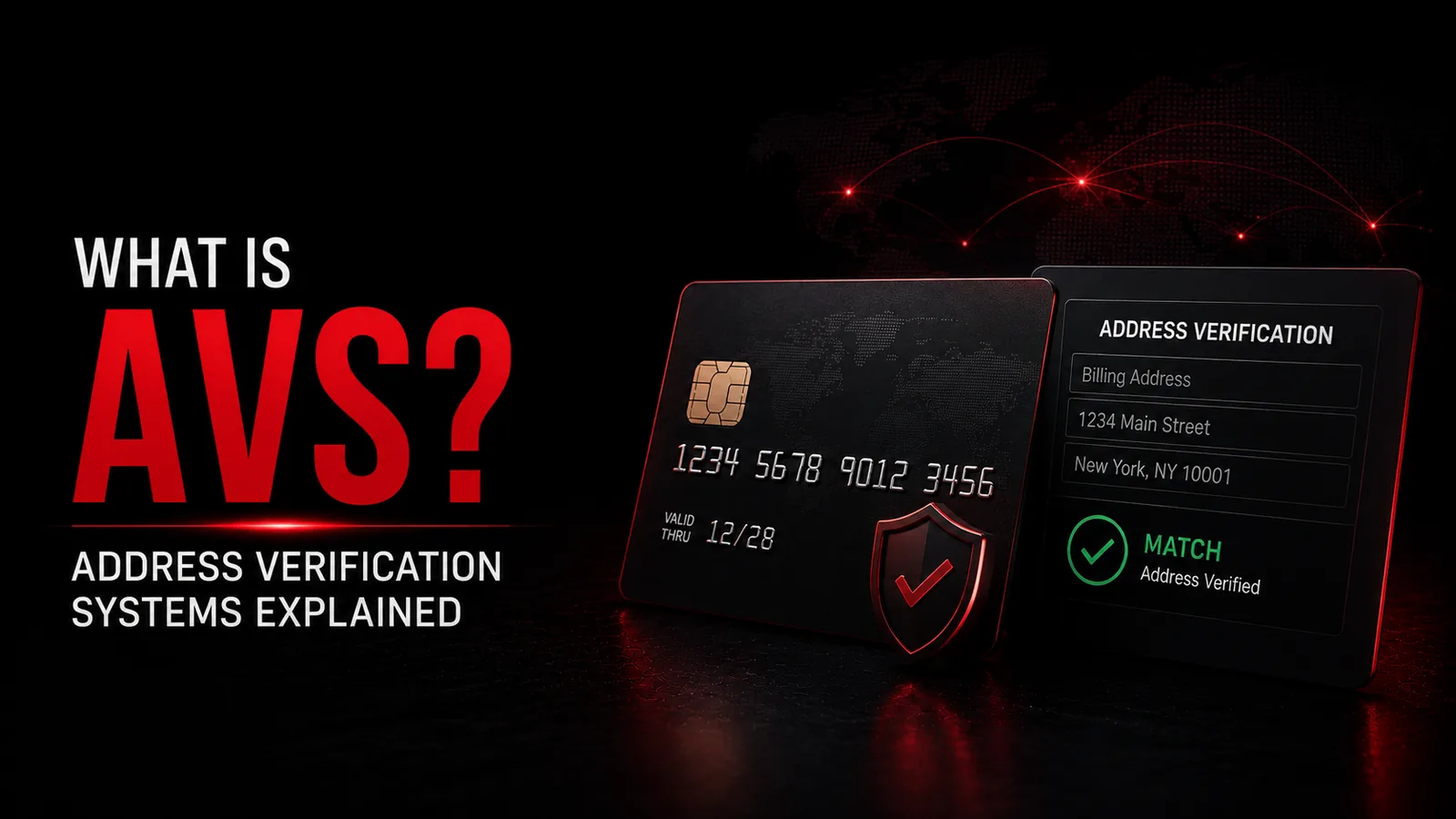
- AVS compares billing-address information with issuer records where supported.
- CVV/CVC checks whether the card security code provided with the payment matches issuer expectations.
- Tokenization reduces exposure of the underlying card credential.
These controls can work together rather than replacing one another.
How Tokenization Helps With Stored Cards and Subscriptions
Stored-card and subscription environments can retain payment relationships for months or years. Using tokens lets merchants maintain an authorized payment relationship without keeping the PAN in ordinary business systems. Network-token lifecycle management can also help keep supported credentials current when a card is replaced or renewed.
How Digital Wallet Tokenization Reduces CNP Exposure
Many digital wallets use network-tokenized credentials. Instead of presenting the original PAN to every merchant, the wallet uses a token associated with the approved device or payment environment.
What Tokenization Cannot Prevent
- Account takeover if a criminal gains control of a legitimate customer account.
- Social engineering that tricks a customer into approving a transaction.
- Fraud involving compromised merchant accounts or stolen authenticated sessions.
- Security problems unrelated to PAN storage.
- Abuse of a legitimate token when the broader account or payment environment is compromised.
This is why tokenization should be combined with authentication, transaction monitoring, account security and secure payment infrastructure.
What Merchants Should Do
- Use a reputable payment provider that supports secure tokenization.
- Prefer network tokens where they fit the merchant's architecture and provider capabilities.
- Avoid storing raw PAN data unless there is a legitimate and properly secured need.
- Use 3-D Secure or Strong Customer Authentication where applicable.
- Combine tokenization with AVS, CVV/CVC, risk scoring and account-security controls where relevant.
- Monitor stored-payment and subscription activity for unusual behavior.
Frequently Asked Questions
How does tokenization reduce card-not-present fraud?
It replaces the reusable PAN with a token that can have limited usefulness outside a specific merchant, device or payment scenario, reducing the value of compromised payment data.
Does tokenization stop stolen-card fraud?
It can reduce certain forms of CNP fraud by making exposed credentials less reusable, but it does not prevent every type of fraud.

Why are network tokens safer than raw card numbers?
Network tokens can be restricted to defined payment domains and can participate in controlled lifecycle management, while a raw PAN is broadly reusable.
Can a stolen token be used somewhere else?
Not necessarily. A properly configured network token may be limited to the merchant, device or transaction context for which it was provisioned.
Does tokenization replace 3-D Secure?
No. Tokenization protects the payment credential, while 3-D Secure helps authenticate the customer during ecommerce payments.
Does tokenization replace CVV or AVS?
No. Tokenization, CVV and AVS provide different security or risk signals and can be used together.
Do digital wallets use tokenization?
Many modern digital wallets use network tokens to represent underlying card accounts during supported payments.
Is tokenization enough to secure ecommerce payments?
No. Merchants should combine tokenization with authentication, fraud monitoring, secure account controls and other appropriate payment-security measures.
Final Thoughts
Tokenization reduces card-not-present fraud by changing the value and portability of payment credentials. Instead of exposing a reusable card number throughout digital payment systems, tokenization substitutes the PAN with a controlled credential.
Network tokens can be restricted to a merchant, device or payment scenario, making compromised data harder to reuse outside its intended context. Used alongside 3-D Secure, Strong Customer Authentication where applicable, AVS/CVV checks and transaction monitoring, tokenization becomes an important part of a layered CNP fraud-prevention strategy.
Authoritative References
- EMVCo - EMV Payment Tokenisation
- EMVCo - EMV Payment Tokenisation: What, Why and How
- EMVCo - Remote Fraud and EMV Technologies
- EMVCo - EMV 3-D Secure Transactions and Leveraging EMV Payment Token Data
- Visa - Tokenization Solutions
- Visa - Secure Payment Processing / Network Tokenization
- Stripe - Understanding the Benefits of Network Tokens
Editorial note: This article is educational and focused on payment-fraud prevention. Fraud-reduction results vary by merchant, region, network, payment mix and implementation.