


Introduction
Every online payment starts with a sensitive problem: the primary account number, or PAN, is a reusable identifier tied to a real card account. If that number is unnecessarily stored, copied, or exposed across many systems, a breach can create downstream fraud risk.
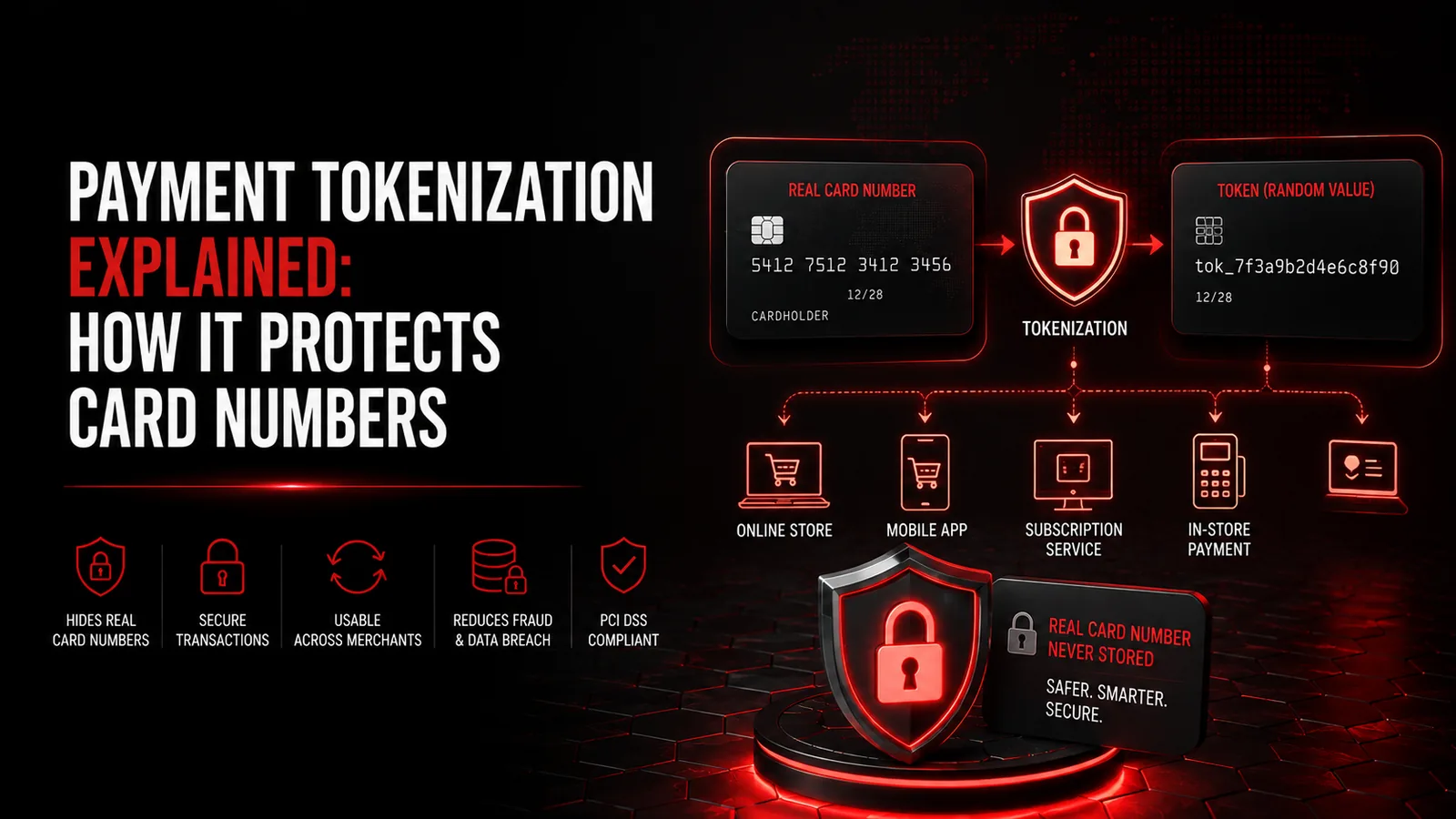
Payment tokenization reduces that exposure by replacing the PAN with a substitute value called a payment token. EMVCo says EMV Payment Tokenisation removes the PAN from many payment interactions and replaces it with a unique token that can be constrained to a particular merchant, device, or payment scenario.
That constraint is the security advantage. A token stolen from one context may be useless or much less useful somewhere else, whereas a raw card number can be broadly reusable if other controls do not stop the fraud.
Tokenization is now a core part of digital wallets, card-on-file payments, subscriptions, e-commerce, in-app commerce, and network payment services. Visa and Mastercard both operate network-tokenization systems intended to reduce fraud exposure while improving the reliability of legitimate digital payments.
Tokenization is not encryption, authentication, or fraud detection, and it does not make every transaction safe. It works best as one layer alongside EMV 3-D Secure, authorization controls, PCI DSS, secure checkout architecture, account security, and fraud analytics.
Quick Answer: What Is Payment Tokenization?
Payment tokenization is the process of replacing a sensitive payment-card number with a substitute value that can be used for payment without exposing the original PAN in the same way.
In EMV payment tokenization, the token can be restricted to a specific merchant, device, or payment context. That means the substitute credential is less broadly reusable if stolen.
The original card account still exists behind the token. Authorized payment infrastructure maps or resolves the token to the underlying account when needed for transaction processing.
Consumers often use tokenization without seeing it, for example when paying with a supported digital wallet or when a merchant stores a network token instead of a raw card number.
PAN vs Payment Token
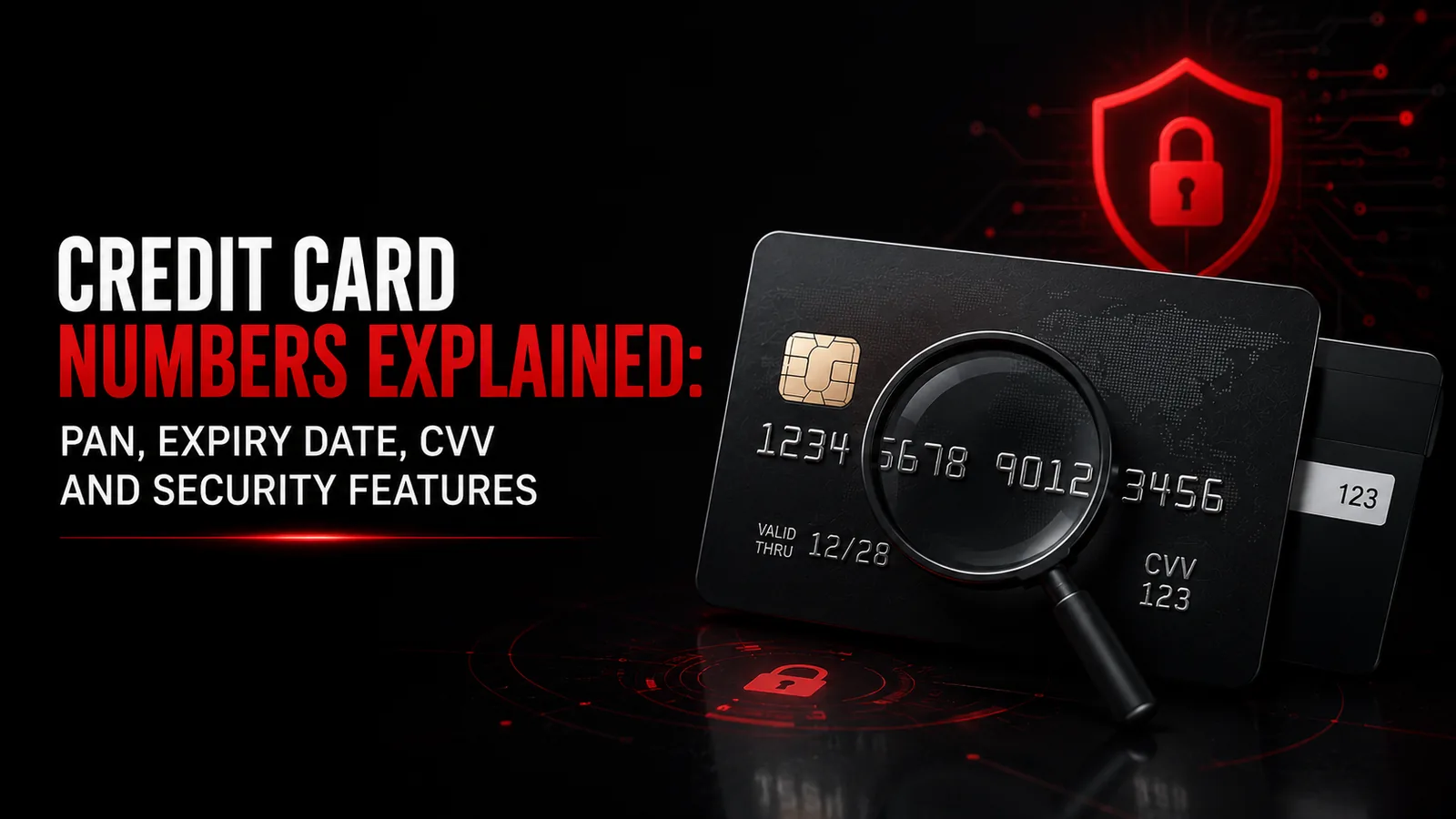
The PAN is the long account number associated with a payment card. It identifies the card account within the payment ecosystem.
A payment token is a substitute payment credential that represents that account for an approved use case.
The security difference is scope. A PAN is designed to work broadly wherever that card account is accepted, subject to authentication and authorization. A token can be constrained so that the same value is not equally useful everywhere.
This makes tokenization a form of data minimization: systems that do not need the original PAN can operate using the substitute credential instead.
Why Raw Card Numbers Create Risk
A reusable card number becomes attractive to attackers when it is stored in merchant databases, exposed in browser checkout, copied into logs, or transmitted through unnecessary systems.
A single breach can expose large quantities of payment credentials if organizations retain more raw card data than necessary.
Tokenization reduces the number of environments that need direct access to the PAN.
It does not remove all payment-security obligations, but it reduces the amount of sensitive reusable card data that can be stolen from many merchant and application environments.
How Tokenization Works at a High Level
At a high level, an authorized token service creates a token that represents a real card account.
The token can then be provisioned for a permitted use such as a digital wallet, merchant card-on-file relationship, recurring payment, or device.
During payment, the token travels through supported payment infrastructure instead of the underlying PAN.
The payment ecosystem applies the controls needed to connect that token to the correct account for authorization.
The merchant or device can therefore complete the payment without needing to expose or repeatedly store the original card number in the same way.
The exact cryptographic and network implementation is intentionally handled by payment networks, issuers, token service providers, processors, and wallet platforms rather than merchants inventing their own payment-token systems.
What Does “Constrained” Mean?
EMVCo emphasizes that payment tokens can be constrained in how they are used.
For example, a token can be associated with one merchant, one device, or one payment scenario.
That means copying the token does not necessarily provide a credential that works broadly across unrelated merchants and channels.
This domain restriction is one of the most important differences between a security token and simply replacing a card number with another universally reusable number.
Network Tokenization Explained
Network tokenization refers to tokenization implemented within the card-network ecosystem so the substitute credential can participate directly in supported payment transactions.
Mastercard describes network tokenization as replacing PANs with token values for secure and convenient checkout, while Visa describes its token service as a way to reduce fraud exposure and support authorization performance.
Network tokens can be useful for digital wallets, card-on-file commerce, subscriptions, and returning-customer payments.
Because the token is recognized by the payment network and issuer ecosystem, it can support lifecycle features that ordinary merchant-created database tokens cannot provide in the same way.
Merchant Tokens vs Network Tokens
Not every token is the same.
A merchant or payment processor may create an internal token that acts as a database reference to a card stored in a secure vault. That token can reduce direct PAN exposure inside the merchant application.
A network token is a payment credential recognized within the network payment flow and may be domain-restricted and lifecycle-managed by the network-token ecosystem.
Both approaches can reduce exposure, but merchants should understand which type their provider offers and what security, authorization, lifecycle, and PCI implications apply.
Tokenization vs Encryption
Tokenization and encryption protect data differently.
Encryption transforms readable data into ciphertext using a cryptographic key. Authorized systems can decrypt it back into the original data.
Tokenization substitutes the sensitive value with a different value and limits where the original PAN needs to appear.
Strong payment systems often use both: encryption protects data in transit and at rest, while tokenization reduces the distribution of reusable PAN data.
Neither should be treated as a replacement for the other.
Tokenization vs Hashing
Hashing creates a one-way derived value and is commonly used for integrity or password-verification purposes.
A payment token is designed to participate in payment flows and remain associated with an underlying card account through controlled payment infrastructure.
A hash of a PAN is not automatically a payment token and generally cannot substitute for the network-defined credential in a transaction.
Merchants should use validated payment technologies instead of designing improvised token schemes from generic hashing functions.
Tokenization vs Masking
Masking hides part of a card number when displaying it, such as showing only the last four digits.
This is useful for user interfaces and receipts because people rarely need to see the full PAN.
But masking does not necessarily change how the card is stored behind the scenes.
Tokenization changes the credential used by systems, while masking primarily changes what a user can see.
Good payment design can use both.
Tokenization in Digital Wallets
Digital wallets are one of the most familiar tokenization use cases.
Mastercard explains that tokenization can replace the number on a payment card with a stand-in number stored on a phone, watch, or other environment.
The wallet can combine that token with device security and transaction-specific cryptographic values.
This means the merchant does not need to receive the consumer's raw card number in the same way as a traditional manually entered card transaction.
The consumer still needs to verify the merchant and transaction; tokenization does not stop someone from intentionally paying a scammer.
Tokenization for Card-on-File Payments
E-commerce merchants often store payment credentials for returning customers.

Using a token instead of a raw PAN reduces the amount of reusable payment data stored in the merchant environment.
Network tokenization can also support returning-customer transactions while reducing the disruption associated with expired or replaced cards when supported lifecycle updates are available.
This makes tokenization useful for marketplaces, ride-hailing, food delivery, travel, subscriptions, and any business that depends on saved-card convenience.
Tokenization for Subscriptions and Recurring Payments
Recurring merchants need reliable credentials over long periods.
A consumer may receive a replacement physical card because of expiration, loss, or security concerns.
Supported network-token lifecycle services can update token relationships when the underlying account changes, reducing unnecessary payment failures for legitimate subscriptions.
Merchants should still follow network rules for recurring-payment consent, disclosures, cancellation, and stored-credential usage.
Tokenization improves credential handling; it does not excuse poor subscription practices.
Tokenization for In-App Commerce
Mobile apps frequently need to support repeat purchases without exposing raw card numbers to every application component.
Tokenized payment credentials can let the app initiate supported payment flows while reducing direct card-data handling.
Use official SDKs and payment-provider components rather than storing card details in application code or ordinary local storage.
Mobile security, account authentication, API authorization, and fraud monitoring remain necessary because a legitimate token can still be abused through a compromised account or device.
Tokenization for E-Commerce Checkout
Tokenization can protect both first-time and returning digital payments depending on the integration.
For first-time checkout, a payment provider or wallet may tokenize the credential as part of the transaction.
For returning customers, the merchant can use the stored token rather than asking for the full card number again.
This reduces repeated exposure of the PAN and can support a smoother checkout experience.
Merchants should combine tokenization with secure payment pages and EMV 3-D Secure because the checkout itself can still be targeted by phishing or e-skimming.

How Tokenization Helps Against Data Breaches
If an attacker compromises a system that contains only properly constrained tokens rather than raw PANs, the stolen material can be less useful for fraud.
The exact benefit depends on the token type, domain controls, surrounding data, and whether the attacker also compromised systems capable of using the token in its permitted context.
Tokenization therefore reduces breach impact but does not make breaches harmless.
Organizations must still protect tokens, accounts, APIs, authentication secrets, payment pages, and privileged systems.
How Tokenization Helps Against E-Skimming
Tokenization can reduce downstream exposure, but it does not automatically stop malicious JavaScript from stealing payment information before tokenization occurs.
If a checkout page collects the raw PAN in the browser and malicious code intercepts it before a secure payment component tokenizes it, the attacker may still capture the original card data.
This is why PCI SSC's payment-page script and tamper-detection controls remain important.
Hosted payment fields, controlled third-party scripts, integrity monitoring, and secure architecture should work together with tokenization.
How Tokenization Helps Against Card-on-File Theft
Stored-card databases are attractive targets because they can contain large numbers of credentials.
Replacing raw stored PANs with tokens reduces the value of many merchant-database records if they are stolen.
A criminal who obtains a merchant-specific token may not be able to use it at an unrelated merchant.
This does not protect the customer if the criminal can take over the customer's merchant account and use the token through its permitted merchant context.
Account takeover prevention therefore remains essential.
Tokenization Does Not Replace Authentication
A token can identify or represent a payment account, but the merchant and issuer may still need confidence that the person initiating the payment is authorized.
EMV 3-D Secure addresses this separate problem by helping issuers and merchants authenticate or risk-assess card-not-present transactions.
Digital wallets may also use device biometrics, passcodes, or other authentication.
Tokenization answers “which payment credential can be used safely?” while authentication helps answer “is this use authorized?”
Tokenization Does Not Replace Authorization
Every payment still needs issuer authorization or the equivalent network decisioning required by the payment flow.
A tokenized credential can still be declined because of insufficient funds or credit, fraud risk, account restrictions, incorrect transaction data, or other issuer controls.
Tokenization changes the credential representation; it does not guarantee that a transaction will be approved.
Tokenization Does Not Eliminate Fraud
Fraud can still occur through phishing, account takeover, social engineering, merchant scams, compromised devices, refund abuse, stolen identities, or manipulation of legitimate authenticated customers.
A criminal who takes over a legitimate customer's merchant account may be able to initiate purchases using a valid token already associated with that account.
A consumer can also knowingly authorize a payment to a scammer.
Tokenization reduces credential theft and reuse risk, but it must sit inside a broader fraud-prevention program.
Tokenization and EMV 3-D Secure Work Together
EMVCo has published guidance specifically addressing the use of EMV payment-token data in EMV 3DS transactions.
The two technologies solve complementary problems.
Tokenization reduces exposure and broad reuse of the PAN.
3DS supports authentication and issuer risk assessment for e-commerce.
Merchants implementing both can protect the payment credential while also strengthening confidence in the transaction itself.
Tokenization and PCI DSS
PCI DSS defines baseline security requirements for environments where payment-account data is stored, processed, or transmitted.
Tokenization can reduce the amount of cardholder data present in merchant systems and may reduce PCI scope in some architectures, but it does not automatically remove every system from scope.
PCI SSC has long published tokenization guidance and now maintains a Token Service Provider standard for providers that generate and issue EMV payment tokens.
Merchants should determine PCI scope with their acquirer, qualified assessor, or payment provider rather than assuming “we use tokens” means “PCI DSS no longer applies.”
Why Tokenization Can Improve Authorization Performance
Security is not the only benefit.
Network tokens can support richer issuer recognition, credential lifecycle management, and better continuity for legitimate card-on-file relationships.
Visa and Mastercard both market network tokenization as a way to reduce fraud while supporting approval rates and customer experience.
A more current, context-rich payment credential can reduce avoidable declines compared with outdated card-on-file data.
Actual performance depends on merchant integration, issuer behavior, geography, transaction type, and network support.
Token Lifecycle Management
Tokens are not necessarily permanent static values with no governance.
The payment ecosystem can provision, suspend, resume, update, or deactivate tokens based on account lifecycle and security events.
For example, a token associated with a lost device may need to be suspended without necessarily closing the underlying card account.
Card reissuance can also be handled in ways that preserve legitimate tokenized relationships where supported.
Lifecycle management is one reason network tokenization is more than a simple database alias.
What Happens When a Physical Card Is Replaced?
A replacement card may change the visible PAN, expiration date, or other account details depending on the reason for reissuance.
Supported network-token systems can manage token relationships separately from the physical plastic card so legitimate wallet or card-on-file payments may continue or be updated appropriately.
The issuer and token service provider control whether a given token remains active, is updated, or is suspended.
This can reduce unnecessary disruption while allowing compromised credentials to be invalidated.
What Happens When a Phone Is Lost?
A device-bound wallet token can be managed separately from the underlying card.
Consumers should use official device-lost procedures, wallet controls, and issuer support to suspend or remove payment credentials from a missing device.
Device locks, biometrics, and remote account controls add additional protection.
Losing a phone does not automatically mean the underlying PAN must always be replaced, but consumers should follow issuer and wallet guidance immediately.
Can a Token Be Stolen?
Yes. Tokens are still payment credentials and should be protected.
Their advantage is that a well-designed token can have limited usefulness outside the context for which it was issued.
An attacker who compromises a merchant account, device, API, or payment flow may still be able to misuse the token within that permitted context.
Treat tokens as security-sensitive data even when they are less broadly reusable than raw PANs.
Can Criminals Reverse a Token Into the Card Number?
Proper payment tokenization is designed so ordinary merchants, users, or attackers cannot simply “calculate” the PAN from the token.
Authorized payment infrastructure maintains the relationship needed for legitimate processing.
The security of that mapping depends on the token service, vault, cryptographic controls, access controls, and architecture.
Merchants should not implement home-grown reversible token schemes that expose a predictable relationship between the token and PAN.
Why Format-Preserving Tokens Exist
Some token systems use values that resemble card numbers in length or format so they can pass through existing payment infrastructure and applications.
Appearance does not mean the token is the original PAN.
The important security property is how the token is generated, governed, mapped, and constrained.
Merchants should not infer security merely from how a token looks.
What Is a Token Service Provider?
A Token Service Provider, or TSP, is an entity that provides tokenization functions within the EMV payment-token ecosystem.
PCI SSC's current TSP Standard defines security requirements for providers that generate and issue EMV payment tokens.
TSP functions can include token generation, provisioning, domain controls, lifecycle management, and secure mapping to underlying accounts.
Merchants usually access these capabilities through payment networks, processors, gateways, wallets, or payment-service providers rather than operating a TSP themselves.
What Is Token Provisioning?
Provisioning is the controlled process of creating and assigning a token for an approved payment use case.
The ecosystem may perform checks to determine whether a card can be tokenized for a device, wallet, or merchant relationship.

Provisioning security matters because fraudsters may try to add compromised cards to wallets or accounts.
Issuers and token providers therefore use authentication, risk assessment, and device or account context during provisioning.
Merchants should not try to bypass provisioning controls.
What Is a Device Token?
A device token is a payment token associated with a particular consumer device or wallet environment.
Its restricted domain means the same token may not be valid if copied into an unrelated context.
Device tokenization is a major reason mobile wallets can reduce direct exposure of the physical card number.
Device security remains important because a compromised unlocked device can still create payment risk.
What Is a Merchant Token?
A merchant-specific token is associated with one merchant or merchant relationship.
It is useful for saved cards, subscriptions, one-click checkout, and returning customers.
If stolen from the merchant, domain restrictions can reduce usefulness at unrelated merchants.
However, account takeover at the same merchant may still allow misuse, so authentication and account-risk controls remain necessary.
What Is a Payment Account Reference?
The payment ecosystem may need a stable way to recognize that multiple tokens and PAN-based transactions belong to the same underlying card account without exposing the PAN itself.
EMVCo defines the Payment Account Reference, or PAR, as an identifier that can support linking tokenized and PAN-based payment activity for permitted use cases.
This can help merchants, acquirers, and processors with functions such as fraud analysis and account recognition while maintaining tokenization.
PAR is not intended to be used as a payment credential for initiating transactions.
Tokenization and Fraud Analytics
Fraud systems still need to understand customer and payment history after tokenization.
Network tokens and related payment references can provide continuity without requiring the merchant to expose a raw PAN in every system.
Risk engines can combine token context with account history, device information, 3DS outcomes, order behavior, authorization responses, and chargeback data.
Do not build fraud rules that simply treat “tokenized” as “safe.”
Tokenization lowers one category of risk; the transaction still needs context.
Tokenization and Chargebacks
Tokenization does not eliminate chargebacks.
A tokenized transaction can still be disputed because of fraud, merchant errors, non-delivery, subscription issues, or other cardholder rights.
Authentication and network rules may affect liability for certain fraud disputes, but tokenization by itself is not a universal liability shield.
Merchants should maintain clear transaction records, customer support, cancellation procedures, and dispute-response processes.
Tokenization and Privacy
Payment tokenization is a payment-security technology, not a general privacy solution.
A merchant can still collect names, email addresses, shipping addresses, device data, and purchase history.
Organizations should minimize and protect all personal information, not only card numbers.
A breach that exposes customer identity information can still be serious even when no raw PANs are stored.
Tokenization and Data Minimization
The broader security principle behind tokenization is to reduce where sensitive data exists.
If an application only needs a reference to a payment method, it should not receive the full PAN merely because the PAN is available somewhere upstream.
Architect systems so sensitive card data stays inside the smallest practical trusted boundary.
Use provider-issued references or tokens throughout the rest of the application.
This can reduce breach impact, developer access, logging mistakes, and accidental disclosure.
Merchant Implementation: Use a Reputable Payment Provider
Most merchants should not build their own token vault or payment-token infrastructure.
Use established processors, gateways, acquirers, payment-service providers, wallet platforms, or network-token services with appropriate security validation.

Understand whether the provider supplies gateway tokens, network tokens, hosted payment fields, card lifecycle updates, and token management.
Document where the PAN first enters the payment flow and which systems ever see it.
The safest architecture is usually the one that keeps raw PAN exposure as narrow as possible.
Merchant Implementation: Do Not Log Raw PANs
Application logs, analytics, error messages, support tools, and debugging systems should not accidentally become shadow card databases.
Mask or tokenize payment identifiers before they reach ordinary logs.
Review observability platforms and third-party analytics for accidental sensitive-data capture.
Developers should use synthetic test cards and provider test environments rather than real card numbers in development logs.
Merchant Implementation: Separate Token Access From PAN Access
Most business systems can operate using a token and do not need access to the original card number.
Restrict detokenization or PAN access to the smallest possible set of trusted payment components and authorized roles.
Use least privilege, strong authentication, monitoring, and audit logging around those functions.
A tokenized architecture loses much of its value if every internal system can freely retrieve the PAN.
Merchant Implementation: Protect APIs
Tokenized payment systems depend heavily on APIs.
Protect token creation, stored-credential operations, refunds, payment-method updates, and account linking with strong authentication and authorization.
Do not trust a token merely because it has the expected format.
Validate that the requesting customer, merchant account, device, or service is authorized to use that token for the requested operation.
Monitor for abuse and rate-limit sensitive operations.
Merchant Implementation: Protect Account Recovery
A fraudster may not need the raw PAN if they can take over the customer's merchant account and use an existing tokenized card.
Secure password reset, email changes, phone changes, MFA reset, and device enrollment.
Evaluate recent high-risk account changes before allowing expensive purchases or payment-method modifications.
Do not rely only on static biographical information for recovery.
Merchant Implementation: Combine Tokenization With 3DS
Tokenization and 3DS address different security layers.
Use tokenization to reduce exposure of the PAN.
Use EMV 3DS to support cardholder authentication and issuer risk assessment for e-commerce.
Use authorization and merchant fraud analytics to make the final transaction decision.
This layered model is more resilient than relying on any one control.
Merchant Implementation: Monitor Token Lifecycle Events
Merchants using network tokens should monitor provider events relating to token activation, suspension, update, or deletion where those events are exposed by the integration.
Unexpected token changes can affect checkout, subscriptions, and fraud investigation.
Build clear operational ownership so payment teams understand how token status affects stored payment methods.
Do not silently fall back to insecure storage practices when a token lifecycle event occurs.
Merchant Implementation: Test Failure Modes
Tokenization systems should be tested for issuer declines, expired cards, token suspension, card replacement, customer device loss, provider outages, duplicate requests, and retry behavior.
The fallback path should preserve security rather than exposing the PAN unnecessarily.
Use provider sandbox environments and synthetic test data.
Do not use real stolen credentials or uncontrolled production data for testing.
What Consumers Should Know
Consumers usually do not need to configure tokenization manually.
Using supported digital wallets, secure merchant checkout, and reputable stored-card services can provide tokenization benefits automatically.
Continue using transaction alerts, strong account passwords, MFA, and careful merchant verification.
A tokenized wallet can protect the card number, but it cannot stop you from approving a payment to a fraudulent merchant.
If a phone is lost or a wallet transaction is unfamiliar, use official device, wallet, and issuer controls promptly.
What Consumers See on Receipts
A tokenized transaction may display a number that differs from the number printed on the physical card, often only as masked digits.
This can be normal in wallet or network-token transactions.
Consumers should verify the merchant, amount, date, and issuer account rather than assuming a different displayed last-four value means fraud.
If uncertain, contact the issuer through its official channel.
Can Tokenization Protect a Stolen Physical Card?
Tokenization mainly reduces exposure of digital card credentials.
If the physical card itself is lost or stolen, the cardholder should still report it to the issuer.
Chip, contactless, PIN, issuer authorization, and card-lock controls address physical-card risk.
A digital token associated with the same account may be managed separately depending on the issuer and wallet.
Can Tokenization Protect Against Phishing?
It can reduce the usefulness of some payment credentials, especially when consumers use wallets or merchant-specific tokens instead of typing a raw PAN.
But phishing can still steal account passwords, identity information, or persuade a victim to authorize a payment.
If a consumer manually enters the raw card number into a fake checkout page, tokenization elsewhere does not protect that exposure.
Phishing resistance still requires merchant verification, safe links, account MFA, and transaction awareness.
Can Tokenization Protect Against Malware?
Tokenization can reduce how much raw card data exists in merchant systems, limiting what some malware can steal.
But malware can target account sessions, wallet credentials, checkout pages, browsers, or systems with access to tokenized payment operations.
Endpoint security, secure development, payment-page integrity, access control, and monitoring remain necessary.
Can Tokenization Prevent Card Testing?
Tokenization can reduce exposure and broad reuse of raw card numbers, which can reduce the supply of credentials available for abuse.
It is not a standalone anti-automation or transaction-testing control.
Merchants still need rate controls, bot detection, authorization handling, fraud analytics, and account protections.
The exact thresholds and detection logic should remain internal so they are not easy to tune around.
Common Myths About Payment Tokenization
Myth: Tokenization is the same as encryption. Reality: encryption transforms data with keys; tokenization substitutes the PAN with a controlled alternative credential.
Myth: A token is useless in every situation if stolen. Reality: its usefulness is constrained, but a token can still be abused within its permitted context if other controls fail.
Myth: Tokenization eliminates PCI DSS. Reality: it can reduce scope, but PCI obligations depend on architecture and where payment data is stored, processed, or transmitted.
Myth: Tokenization eliminates fraud. Reality: account takeover, phishing, merchant scams, social engineering, refund abuse, and other fraud remain possible.
Myth: Digital wallets reveal the physical card number to every merchant. Reality: supported wallet transactions commonly use tokenized payment credentials rather than the original PAN.
Myth: Merchants should invent their own token algorithm. Reality: payment tokenization should use established, validated payment infrastructure and providers.
Myth: A tokenized transaction is automatically approved. Reality: issuer authorization and fraud decisioning still apply.
Conclusion
Payment tokenization protects card numbers by changing where and how the payment credential is exposed.
Instead of allowing the raw PAN to spread across merchant databases, devices, apps, and checkout systems, tokenization lets many of those environments operate with a substitute credential.
The strongest implementations go further by constraining the token to a merchant, device, or payment scenario and managing it throughout the card lifecycle.
That reduces the value of stolen payment data, supports safer saved-card experiences, and can improve continuity for legitimate digital payments.
But tokenization is not magic. A compromised account can misuse a legitimate token. A phishing victim can still authorize a scam. A malicious checkout script can steal a PAN before tokenization. A fraudulent merchant can still take a legitimate tokenized payment.
The right security model is layered: minimize PAN exposure with tokenization, authenticate with tools such as EMV 3-D Secure, protect checkout under PCI DSS, secure customer accounts, and monitor transactions for fraud.
For modern digital commerce, tokenization is one of the most important ways to make stolen card numbers less available, less reusable, and less valuable to criminals.