


Introduction
Card-not-present fraud, commonly shortened to CNP fraud, is one of the central security challenges in modern e-commerce. It occurs when payment-card credentials are used without the physical card being presented to the merchant and the transaction is unauthorized by the legitimate cardholder.
The defining challenge is identity. In a physical store, a payment terminal may interact directly with a chip-enabled card. Online, the merchant has to decide whether a remote customer entering payment information is actually authorized to use that account.
That is why modern CNP security is built around layers: authentication, fraud analytics, payment-page security, tokenization, transaction monitoring, account protection, and secure handling of payment data.
This guide explains CNP fraud from a defensive and educational perspective. It does not provide instructions for committing fraud or bypassing payment-security controls.
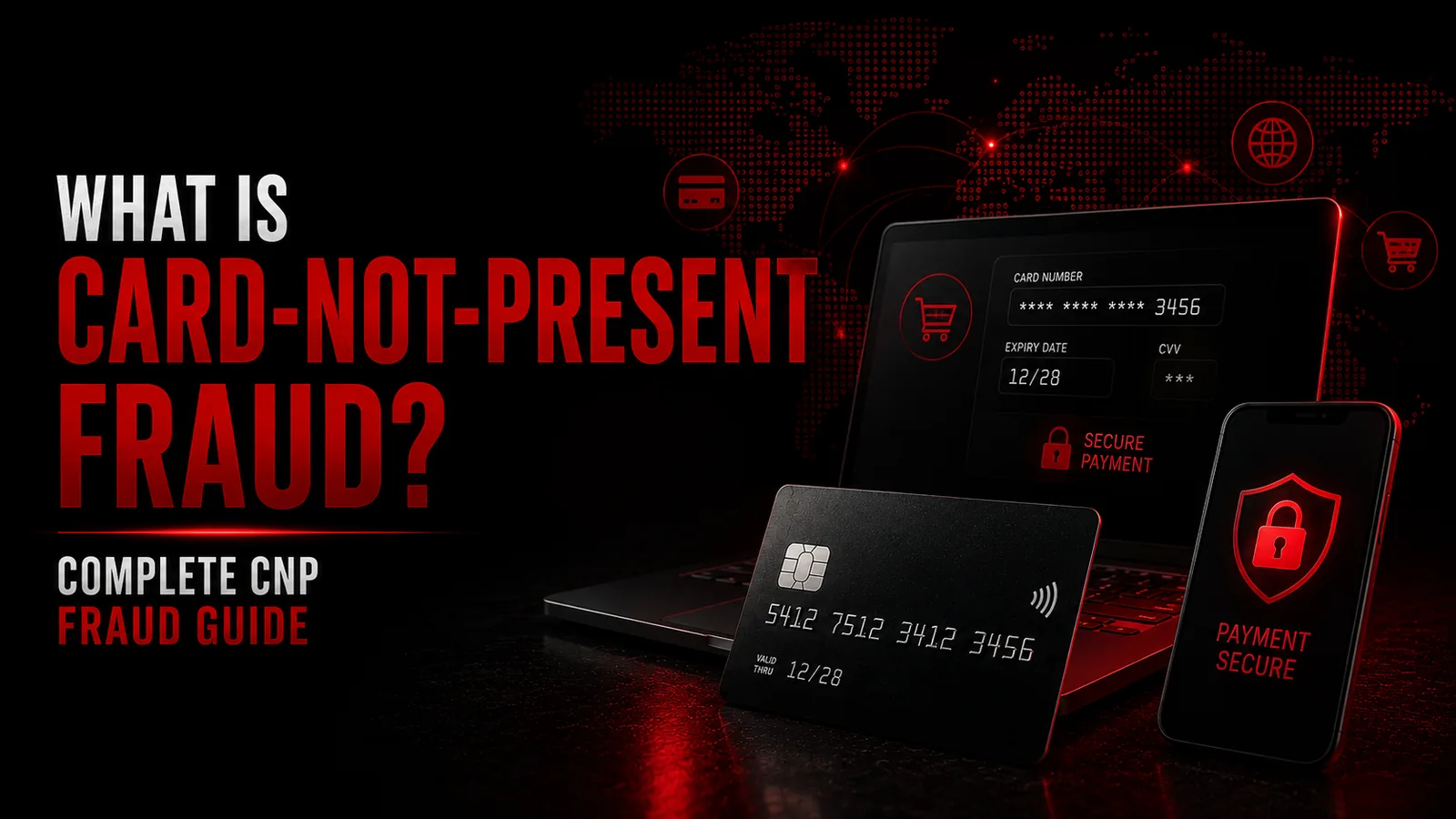
What Is Card-Not-Present Fraud?
Card-not-present fraud is an unauthorized payment-card transaction in which the physical card is not presented to the merchant. Common card-not-present environments include e-commerce, mobile commerce, mail-order transactions, telephone orders, and some recurring or stored-credential payments.
EMVCo describes EMV 3-D Secure as technology designed to help issuers and merchants prevent card-not-present fraud and increase the security of e-commerce payments. PCI Security Standards Council guidance likewise distinguishes card-not-present environments such as e-commerce and mail-order or telephone-order channels from face-to-face card-present environments.
A legitimate customer can therefore still have the card in their wallet while unauthorized activity occurs online. That is one reason transaction monitoring matters even when a card has never been physically lost or stolen.
What Does CNP Mean?
CNP stands for card not present. The abbreviation describes the payment environment, not the identity of the customer and not a specific fraud technique.
A legitimate online purchase is also a card-not-present transaction. It only becomes CNP fraud when the transaction is unauthorized or fraudulent.
This distinction is important: card-not-present is a payment channel, while card-not-present fraud is abuse of that channel.
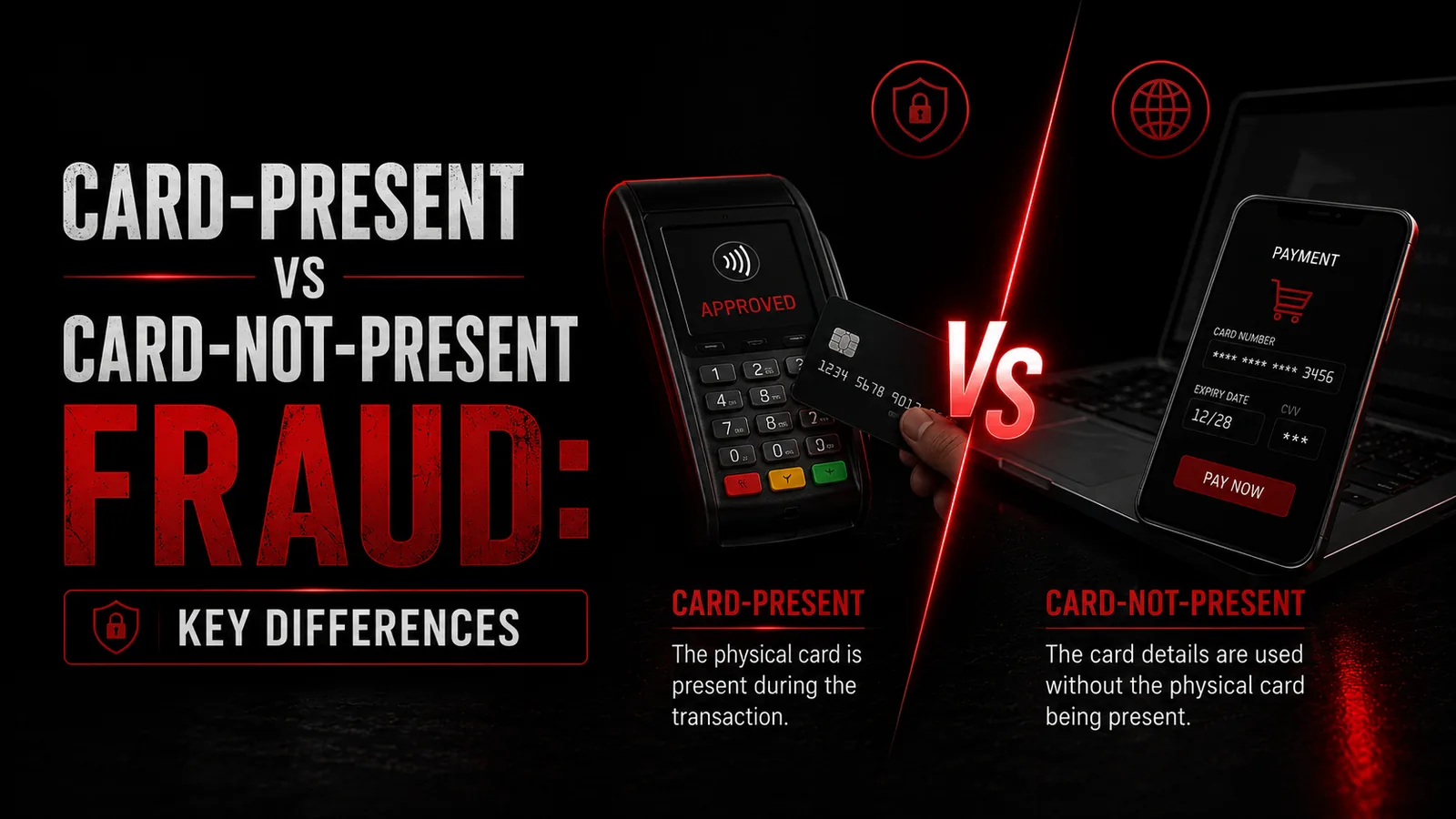
Card-Present vs Card-Not-Present Transactions
Card-present transactions generally occur when the payment card or payment device interacts directly with a physical merchant terminal. Modern chip transactions can use dynamic security features that help validate the card.
Card-not-present transactions occur remotely. The merchant cannot physically inspect the card or rely on the same in-person interaction, so authentication and risk analysis become especially important.
The payment industry therefore uses different security tools for different environments. EMV chip technology is central to many in-person transactions, while EMV 3-D Secure and other online fraud controls focus on e-commerce authentication and remote risk.
Why CNP Fraud Matters to E-Commerce
E-commerce removes the physical distance between buyer and seller. A customer can purchase from a merchant on another continent in seconds, which is enormously valuable for legitimate commerce.
The same convenience creates security pressure because merchants must make authorization decisions without meeting the buyer. Visa describes the majority of e-commerce fraud as occurring in card-not-present transactions, where the physical card is not required to complete a purchase.
For merchants, CNP fraud can create chargebacks, lost goods or services, fraud-management costs, customer-support burdens, and pressure to introduce stronger controls. Consumers can face unauthorized charges, card replacement, account disruption, and identity-theft concerns.
How CNP Fraud Fits Into the Wider Fraud Ecosystem
CNP fraud is usually the transaction stage of a larger fraud lifecycle. Before an unauthorized payment can occur, payment or account information first has to become compromised.

At a high level, the lifecycle may involve credential compromise, unauthorized transaction attempts, authorization and authentication, merchant fulfillment, fraud detection, and disputes or chargebacks.
The same incident can therefore be described in several ways. If compromised card credentials are used online, it may be both carding and card-not-present fraud. If a retail account was first taken over, account takeover may also be part of the incident.
How Payment Information Becomes Compromised
Payment information can be exposed through data breaches, phishing, social engineering, malware, compromised merchant systems, e-skimming, weak account security, or account takeover.
For merchants, PCI SSC emphasizes protecting cardholder-data environments and evaluating the channels through which payment details are provided. E-commerce payment pages, scripts, third-party components, and administrative accounts all form part of the broader security picture.
The defensive goal is to reduce the opportunities for compromise rather than waiting until stolen information is used in an unauthorized transaction.
CNP Fraud vs Carding
Card-not-present fraud and carding frequently overlap, but they are not identical terms.
CNP describes the payment channel: the physical card is not presented. Carding describes fraudulent use or attempted use of compromised payment-card credentials.
An unauthorized online purchase using compromised card data can therefore be both carding and CNP fraud. A legitimate e-commerce purchase is CNP but is not fraud. A stolen physical card used at a store may be credit-card fraud without being a CNP transaction.
CNP Fraud vs Account Takeover
Account takeover occurs when someone gains unauthorized control of a customer's online account. The attacker may change profile information, access stored payment methods, or attempt purchases.
CNP fraud can result from account takeover, but the terms describe different parts of the incident. Account takeover concerns unauthorized account access. CNP fraud concerns the unauthorized remote payment.

That is why strong login security, email protection, multi-factor authentication, and payment authentication all contribute to reducing online payment fraud.
CNP Fraud vs Friendly Fraud
Merchants also encounter disputed transactions involving legitimate customers. These are sometimes described as first-party misuse or friendly fraud.
That differs from third-party CNP fraud involving stolen or compromised credentials. A good fraud-management system needs to distinguish stolen-card fraud from customer disputes, forgotten subscriptions, service complaints, and first-party abuse.
Treating every chargeback as stolen-card fraud can lead to poor decisions and unnecessary customer friction.
What Information Does a Merchant Evaluate?
Modern online payment security is not based on one piece of information. Depending on the merchant, issuer, processor, and applicable rules, a transaction may be evaluated using multiple risk signals.
These can include authentication results, transaction history, customer account history, device characteristics, location indicators, behavioral patterns, order value, transaction velocity, and previous fraud signals.
The goal is to build a more complete picture of whether the transaction resembles legitimate customer behavior without creating excessive friction for genuine buyers.
What Is 3-D Secure?
EMV 3-D Secure, commonly called EMV 3DS or simply 3-D Secure, is an e-commerce authentication framework. EMVCo says it enables consumer authentication to help prevent card-not-present fraud and increase e-commerce payment security.
3DS allows information to be exchanged between the merchant environment and the card issuer so the issuer can make a better authentication decision.
Depending on the transaction and risk assessment, the process may be low-friction or may require an additional verification step. Modern implementations aim to improve security without forcing every legitimate customer through unnecessary challenges.
Does 3-D Secure Stop All CNP Fraud?
No. 3-D Secure is an important authentication layer, not a guarantee that fraud becomes impossible.
Visa describes 3D Secure as adding a real-time identity check for card-not-present payments. EMVCo similarly positions EMV 3DS as part of the global effort to prevent CNP fraud.
Strong online payment security combines authentication with secure checkout pages, account security, tokenization, fraud monitoring, issuer analytics, and merchant risk controls.
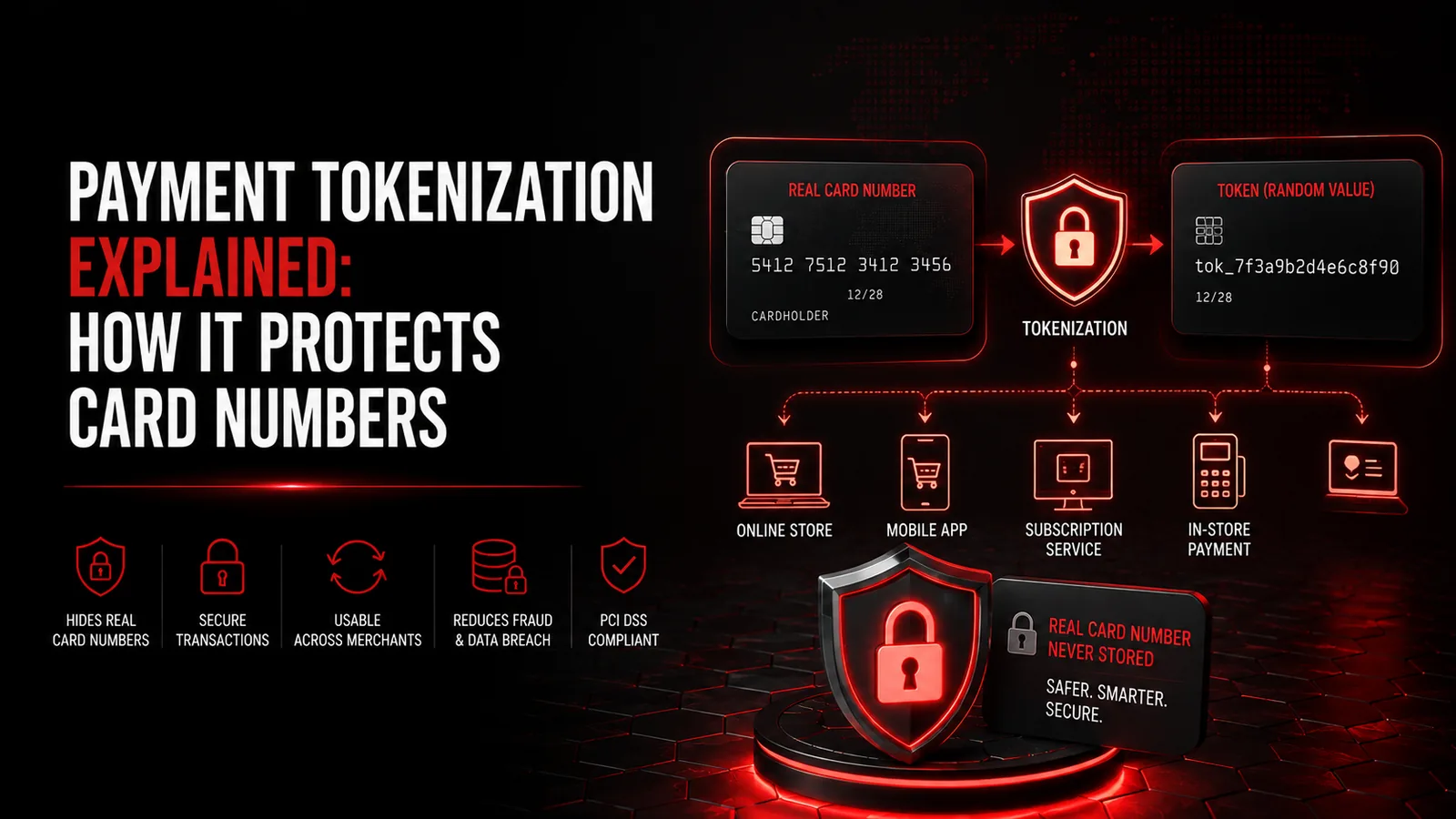
What Is Tokenization?
Tokenization replaces sensitive payment credentials with substitute digital values in supported payment flows.
The security advantage is that the actual account number does not need to be exposed in every part of the transaction ecosystem. Depending on implementation, a token can be limited to a particular merchant, device, wallet, or context.
Reducing exposure of reusable credentials can reduce the impact of some data compromises and is an important part of modern digital-payment architecture.
What Does PCI DSS Have to Do With CNP Fraud?
PCI DSS is the Payment Card Industry Data Security Standard. It establishes technical and operational requirements for protecting payment-account data.
PCI SSC specifically recognizes card-not-present environments such as e-commerce and mail-order or telephone-order channels as environments where payment details must be evaluated and protected according to PCI DSS.
PCI DSS is not a fraud-scoring product. Its role is to strengthen the systems and processes that store, process, or transmit payment data so criminals have fewer opportunities to obtain credentials in the first place.
Why Payment-Page Security Matters
For an e-commerce merchant, the checkout page is part of the security perimeter. If malicious or unauthorized code runs in the payment environment, customer information can potentially be exposed before it reaches an otherwise secure payment processor.
Merchants should therefore monitor scripts, plugins, third-party components, administrative access, and unexpected changes to payment pages.
This is one reason modern e-commerce security requires both transaction fraud controls and cybersecurity controls.
How Fraud Detection Systems Help
Fraud detection systems analyze patterns across transactions to identify unusual or high-risk activity. Mastercard describes modern fraud and decisioning solutions as using AI and data analytics to improve risk, detection, and authorization decisions.

A strong system may consider multiple signals rather than relying on a simple blocklist or one threshold. This can improve detection while reducing unnecessary declines of legitimate customers.
Human review may also be used for selected transactions, especially where automated signals are inconclusive or the value and risk justify additional scrutiny.
Why False Declines Matter
Merchants cannot solve fraud simply by declining every unusual transaction. Legitimate customers travel, change devices, make large purchases, move homes, and behave differently over time.
A false decline occurs when a legitimate transaction is incorrectly rejected as fraud.
Too many false declines can damage conversion rates, customer trust, and revenue. Effective CNP fraud management therefore tries to reduce fraud while preserving a smooth experience for legitimate customers.
Warning Signs for Consumers
Consumers should investigate unfamiliar online transactions, unexpected purchase alerts, repeated small charges they do not recognize, login notifications from unknown devices, unexpected password-reset emails, or changes to stored payment accounts.
An unfamiliar charge does not need to be large to deserve attention. Prompt detection can help an issuer restrict a compromised account before additional transactions occur.
What to Do After an Unauthorized CNP Transaction
Contact the card issuer promptly through an official channel such as the number on the back of the card, the issuer's official app, or contact information on a trusted statement.
Report the unauthorized transaction and follow the issuer's dispute, card-locking, or card-replacement process.
Review recent transactions for additional suspicious activity.
Change passwords for relevant banking, email, shopping, and payment accounts if account compromise is possible.
Enable multi-factor authentication where available.
Continue monitoring the account after the initial incident because additional attempts may occur.
Consumer rights, liability rules, and dispute deadlines vary by country and payment type, so follow official issuer and local consumer-protection guidance.
How Consumers Can Reduce CNP Fraud Risk
Use unique passwords for email, financial, and shopping accounts.
Enable multi-factor authentication where available.
Turn on real-time transaction notifications from the card issuer.
Avoid entering payment details after following suspicious links in unsolicited messages.
Use trusted merchants and keep devices and browsers updated.
Use supported tokenized payment methods or digital wallets where appropriate.
Review statements regularly rather than relying entirely on automated fraud detection.
Never share one-time authentication codes with someone who contacts you unexpectedly.
How Merchants Can Reduce CNP Fraud
Use layered controls rather than relying on one fraud rule.

Maintain applicable PCI DSS security and minimize unnecessary storage of payment data.
Use secure payment providers and tokenization where appropriate.
Use EMV 3-D Secure according to the merchant's authentication and risk strategy.
Protect checkout pages, third-party scripts, plugins, and administrative access.
Monitor transaction patterns, account behavior, and authentication outcomes.
Use strong authentication for merchant and employee accounts.
Train staff to recognize phishing and social-engineering attacks.
Tune fraud controls to reduce both unauthorized transactions and false declines.
Common Myths About CNP Fraud
Myth: Card-not-present means the transaction is fraudulent. Reality: most legitimate e-commerce payments are card-not-present transactions; CNP fraud is the unauthorized subset.
Myth: The physical card must be stolen. Reality: the cardholder can still possess the card while compromised credentials are misused remotely.
Myth: A CVV alone proves the buyer is legitimate. Reality: modern fraud prevention uses multiple layers and risk signals.
Myth: 3-D Secure makes fraud impossible. Reality: it strengthens authentication but works best as part of layered security.
Myth: PCI DSS is only relevant to large merchants. Reality: PCI SSC provides requirements and resources for merchants handling payment-account data across different environments and sizes.
The Future of CNP Fraud Prevention
Online payment security is moving toward stronger identity signals, tokenization, device and behavioral intelligence, passkeys and modern authentication, richer real-time risk analysis, and reduced reliance on reusable static credentials.
At the same time, attackers increasingly target people and accounts through phishing, social engineering, account takeover, and compromised digital infrastructure.
The future of CNP security will therefore depend on combining transaction intelligence with cybersecurity and identity protection rather than treating payment fraud as an isolated checkout problem.
Conclusion
Card-not-present fraud exists because remote commerce separates the payment credential from the physical card and the buyer from the merchant. That creates an identity and trust problem that cannot be solved by static card information alone.
Modern defenses therefore rely on layers: secure handling of payment data, strong customer authentication, tokenization, protected checkout environments, real-time fraud analytics, account security, and rapid incident response.
For consumers, the priority is monitoring and protecting accounts. For merchants, the priority is combining strong security with accurate risk decisions that stop fraud without unnecessarily blocking legitimate customers.
Understanding CNP fraud is essential to understanding modern carding and online payment security because the card-not-present environment sits at the center of today's e-commerce fraud challenge.