


Introduction
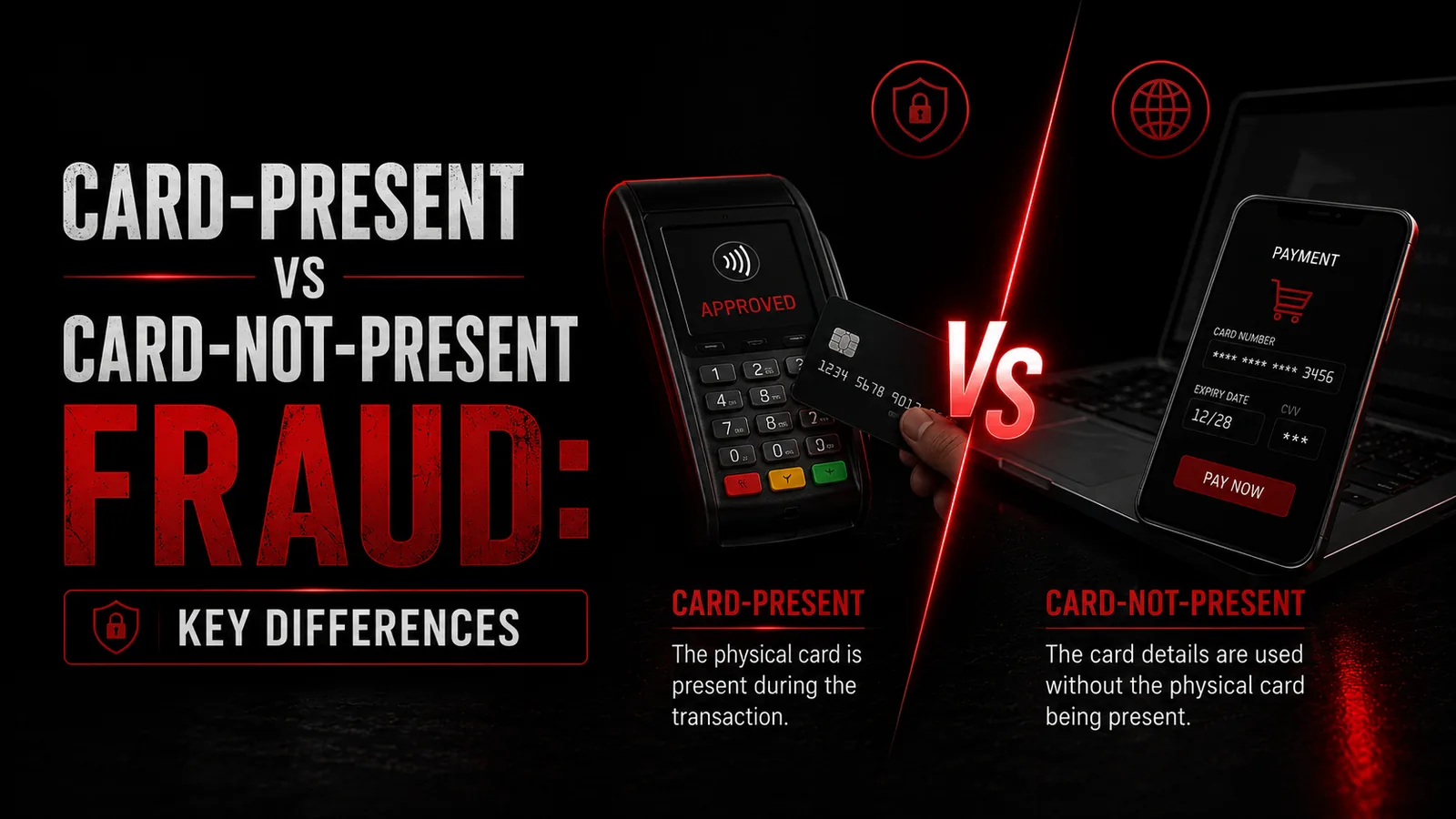
Card-present and card-not-present fraud are two major categories used to describe payment-card fraud. The difference is based on the payment channel: whether the card or payment device is physically present at the merchant or whether the transaction happens remotely.
PCI Security Standards Council defines common payment channels as card present for in-person payments and card not present for e-commerce and mail-order or telephone-order transactions. That distinction matters because each environment creates different risks and requires different security controls.
In a card-present transaction, the merchant can interact directly with a card or payment device. In a card-not-present transaction, the merchant must evaluate a remote customer without physically seeing the card. That makes authentication, transaction context, account security, and fraud analytics especially important online.
This guide compares card-present and card-not-present fraud from a defensive perspective and explains how technologies such as EMV chip, EMV 3-D Secure, PCI DSS, tokenization, and real-time fraud monitoring help reduce risk.
Quick Answer: What Is the Difference?
Card-present fraud involves unauthorized activity in an in-person payment environment where a physical card or payment device is presented to a merchant terminal.
Card-not-present fraud, often abbreviated CNP fraud, occurs in remote payment environments such as e-commerce, in-app, phone, or mail-order transactions where the physical card is not presented.
The easiest way to remember the difference is: card-present fraud concerns in-person payments; card-not-present fraud concerns remote payments.
Card-Present vs Card-Not-Present Fraud Comparison
Category | Card-Present Fraud | Card-Not-Present Fraud |
|---|---|---|
Payment setting | In person | Remote |
Physical card/device | Presented to terminal | Not presented |
Typical channels | Retail, restaurant, ATM | E-commerce, app, phone, mail order |
Core security challenge | Card/device authenticity and physical environment | Remote customer authentication and transaction risk |
Major security technology | EMV chip | EMV 3-D Secure |
Common defensive signals | Chip/terminal data, location, transaction behavior | Authentication, device, account history, behavioral and transaction signals |
PCI DSS relevance | Yes | Yes |
What Is Card-Present Fraud?
Card-present fraud refers to fraudulent or unauthorized activity involving an in-person payment environment. The card or payment device is physically used or presented at a merchant location, ATM, or other face-to-face payment setting.
Historically, card-present fraud included stolen physical cards, counterfeit magnetic-stripe cards, and payment-terminal tampering. Modern EMV chip technology has made many traditional counterfeit-card attacks more difficult because chip transactions use dynamic security rather than relying solely on static magnetic-stripe data.
EMVCo explains that EMV contact chip validates the authenticity of a card and generates a one-time security code for each transaction, which helps prevent counterfeit, lost, and stolen fraud.
What Is Card-Not-Present Fraud?
Card-not-present fraud is an unauthorized remote payment made without the physical card being presented to the merchant. Typical CNP environments include online stores, mobile apps, telephone orders, and certain recurring or stored-credential transactions.
Visa describes CNP fraud as occurring when stolen payment credentials are used for online, phone, or in-app purchases without the physical card. The payment card may still be in the legitimate cardholder's possession while unauthorized transactions appear.
The main security challenge is identity. Because the merchant cannot inspect the physical card or interact with a chip in the same way as an in-person transaction, remote payments depend more heavily on authentication, fraud analytics, device information, account history, and other risk signals.

Why the Payment Channel Matters
Fraud prevention works differently depending on the payment environment. A physical terminal can use technologies and signals that are unavailable to a remote merchant, while an online merchant can use digital risk signals that may not exist in a traditional retail transaction.
PCI SSC therefore treats payment channels as an important part of payment-security assessment. Merchants must understand how card data enters their environment, where it is processed, and what controls protect it.
How Card-Present Fraud Typically Arises
At a high level, card-present fraud can result from a lost or stolen physical card, compromised card data used to create counterfeit payment instruments in legacy environments, tampered payment terminals, or unauthorized access to physical payment infrastructure.
The important defensive lesson is that merchants should secure terminals, use supported EMV technologies, train staff to notice tampering, restrict physical and administrative access to payment systems, and monitor transactions for suspicious patterns.
How Card-Not-Present Fraud Typically Arises
CNP fraud usually depends on compromised payment or account credentials. Those credentials may be exposed through phishing, data breaches, account takeover, e-skimming, malware, social engineering, or compromised merchant systems.
The attacker does not need to possess the physical card. That is why online payment security increasingly focuses on proving the identity and legitimacy of the remote customer rather than simply checking whether submitted card information appears valid.
Card-Present Fraud and EMV Chip Security
EMV chip technology is one of the most important defenses against traditional card-present counterfeit fraud. EMVCo states that contact-chip technology validates card authenticity and generates a one-time security code for each transaction.
This dynamic transaction data makes copying a chip transaction much less useful than simply copying static magnetic-stripe information. However, no payment technology eliminates all forms of fraud, and merchants still need secure terminals, transaction monitoring, and strong operational controls.
Card-Not-Present Fraud and 3-D Secure
EMV 3-D Secure, commonly called EMV 3DS or 3-D Secure, is specifically designed to strengthen authentication for e-commerce and other card-not-present transactions.
EMVCo says EMV 3DS helps issuers and merchants prevent CNP fraud and increase the security of e-commerce payments. The framework allows authentication data and transaction context to be exchanged so the issuer can make a more informed decision about whether the customer is legitimate.
Depending on the risk level and implementation, authentication may be frictionless or may require an additional verification step. This risk-based approach is designed to improve security without unnecessarily disrupting legitimate customers.
Why CNP Fraud Is a Major Modern Risk
As commerce has moved online, criminals have increasingly focused on remote payment channels. Mastercard reports that a large share of card-related fraud occurs in card-not-present transactions, while Visa describes CNP fraud as substantially more likely than fraud at physical points of sale.
The numbers vary by market and methodology, but the broad industry pattern is consistent: remote payments have become a major fraud battleground because the merchant must authenticate a customer who is not physically present.
What Is the Role of PCI DSS?
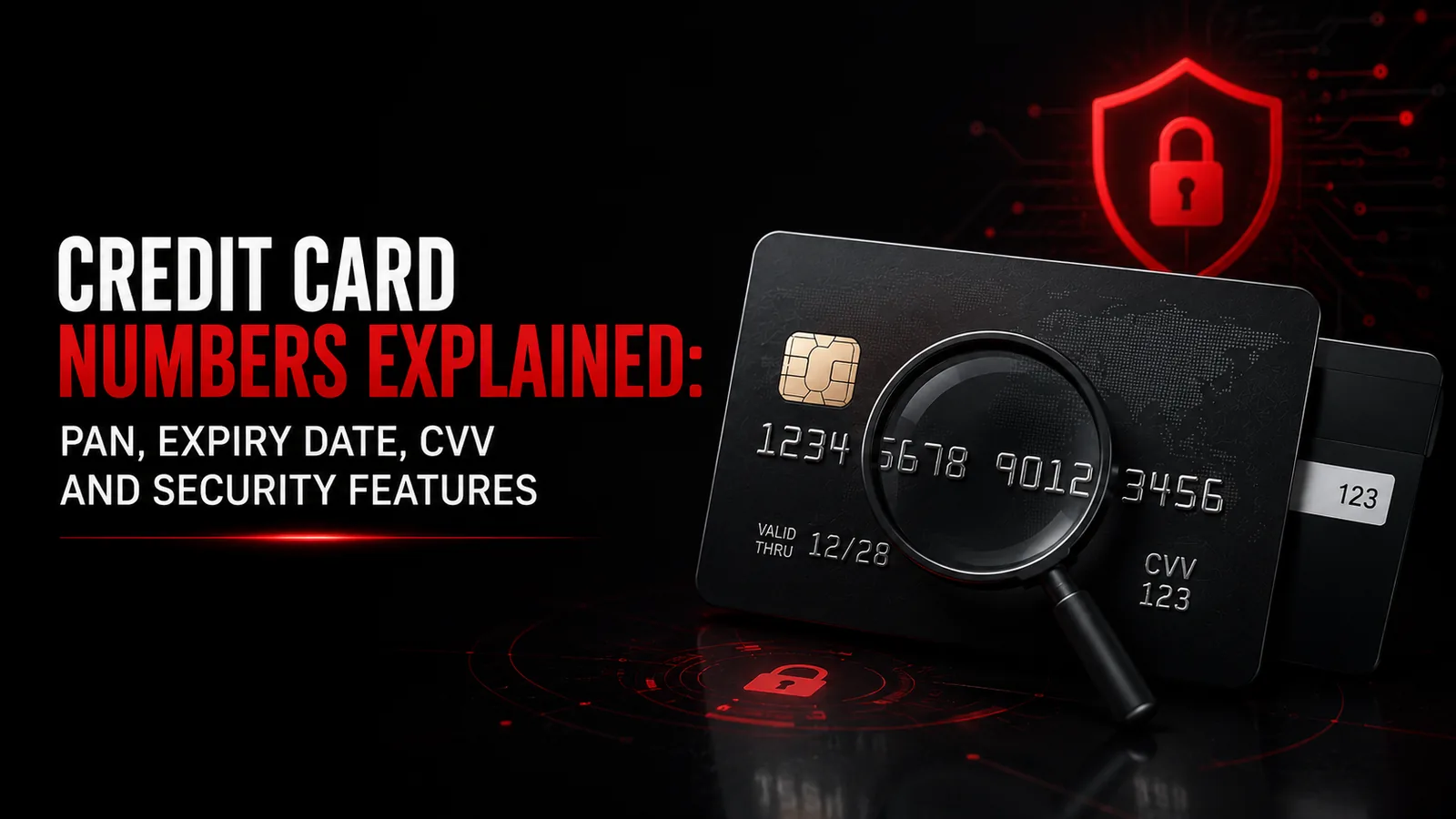
PCI DSS is the Payment Card Industry Data Security Standard. It provides baseline technical and operational requirements for protecting payment-account data.

PCI SSC specifically notes that card-present and card-not-present environments both need to be evaluated and protected according to PCI DSS. The exact exposure differs by channel, but the underlying principle is the same: reduce unnecessary access to payment data and secure every system that stores, processes, or transmits it.
What Is the Role of Tokenization?
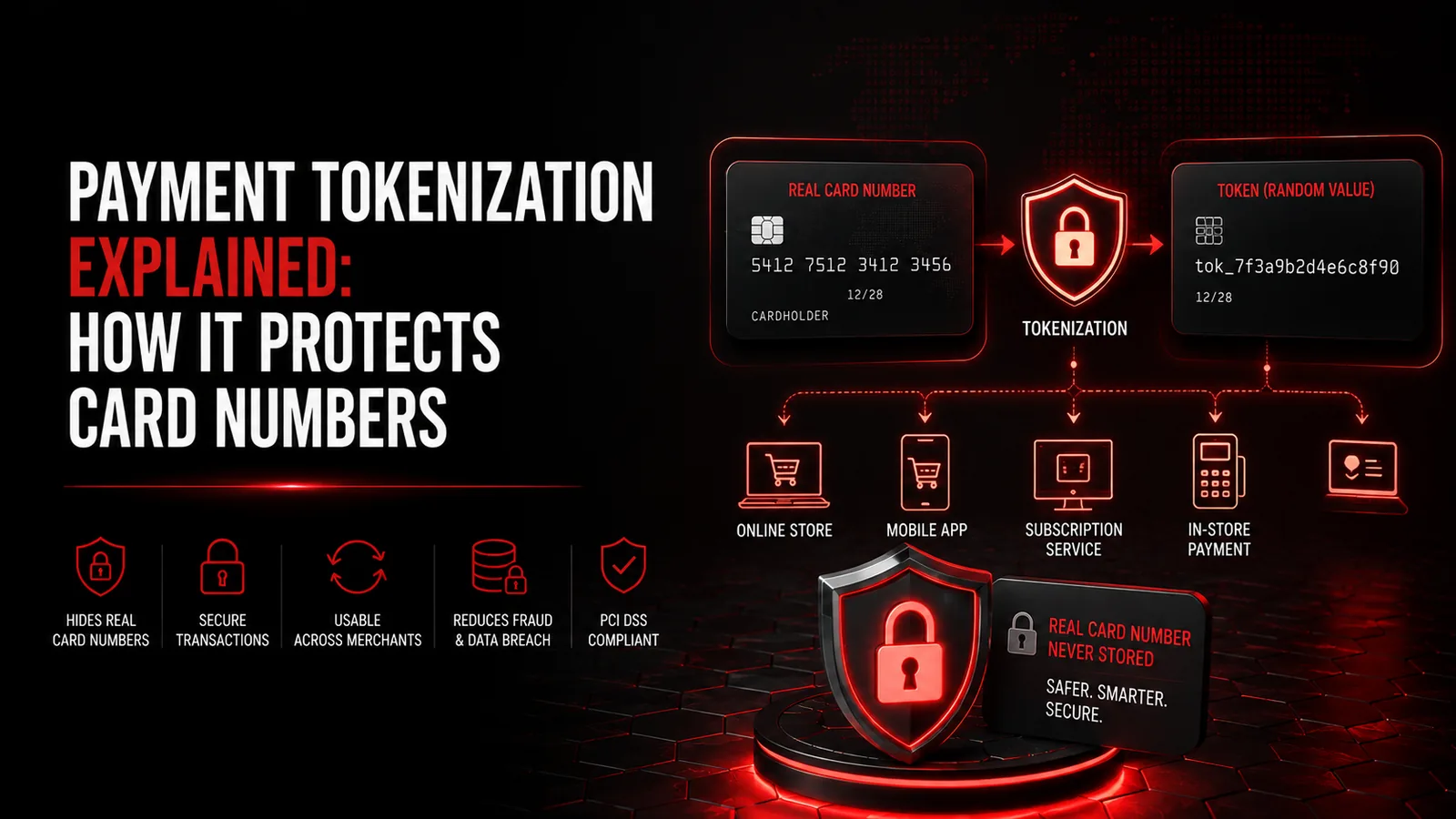
Tokenization reduces exposure of the real payment-card number by substituting a token in supported payment flows. This can be useful in digital wallets, e-commerce, subscriptions, mobile payments, and other modern payment scenarios.
Tokenization does not replace fraud monitoring or authentication, but it can reduce the value of payment data exposed in certain compromises because the underlying account number does not need to appear in every part of the transaction chain.
How Fraud Detection Differs Between the Two Channels
Card-present fraud detection may consider terminal data, chip authentication results, merchant location, transaction behavior, physical-card status, and other in-person signals.
Card-not-present fraud detection may rely more heavily on account history, device information, behavioral patterns, authentication outcomes, location signals, transaction velocity, order characteristics, and merchant risk data.
Modern fraud systems combine many indicators rather than relying on a single rule. This helps reduce both fraud and false declines.
What Are False Declines?
A false decline occurs when a legitimate payment is incorrectly rejected because it appears suspicious. False declines matter in both card-present and CNP environments, but they are especially important online because remote customers often change devices, travel, make unusual purchases, or behave differently from their previous transaction history.
Visa and Mastercard both emphasize the importance of balancing fraud prevention with approval rates and customer experience. Strong controls should stop unauthorized transactions without treating every unusual transaction as criminal.
Card-Present vs Card-Not-Present: Which Is Safer?
There is no universal answer that applies to every transaction. Modern EMV chip card-present payments can provide strong protection against traditional counterfeit-card fraud, while well-designed CNP environments can combine 3-D Secure, tokenization, account security, and sophisticated fraud analytics.
The relevant question is not simply which channel is safer, but whether the payment environment uses the appropriate security controls for its risks.

Card-Present vs Card-Not-Present Fraud: Key Warning Signs
Consumers should investigate unfamiliar in-person or online charges, unexpected purchase notifications, unusual login alerts, unknown devices accessing accounts, or transactions occurring in places they did not visit.
Merchants may look for abnormal transaction patterns, suspicious account changes, inconsistent transaction context, unusual device or terminal behavior, repeated failed authorization attempts, or other combinations of risk signals.
No single indicator proves fraud. Effective detection relies on context and multiple signals.
What Consumers Should Do After Unauthorized Card Activity
Contact the card issuer promptly through an official channel such as the number printed on the card, the issuer's official app, or a trusted account statement.
Report unfamiliar transactions and follow the issuer's dispute, card-locking, or replacement process.
Review other recent transactions and secure related email, banking, shopping, and payment accounts if account compromise may be involved.
Enable multi-factor authentication where available and continue monitoring the account for additional suspicious activity.
How Consumers Can Reduce Card-Present Fraud Risk
Keep physical cards secure and report lost or stolen cards promptly.
Use chip or supported contactless payment methods when available rather than relying on legacy magnetic-stripe fallback where avoidable.
Inspect unfamiliar ATMs or unattended payment terminals for signs of tampering and use trusted locations.
Turn on transaction alerts and review statements regularly.
How Consumers Can Reduce CNP Fraud Risk
Use unique passwords for financial, email, and shopping accounts.
Enable multi-factor authentication where available.
Avoid entering payment details after following suspicious links in unsolicited messages.
Keep devices and browsers updated and use trusted merchants.
Use supported tokenized payment methods or digital wallets where appropriate.
Review transaction alerts and statements regularly.
How Merchants Can Reduce Card-Present Fraud
Use supported EMV terminals and keep payment devices properly configured and updated.
Physically inspect terminals and restrict access to payment hardware.
Train staff to recognize suspicious tampering or unusual payment behavior.
Maintain applicable PCI DSS controls and minimize payment-data exposure.
Monitor transaction patterns and terminal activity for anomalies.

How Merchants Can Reduce Card-Not-Present Fraud
Use layered online fraud controls rather than one simple rule.
Protect e-commerce payment pages, scripts, plugins, and administrative accounts.
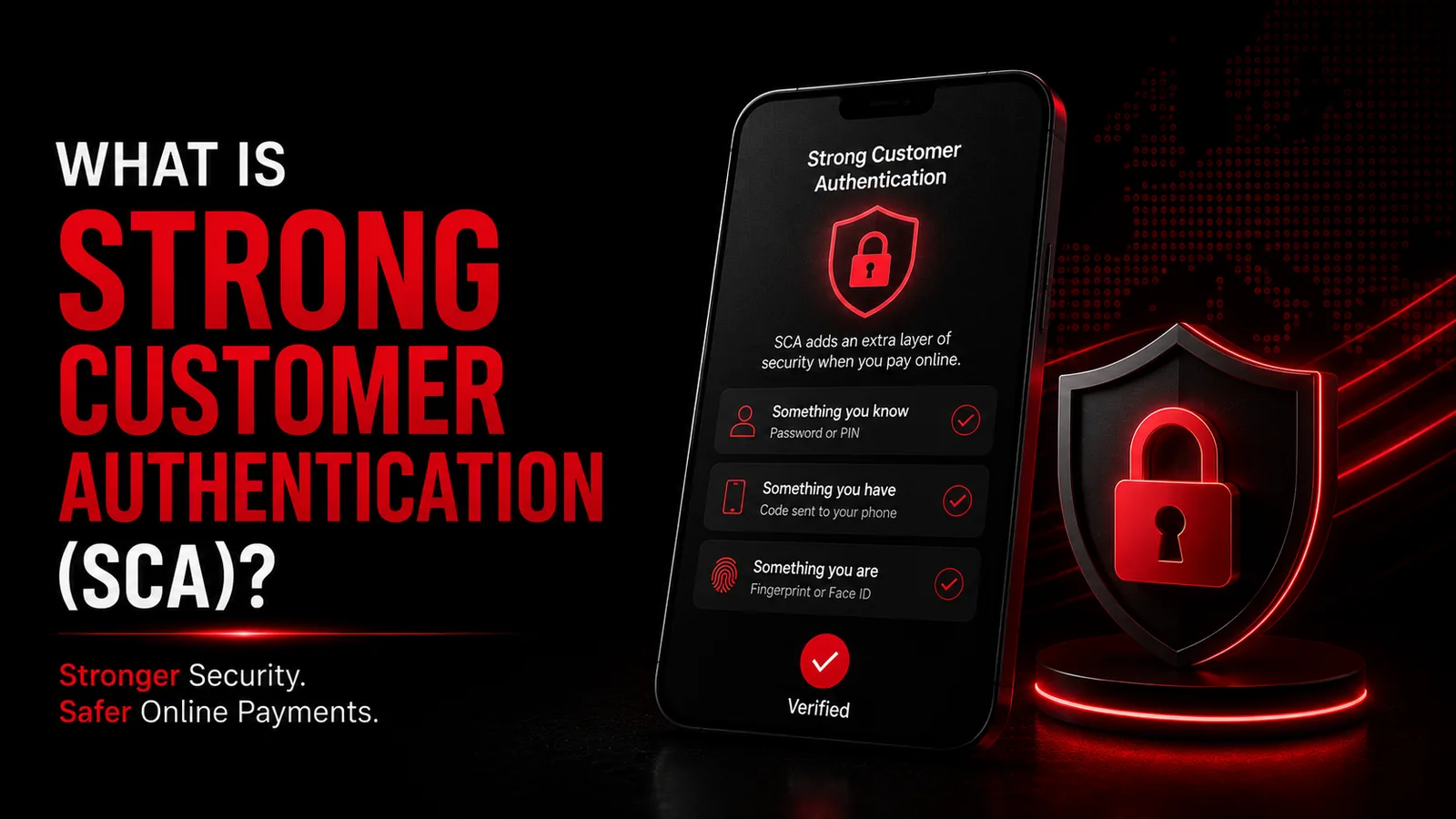
Use EMV 3-D Secure according to the merchant's authentication strategy.
Use tokenization and secure payment providers where appropriate.
Apply real-time fraud analytics and risk-based transaction monitoring.
Maintain applicable PCI DSS controls and reduce unnecessary payment-data storage.
Secure customer accounts and merchant administrative access with strong authentication.
Common Myths
Myth: Card-present means fraud is impossible. Reality: in-person payment fraud still exists, although EMV chip technology has strengthened many card-present environments.
Myth: Card-not-present means the transaction is fraudulent. Reality: most legitimate e-commerce card purchases are also card-not-present transactions.
Myth: The physical card must be stolen for online fraud. Reality: compromised credentials can be misused remotely while the cardholder still has the physical card.
Myth: 3-D Secure eliminates all CNP fraud. Reality: it is an important authentication layer but works best with other controls.
Myth: PCI DSS is only relevant online. Reality: PCI DSS applies to payment-account data across multiple payment channels.
Conclusion
The difference between card-present and card-not-present fraud comes down to the payment environment. In-person payments involve direct interaction with a card or payment device, while remote transactions require merchants and issuers to establish trust without physically seeing the cardholder.
That difference explains why security technologies have evolved along separate but complementary paths. EMV chip strengthened card-present payments; EMV 3-D Secure strengthened remote authentication; PCI DSS helps protect payment data across both; tokenization and fraud analytics reduce exposure and improve risk decisions.
For consumers, the priority is to protect both the physical card and the digital accounts surrounding it. For merchants, the priority is to understand the risks of each payment channel and apply layered controls that match those risks.